Aluminum Security Doors For Sale
Aluminum Security Doors For Sale
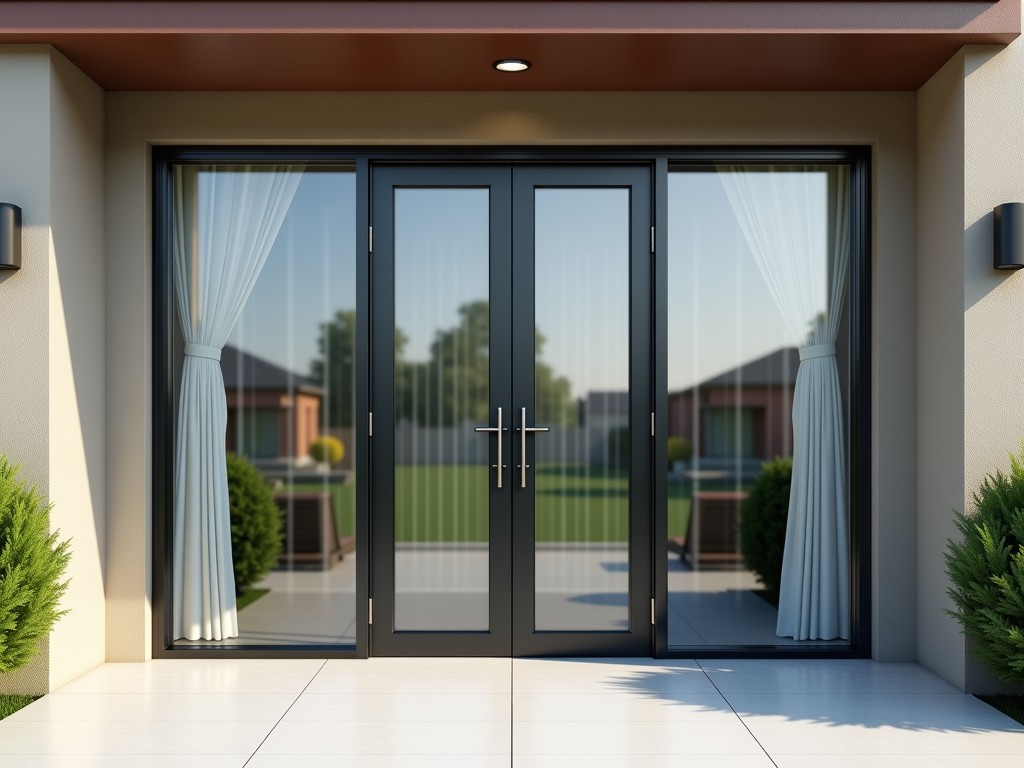
High-Performance Aluminum Security Doors for Industrial and Commercial Applications
Selecting a security perimeter requires a balance between structural integrity, corrosion resistance, and operational reliability. Unlike standard steel alternatives that may suffer from warping or oxidation over time, engineered aluminum security doors offer a high strength-to-weight ratio that ensures dimensional stability under high-frequency use cycles. These systems are designed for environments where thermal expansion and long-term durability are non-negotiable factors.
Engineering Considerations in Material Selection
The performance of a security door begins with the alloy selection and extrusion geometry. We typically utilize 6063-T5 or 6061 alloys, providing the necessary yield strength to resist mechanical impact. The profile design is engineered with internal structural ribs to increase torsional rigidity without adding excessive weight that would strain hardware—a common failure point in lower-grade aluminum installations.
Surface treatment plays a critical role in lifecycle-cost analysis. For coastal or high-humidity environments, a powder-coated finish or an anodized layer provides a sacrificial barrier against atmospheric corrosion. This prevents the structural degradation of the metal, ensuring that the locking mechanisms and frame alignments remain functional after years of exposure.
Technical Specifications and Standards
| Parameter | Typical Specification / Range |
|---|---|
| Material Alloy | 6063-T5 / 6061-T6 Aluminum |
| Frame Wall Thickness | 2.0mm to 4.0mm (Customizable) |
| Structural Tolerance | ±1.5mm overall |
| Locking Mechanism | Multi-point security locking (3-5 point systems) |
| Infill Options | Reinforced Mesh, Tempered Glass, Perforated Aluminum |
| Finish Options | Powder Coating (A-grade compliant), Anodizing |
Mechanical Integrity and Security
A security door is only as strong as its weakest point—usually the hardware interface. Our aluminum doors utilize multi-point locking systems that distribute force across the entire height of the door leaf. This prevents the "prying" effect often seen in single-point latch systems.
The hinges are constructed from heavy-duty stainless steel or reinforced aluminum, integrated into the frame to prevent external removal. This design ensures that even under forced entry attempts, the structural geometry of the door remains intact, maintaining the integrity of the facility's perimeter.
Industrial Application Scenarios
- Data Centers & IT: Providing fire-resistant and climate-controlled entry while maintaining high-security protocols.
- Manufacturing Facilities: Heavy-duty doors that withstand dust, vibrations, and frequent operational cycles without misalignment.
- Commercial Warehousing: Corrosion-resistant solutions for loading docks and exterior-facing entry points.
- Public Infrastructure: Low-maintenance doors for transit hubs and government buildings where aesthetic consistency is required.
Customization and OEM Capabilities
Every project presents unique architectural constraints. We offer OEM and ODM services to adapt door specifications to specific site requirements. Whether you require specialized dimensions for fire-rating integration or custom mesh infills for ventilation security, our manufacturing process allows for precision modifications based on technical drawings.
To ensure seamless integration, we provide detailed technical data sheets and CAD files for review by your engineering team. You can discuss your project requirements with our engineering team to receive a tailored proposal.
Ready to Secure Your Facility?
Share your drawings or specifications for a customized proposal. Our technical team will provide a material analysis and formal quote based on your site-specific needs.
Request Technical Consultation