Wooden Fire Door With Solid Core Factory Sale
Wooden Fire Door With Solid Core Factory Sale
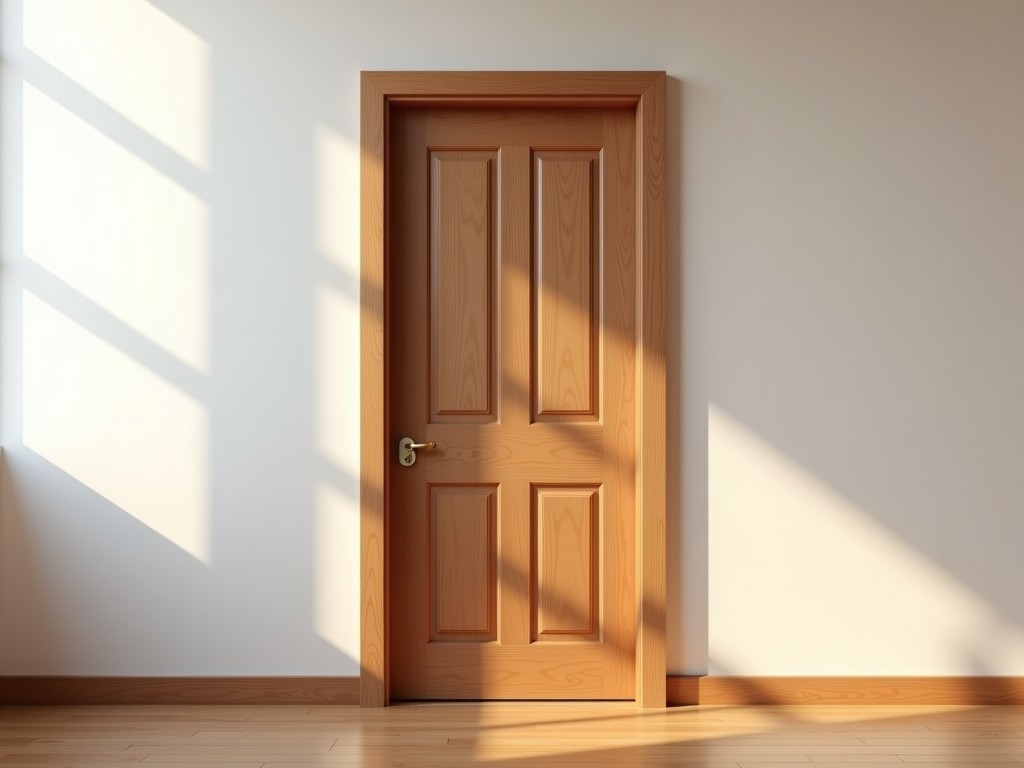
Wooden Fire Door with Solid Core – Engineered for Compartmentalization and Life Safety
In buildings where fire resistance and smoke control are critical to life safety, wooden fire doors with solid core construction provide a verified barrier against flame spread and heat transfer for designated periods. Unlike hollow-core or particleboard alternatives, these doors use dense, engineered wood cores that maintain structural integrity under fire exposure, delaying ignition and limiting radiant heat transmission to adjacent compartments. They are commonly specified in stairwells, corridor partitions, and service shafts where both aesthetic compatibility with interior woodwork and certified fire performance are required.
Material Selection and Core Construction
The fire resistance of a solid-core wooden door is primarily determined by the density, composition, and thickness of its core material. Common core types include:
- Particleboard cores with fire-retardant additives (typically urea-formaldehyde or melamine-urea-formaldehyde resin bonded) – suitable for 30- to 60-minute ratings when tested per EN 1634-1 or BS 476:Part 22.
- Mineral-enhanced cores (e.g., calcium silicate or vermiculite-loaded particleboard) – offer improved thermal stability and are often used in 60- to 90-minute applications where higher temperature resistance is needed.
- Solid lumber cores (e.g., poplar, pine, or hardwood strips) – less common due to variability and higher cost, but used in custom architectural applications where natural wood appearance is prioritized and fire ratings are lower (typically 20-30 minutes).
The core is sandwiched between stiles and rails made of solid wood or engineered lumber (LVL or glulam), then faced with veneers or laminates. Facings are selected based on aesthetic requirements and must be compatible with fire door assemblies – thin veneers (0.6–1.0 mm) or high-pressure laminates (HPL) are typical, as thicker finishes can affect intumescent seal performance.
Fire Performance and Testing Standards
Fire door assemblies are evaluated as complete systems, including the door leaf, frame, hinges, locks, seals, and glazing (if applicable). Performance is measured by:
- Integrity (E): Resistance to flame passage and gap formation – maintains compartment separation.
- Insulation (I): Limits temperature rise on the unexposed side – protects against heat ignition of adjacent materials.
- Radiation (W): Restricts radiant heat flux – critical for escape route safety.
A wooden fire door with solid core is typically rated for E, EI, or EIW classifications (e.g., EI30, EI60) based on test duration. Certification requires third-party testing under standards such as:
- EN 1634-1: Fire resistance and smoke control tests for door and shutter assemblies.
- BS 476:Part 22: Methods for determination of the fire resistance of non-loadbearing elements of construction.
- UL 10C: Standard for Positive Pressure Fire Tests of Door Assemblies (North America).
Test results are valid only for the specific assembly configuration – changes to hardware, glazing percentage, or frame material require re-evaluation. Manufacturers provide detailed installation instructions to ensure field performance matches test conditions.
Typical Specifications and Dimensional Range
While exact dimensions vary by project and regional standards, solid-core wooden fire doors are commonly manufactured within the following ranges:
| Parameter | Typical Range | Notes |
|---|---|---|
| Door Leaf Thickness | 40–54 mm | Thickness increases with fire rating; 44–45 mm common for EI30, 54 mm for EI60 |
| Core Density | 650–850 kg/m³ | Higher density improves fire and acoustic performance; mineral cores may exceed 900 kg/m³ |
| Maximum Height | 2400 mm | Taller doors may require intermediate stiffeners or special hinges; width typically 800–1000 mm per leaf |
| Facade Options | Veneer (0.6–1.0 mm), HPL, painted MDF | Facade must not impede intumescent seal activation; edge banding required |
| Fire Rating | EI20, EI30, EI60, EI90 | Rating dependent on core, thickness, and seal system; verified via test evidence |
Tolerances are critical for proper fit and seal engagement. Standard manufacturing tolerances typically adhere to:
- Width and height: ±1.5 mm
- Thickness: ±1.0 mm
- Squareness (diagonal difference): ≤2.0 mm
- Face flatness: ≤1.0 mm over 300 mm span
These tolerances ensure consistent gap control around the perimeter – typically 2–4 mm at the head and jambs, 8–10 mm at the threshold – allowing intumescent seals to expand effectively without binding or premature failure.
Hardware Compatibility and Sealing Systems
Fire door performance depends on the correct selection and installation of complementary components. Key elements include:
- Intumescent seals: Installed in the frame or door edge, they expand at ~200°C to close gaps and restrict smoke and flame passage. Seal type (e.g., blade, fin, or brush) must match the tested assembly.
- Hinges: Must be fire-rated (typically steel, with phosphor bronze washers) and installed per manufacturer specifications – usually 3 hinges for doors up to 2100 mm height, 4 for taller leaves.
- Locks and latches: Must be fire-rated and compatible with the door’s locking mechanism; electronic strikes require special consideration for power failure modes.
- Door closers: Essential for ensuring the door closes and latches after use; must be sized and positioned according to the door’s weight and fire rating.
- Glazing: If present, must use fire-resistant glass (e.g., wired ceramic or borosilicate) with compatible glazing beads and seals – maximum area and location are strictly defined in the test evidence.
Using non-certified hardware or altering seal placement voids the fire resistance certification. Project specifications should reference the exact hardware schedule from the door’s test report or approval document.
Application Scenarios and Industry Use
Wooden fire doors with solid core are selected where fire safety must coexist with interior design requirements. Common applications include:
- Stairwell enclosures in residential, office, and hotel buildings – providing protected escape routes while matching corridor woodwork or paneling.
- Corridor partitions in healthcare and educational facilities – combining fire compartmentation with a warm, non-institutional aesthetic.
- Service risers and vertical shafts in mixed-use developments – concealing ducts and pipes while maintaining fire barriers between floors.
- Apartment entrance doors in multi-unit housing – balancing security, sound insulation, and fire resistance for individual unit protection.
- Historic building renovations – where replicating original door profiles is necessary, but modern fire performance must be upgraded via solid-core construction and concealed seals.
In environments with high humidity or frequent cleaning (e.g., bathrooms, kitchens), solid-core doors with moisture-resistant facings (e.g., HPL or melamine) are preferred over bare veneer to prevent swelling or delamination. Acoustic performance is often a secondary benefit – solid cores typically achieve STC ratings of 30–35, contributing to sound privacy in offices and residential units.
Customization and OEM Considerations
Manufacturers of solid-core wooden fire doors typically accommodate project-specific requirements through:
- Non-standard dimensions – within structural limits; taller or wider leaves may require reinforced cores or additional stiles.
- Custom profiles – matching existing architrave, bead, or panel designs for architectural continuity.
- Facade flexibility – veneer species (oak, walnut, maple), HPL colors, or pre-finished paint to match interior schemes.
- Hardware preparations – pre-machined for specific lock bodies, hinge types, or electronic access systems.
- Glazing options – vision panels, fanlights, or side lights with approved fire-resistant glazing systems.
Customization impacts lead time and tooling. Standard configurations usually ship within 3–4 weeks; custom profiles or facings may extend production to 6–8 weeks. Minimum order quantities vary – some manufacturers accept single leaves for replacement projects, while others require batch production for cost efficiency. Packaging is typically individual wrap (polyethylene or cardboard corner protection) stacked on pallets, with edge guards to prevent damage during transit.
Quality Control and Factory Consistency
Consistent fire performance depends on tight control over material inputs and assembly processes. Key quality checkpoints include:
- Core density verification – sampling particleboard or mineral core boards to ensure uniform fire-retardant distribution.
- Adhesive bond strength – testing stave joints and face laminations to prevent delamination under heat or moisture exposure.
- Dimensional inspection – checking thickness, width, height, and squareness against tolerances before hardware machining.
- Seal groove precision – ensuring intumescent seal channels are cut to correct depth and width for proper fit and activation.
- Pre-assembly dry fit – verifying hardware alignment and clearance before final finishing.
Finished doors are typically weighed and visually inspected – significant weight deviations may indicate core density issues or moisture variation. Final packaging includes labels with fire rating, test standard, serial number, and installation instructions to support traceability and compliance verification on-site.
Selection Guide for Procurement and Engineering Teams
When evaluating wooden fire doors with solid core, technical buyers should confirm:
- Valid third-party test evidence for the exact assembly (door + frame + hardware + seals) – not just material certification.
- Compatibility of specified hardware with the tested configuration – substitutions require re-approval.
- Factory tolerances and quality control procedures – especially for core density and seal groove accuracy.
- Lead time and packaging suitability for site logistics – knock-down or pre-hung options may affect installation time.
- Availability of technical support – installation manuals, maintenance guidelines, and replacement part information.
Cost considerations extend beyond the unit price – include potential expenses for site adjustments, hardware upgrades, or rework due to non-compliance. A slightly higher initial cost for a door with documented consistency and full test evidence often reduces long-term risk and lifecycle expenses.
Frequently Asked Questions
Q: Can a wooden fire door be painted on-site after delivery?
A: Only if the facing is designed for field painting (e.g., primed MDF or specific veneer grades). Factory finishes (HPL, melamine) should not be sanded or coated – doing so may damage the surface or interfere with seal performance. Always consult the manufacturer’s finishing guidelines.
Q: How does humidity affect solid-core wooden fire doors?
A: Excessive moisture can cause core swelling or facing delamination, potentially affecting fit and seal engagement. Doors in high-humidity areas should use moisture-resistant cores (e.g., MR-grade particleboard) and stable facings. Acclimatization before installation and proper sealing of edges are recommended.
Q: Are solid-core wooden fire doors suitable for exterior use?
A: Generally not recommended for direct weather exposure. While the core may resist fire, prolonged UV, rain, and temperature cycling can degrade facings, adhesives, and seals. For exterior applications, metal or specialized composite fire doors are typically preferred.
Q: What is the difference between FD30 and EI30?
A: FD30 (British legacy term) and EI30 (European standard) both indicate 30 minutes of fire resistance, but EI30 specifies performance under EN 1634-1 testing, which includes pressure conditions and defines both integrity (E) and insulation (I) criteria. FD30 may refer to older BS 476:Part 22 testing – always verify the test standard and evidence.
Share your project specifications for a customized fire door proposal