Wholesale Wooden Sliding Door For Wardrobe
Wholesale Wooden Sliding Door For Wardrobe
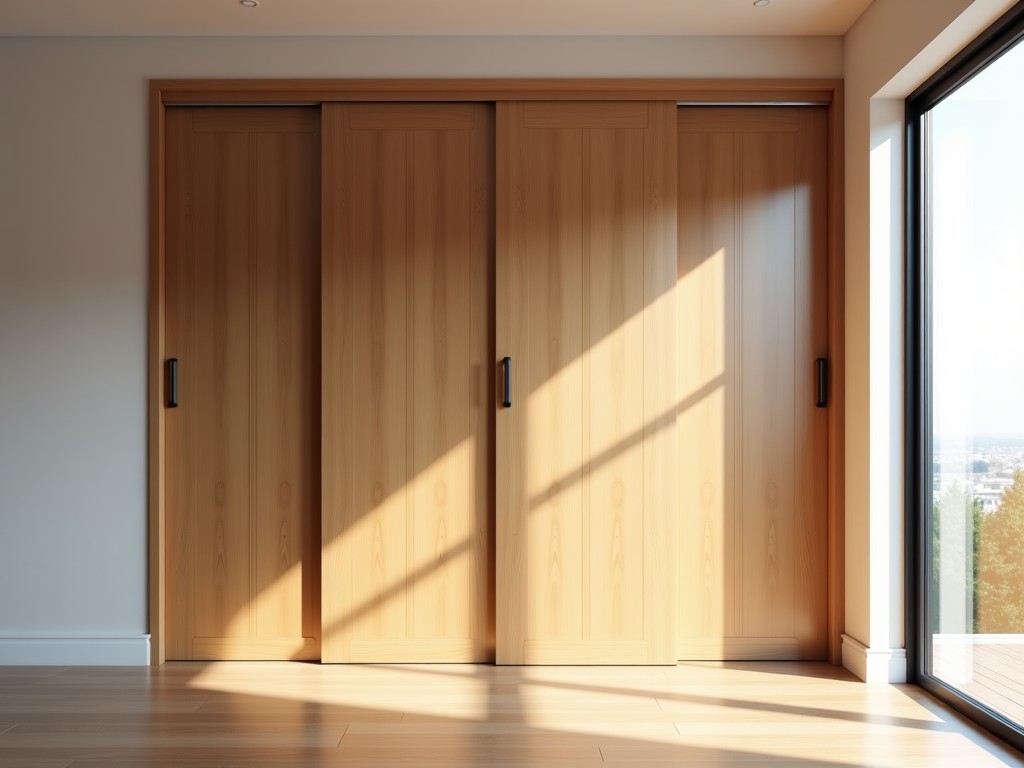
Wooden Sliding Door for Wardrobe: Engineering Considerations for Reliable Operation
In wardrobe systems where space efficiency and smooth operation are critical, sliding doors eliminate the swing clearance required by hinged alternatives. However, wooden sliding doors introduce specific engineering challenges related to material stability, hardware compatibility, and long-term alignment under varying humidity conditions. This page examines the technical factors that influence performance, durability, and suitability for industrial wardrobe manufacturing, helping procurement and engineering teams evaluate options based on functional requirements rather than appearance alone.
Material Selection and Dimensional Stability
Wood is hygroscopic, meaning it absorbs and releases moisture based on ambient humidity, leading to expansion and contraction across the grain. For sliding wardrobe doors, this movement can cause binding, gaps, or uneven operation if not properly managed. Engineered wood products such as MDF, particleboard, or plywood with balanced construction are commonly selected because their layered or homogenized structure minimizes directional movement compared to solid wood. The choice of substrate affects not only stability but also edge integrity, screw holding strength, and resistance to sagging over the door’s height—particularly important for doors exceeding 2.2 meters in height.
Surface finishes such as melamine, veneer, or lacquer are applied not only for aesthetics but also to seal the substrate and reduce moisture exchange rates. A consistent finish on all surfaces—including edges and backs—helps maintain equilibrium and reduces the risk of warping. When evaluating materials, procurement teams should consider the equilibrium moisture content (EMC) of the finished product relative to the end-use environment, as mismatched EMC is a frequent cause of field performance issues.
Hardware Integration and Load Distribution
The performance of a wooden sliding door depends heavily on the hardware system—specifically, the top-hung or bottom-rolling mechanism and its interface with the door. Top-hung systems transfer the door’s weight to the upper track, reducing floor load but requiring adequate header strength and precise alignment to prevent pendulum swing. Bottom-rolling systems alleviate header load but place greater demand on floor leveling and roller durability, especially when door weights exceed 25–30 kg.
Mounting hardware must be selected based on the door’s thickness and material density to ensure secure fastening without splitting or pull-out. Common mounting methods include surface-mounted plates, concealed brackets, or through-bolts with reinforcing inserts. The spacing and quantity of fasteners influence load distribution; inadequate fastening can lead to localized deformation at the attachment point, causing misalignment over time. Engineers should verify hardware compatibility with the door’s edge strength and consult manufacturer pull-test data for the specific substrate.
Tolerances, Alignment, and Gap Control
Sliding door systems rely on consistent gaps between the door and frame, adjacent doors, and the floor or ceiling to operate smoothly. Typical operational gaps range from 2–4 mm at the sides and top, and 3–6 mm at the bottom to accommodate floor unevenness and allow for clearance. These gaps are not arbitrary; they compensate for material movement, hardware deflection, and installation variance.
Maintaining these tolerances requires attention to door squareness, frame flatness, and hardware precision. A door that is out of square by more than 1.5 mm diagonal variance may bind during operation, particularly in longer spans. CNC cutting and edge banding processes help ensure consistent dimensions, but post-manufacturing handling and storage conditions can introduce deviations. Quality control checks should include diagonal measurement, edge straightness, and surface flatness before hardware installation.
Typical Specifications and Customization Factors
| Parameter | Typical Range / Consideration |
|---|---|
| Door Height | Up to 2.7 m (limited by material sag and hardware capacity) |
| Door Width | 600–1000 mm per panel (wider panels increase load and flex risk) |
| Door Thickness | 16–25 mm (affects hardware compatibility and stiffness) |
| Substrate Options | MDF, particleboard, plywood, HDF (selection based on stability, weight, and finish requirements) |
| Surface Finish | Melamine, veneer, lacquer, laminate (impacts moisture resistance and edge sealing) |
| Weight per Panel | Typically 18–35 kg (dependent on size, thickness, and density) |
These values represent common industrial configurations; actual limits depend on hardware specifications, material grade, and installation conditions. Custom dimensions beyond standard ranges may require reinforced cores, alternative hardware, or segmented designs to maintain operability and longevity.
Quality Control and Consistency in Production
Variability in wooden sliding doors often stems from inconsistencies in raw material moisture content, adhesive curing in engineered panels, or finishing application thickness. To ensure batch-to-batch reliability, manufacturers typically implement incoming material checks for moisture content and density, monitor pressing parameters for panel uniformity, and conduct post-finish curing inspections. Edge quality is particularly critical, as chipping or uneven banding can interfere with hardware mounting and create stress concentrations.
Finished doors should undergo functional testing—sliding operation under load, gap verification, and alignment checks—before packaging. Packaging methods must protect edges and surfaces from impact and moisture during transit, with edge guards, corner protectors, and humidity-barrier wrapping commonly used for long-distance or export shipments. Clearly marked handling instructions reduce the risk of damage during warehousing and installation.
Application Considerations and Selection Guidance
Wooden sliding doors are well-suited for wardrobe systems in residential, hospitality, and multi-unit housing where a balance of aesthetics, cost, and space efficiency is required. Their performance is most predictable in environments with stable humidity control (e.g., conditioned indoor spaces). In locations with high seasonal variation or uncontrolled moisture exposure, alternative materials or additional sealing strategies may be necessary to maintain long-term function.
Selection should begin with an assessment of the opening dimensions, expected door weight, hardware load ratings, and environmental conditions. Procurement teams should request material data sheets, hardware compatibility guides, and quality control documentation from suppliers. For OEM or high-volume applications, pilot runs with functional validation under simulated use conditions help identify potential issues before full-scale production.
Share your project specifications—including door dimensions, material preferences, hardware type, and environmental conditions—with our engineering team to receive a tailored evaluation and quotation.