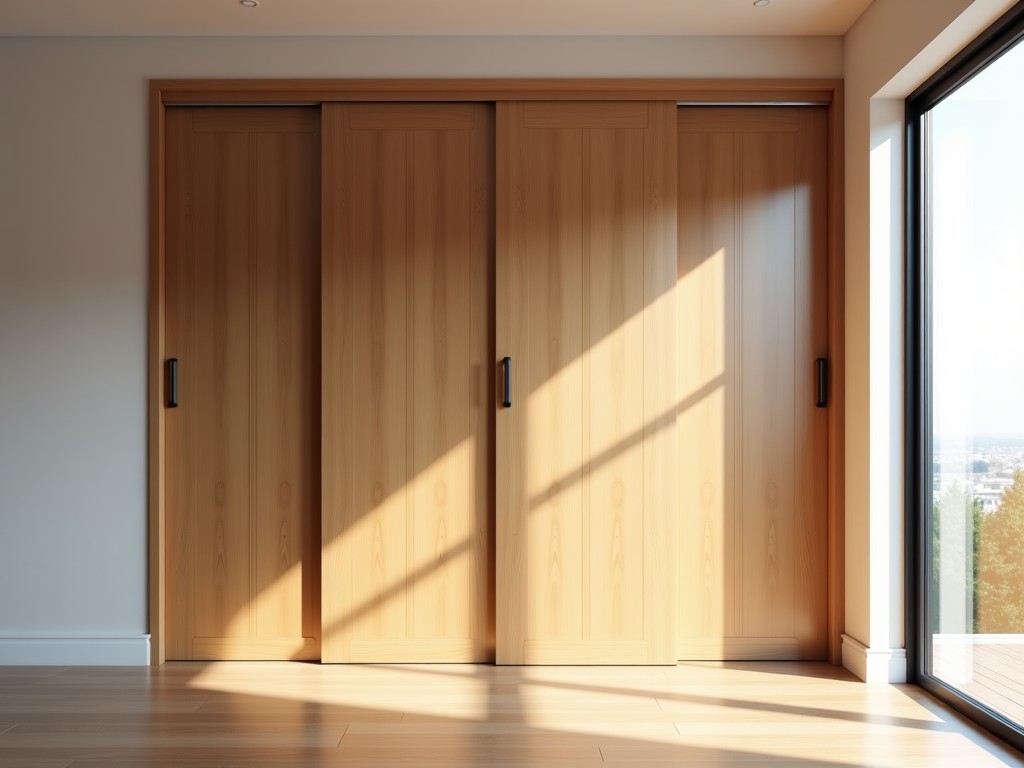
Factory Direct Multi Track Sliding Door
Factory Direct Multi Track Sliding Door
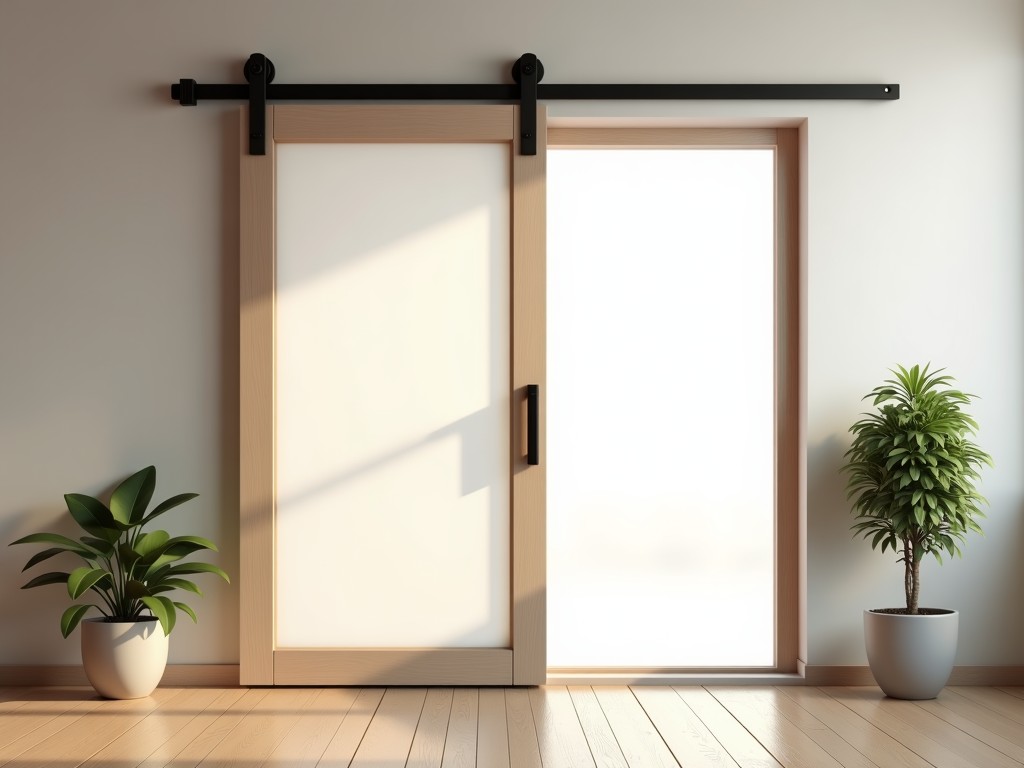
Engineering-Grade Multi-Track Sliding Door Systems for Industrial Applications
In industrial and high-traffic commercial environments, the requirement for large-scale openings necessitates a balance between structural integrity and operational flexibility. Unlike standard residential solutions, a multi-track sliding door system is engineered to distribute significant loads across multiple panels, allowing for maximum clearance without compromising the building envelope. These systems are critical for facilities where thermal control, acoustic insulation, or rapid partitions between required while heavy-duty machinery access is paramount.
Structural Mechanics of Multi-Track Configurations
The primary challenge in wide-span openings is the management of cantilevered weight. As the number of tracks increases, the cumulative force on the header assembly can lead to deflection or mechanical binding. Our multi-track systems utilize reinforced aluminum profiles or heavy-gauge steel frames to ensure that each panel remains perfectly plumb, even under high-duty cycle operations.
- Load Distribution: Parallel tracks distribute panel weight to prevent floor-wear and track sagging.
- Alignment Tolerance: Precision-machined rollers ensure that panels transition between tracks without friction increase.
- Sealing Integrity: Overlapping gaskets and integrated weather-stripping minimize air infiltration and moisture ingress.
Material Selection and Environmental Durability
Selecting the correct material depends on the operating environment and expected mechanical stress. For coastal or high-humidity environments, 6063-T6 tempered aluminum alloys are preferred for their high strength-to-weight ratio and inherent corrosion resistance. In heavy manufacturing settings where physical impact is a risk, galvanized or stainless steel frames may be specified to prevent deformation under repeated mechanical loads.
The glazing selection also dictates performance metrics regarding thermal break. For climate-controlled laboratories, double or triple glazed units with argon-filled cavities reduce thermal transfer. Conversely, for industrial warehouse partitions, reinforced tempered laminated glass provides the necessary safety factor in the event of structural impact.
Technical Specification Overview
| Parameter | Standard Specification | Heavy-Duty Option |
|---|---|---|
| Track Configuration | 2 to 4 Tracks | Up to 6+ Tracks |
| Max Panel Weight | Up to 150kg per panel | 300kg+ per panel |
| Frame Material | Anodized Aluminum | Powder Coated Steel / SS |
| Roller Type | Nylon Polymeric | Stainless Steel Ball Bearing |
| Air Infiltration Rating | Class 3 | Class 4 (High Performance) |
Application Scenarios in Industry
Multi-track sliding doors are deployed where space efficiency is critical but large access is required periodically. Common applications include:
Manufacturing Plants
Dividing assembly lines from cleanroom zones while allowing the passage of oversized machinery or components.
Commercial Showrooms
Providing flexible exhibition spaces that can be fully opened for events or inventory deliveries.
Research Laboratories
Maintaining separate controlled environments for different experiments while allowing wide access for large testing equipment.
Manufacturing and Quality Control Standards
To ensure long-term reliability, our manufacturing process follows strict dimensional tolerances for track alignment. Even a deviation of 2mm over a long span can cause premature wear on the rollers or uneven operation. Each assembly undergoes stress-testing to verify that the hardware can handle the rated duty cycle without mechanical fatigue.
We utilize CNC-machined aluminum extrusions followed by precision welding for reinforced joints. Surface treatments, such as marine-grade anodizing or architectural architectural-grade powder coating, are applied to protect the substrate from chemical exposure and oxidation in industrial environments.
Frequently Asked Questions
Can these systems be customized for specific opening widths?
Yes, we design track configurations and panel profiles based on site-specific measurements to accommodate non-standard structural opening requirements.
What is the maintenance requirement for high-frequency use?
Maintenance involves periodic cleaning of tracks to remove debris and inspection of rollers for wear. Stainless steel bearing systems require minimal lubrication compared to standard nylon rollers.
How does the system handle high wind loads?
Wind load resistance is determined by the glass thickness and the profile cross-section. We provide structural calculations based on your site's wind pressure zone.
Need technical drawings or a formal quote for your project?
Consult Our Engineering Team