Louvre Aluminium Doors Factory Sale
Louvre Aluminium Doors Factory Sale
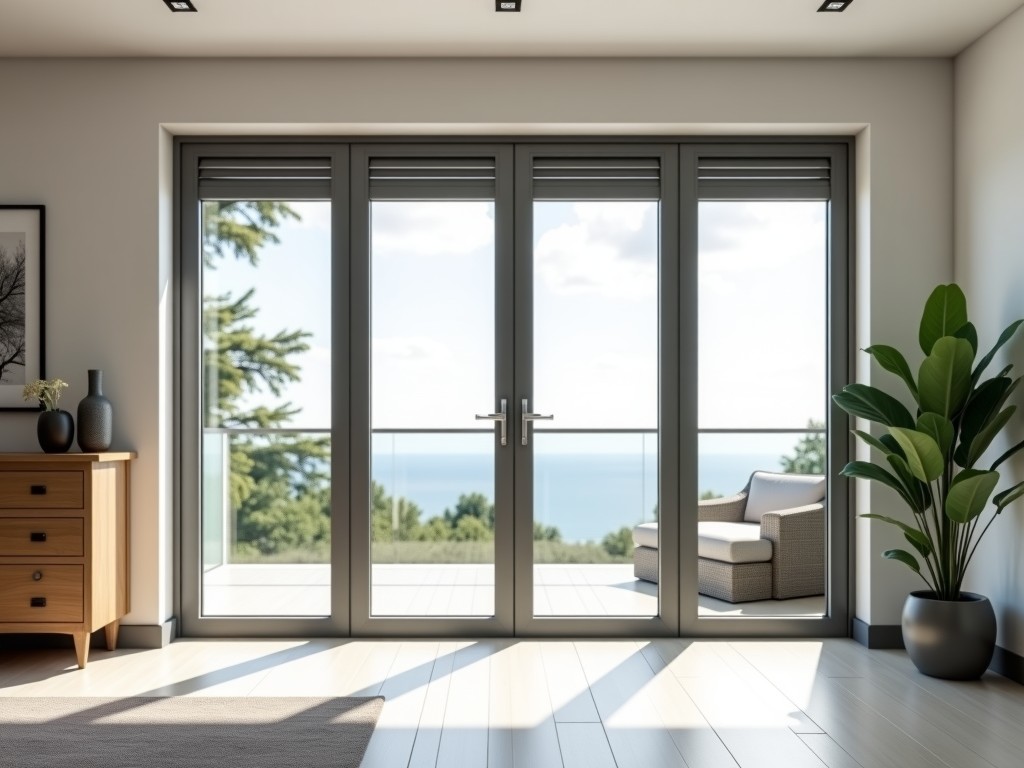
Industrial-Grade Aluminium Louvre Doors for Ventilation and Screening
In industrial environments, managing thermal loads while maintaining structural integrity is a critical engineering challenge. Aluminium louver doors are engineered to provide controlled airflow while simultaneously protecting internal equipment from precipitation, debris, and unauthorized access. Unlike standard solid doors, aluminum-based louvers offer a high strength-to-weight ratio and inherent corrosion resistance, ensuring dimensional stability over long service cycles in humid or chemically outdoor conditions.
Engineering Considerations for Ventilation Performance
Selecting the correct louver configuration requires an analysis of free air area versus pressure drop requirements. Engineers must evaluate the blade angle and spacing to ensure the HVAC system meets the necessary CFM ratings without causing excessive turbulence. A steeper blade pitch may reduce airflow efficiency but significantly improves the barrier against water ingress during wind-driven rain.
Key Technical Parameters
- Alloy Selection: Typically 6063-T5 extrusion for structural rigidity and high-quality surface finish.
- Free Air Area: Ranging from 40% to 80% depending on blade profile and density.
- Surface Treatment: Anodizing or powder coating for enhanced salt spray resistance in coastal or industrial zones.
- Structural Load Capacity: Reinforced frames designed for wide-span applications to prevent wind-pressure deflection.
Material Selection and Manufacturing Process
The manufacturing of aluminium louver doors begins with precision extrusion of the blade profiles. This process ensures consistent dimensional tolerances across large batches, which is vital for seamless alignment within door frames. The frames are typically mechanically jointed or welded with heavy-duty corners to ensure the door remains square under the mechanical stress of frequent operation.
To mitigate oxidation, the aluminium undergoes a pre-treatment process before final finishing. For high-corrosion environments, a marine-grade powder coating is specified to provide a durable barrier against UV degradation and chemical exposure. This prevents the pitting often seen in galvanized steel alternatives, extending the maintenance lifecycle of the mechanical assembly.
Technical Specifications Overview
| Parameter | Standard Specification |
|---|---|
| Material Alloy | 6063-T5 / 6061-T6 |
| Frame Depth | 50mm to 200mm (Customizable) |
| Blade Thickness | 1.5mm - 3.0mm |
| Hinge Type | Heavy-duty Stainless Steel or Pivot-bearing |
| Finish Options | Anodized, Powder Coated (RAL-compliant) |
Application Scenarios
Louver doors are widely deployed across various industrial sectors where ventilation is non-negotiable. In data centers, they facilitate exhaust for cooling units while preventing bird entry and rain damage. In manufacturing plants, they provide necessary air intake for machinery rooms, preventing overheating. Furthermore, in commercial architecture, they serve as functional screening for mechanical plant equipment, maintaining aesthetic consistency without compromising operational performance.
Mechanical Rooms
Optimized for heat dissipation in generator rooms and chiller housing where high airflow is required.
Industrial Kitchens
Provides natural ventilation for grease extraction systems while maintaining a fire-resistant barrier.
Data Centers
Integrated into server room systems to maintain precise temperature and humidity set-points.
Frequently Asked Questions
Can these louver doors be manufactured with specific mesh inserts?
Yes, we can integrate stainless steel or aluminum mesh screens behind the louver blades to prevent insect entry or small debris while maintaining airflow.
What is the maximum span for a single-leaf door?
Standard spans typically reach up to 2000mm; for larger openings, we recommend reinforced mullions or split configurations to prevent deflection under wind load.
Request a Technical Specification or Quote
Provide your project drawings or airflow requirements to our engineering team for a tailored technical solution.
Contact Our Engineering Team