Aluminum Facade Wall Cladding Factory
Aluminum Facade Wall Cladding Factory
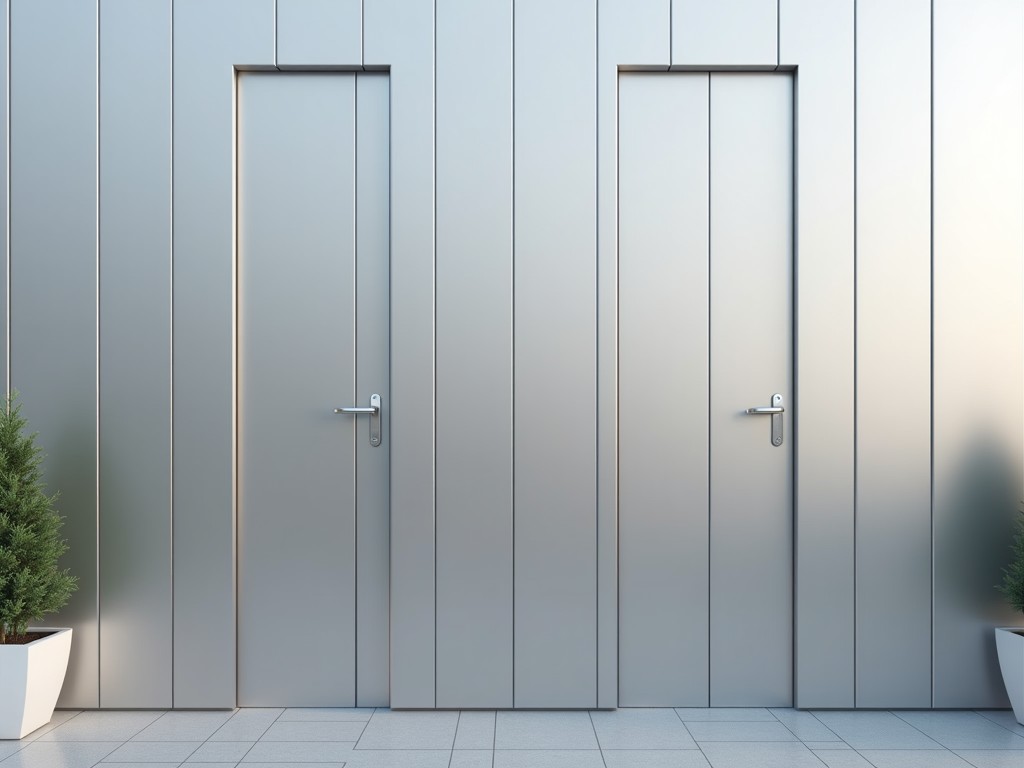
High-Performance Aluminum Facade Wall Cladding: Engineering and Material Specifications
Architectural cladding solutions engineered for dimensional stability, thermal resistance, and long-term corrosion protection in demanding urban environments.
Structural Integrity and Material Selection Logic
Selecting an aluminum facade system requires a balance between mechanical strength, weight, and environmental resistance. Unlike traditional masonry or composite panels, aluminum cladding offers a high strength-to-weight ratio, significantly reducing the dead load on the building's primary structure. This is particularly critical in high-rise applications or retrofitting projects where minimizing additional structural reinforcement is a primary cost and engineering constraint.
Most industrial applications utilize the 3000 or 5000 series alloys. The 3000 series is favored for its excellent formability and drawing properties, making it ideal for complex decorative geometries. Conversely, the 5000 series is specified when higher structural strength and superior corrosion resistance—especially in coastal or high-salinity environments—are non-negotiable requirements.
Technical Performance Parameters
The performance of a facade system is determined by how it manages thermal expansion and UV degradation. Aluminum has a high coefficient of thermal expansion, which necessitates precision engineering of the sub-frame mounting system to prevent buckling or fastener shear.
- Thermal Stability: Engineered joints and floating mounting systems allow for material movement without compromising the building envelope.
- Surface Resilience: PVDF (FEVE) coatings provide a chemical barrier that resists atmospheric pollutants, chalking, and color fading under intense UV exposure.
- Fire Safety: Natural non-combustibility, meeting Class A fire ratings essential for modern commercial safety codes.
- Weight-to-Volume Ratio: Approximately 1/3 the weight of steel, simplifying logistics and accelerating installation cycles.
Engineering Specifications Comparison
| Parameter | Standard Grade | Heavy-Duty Specification |
|---|---|---|
| Alloy Type | 3003-H5 | 5052-H32 / 6061 |
| Thickness Range | 2.0mm - 3.0mm | 4.0mm - 6.0mm+ |
| Surface Treatment | Anodized / Powder Coat | 3-Layer PVDF-FEVE |
| Flatness Tolerance | ±0.5mm/2m | ±0.3mm/2m |
Manufacturing and Customization Workflow
The precision of facade installation begins at the extrusion and fabrication stage. We utilize high-tolerance milling and computer-controlled extrusion lines to ensure dimensional consistency across large production runs. For complex architectural designs, CNC-routing allows for interlocking joints that eliminate the need for on-site cutting and reducing labor.
Customization options extend beyond standard flat panels. We provide bespoke extrusions profiles, perforated panels for ventilation systems, and integrated rain-screen modules. Each project undergoes a rigorous QC check against CAD-provided drawings to ensure that bolt holes and reveal channels align perfectly with the building's structural grid.
Procurement and Logistics Considerations
To ensure project timelines are met, our packaging protocol is designed for international shipping. Aluminum cladding is sensitive to surface scratches during transit; therefore, we utilize moisture-barrier polyethylene protective films and reinforced wooden crates or steel pallets.
Supply Stability
Consistent access to raw aluminum billet ensures predictable lead times even for large-scale commercial developments.
Inspection Standards
Standard testing includes salt spray tests for corrosion, adhesion tests for coatings, and tensile strength verification.
Ready to Specify Your Project?
Share your technical drawings and material requirements with our engineering team for a detailed quotation.
Request Technical ConsultationFrequently Asked Questions
What is the expected lifespan of aluminum cladding?
With properly specified PVDF coatings and installation, aluminum facades typically maintain aesthetic integrity for 30 to 50 years with minimal maintenance.
Can these panels be used in highly coastal environments?
Yes, provided that 5000-series alloys and high-performance coatings are selected to resist chloride-induced corrosion.