Pool Glass Fence Factory
Pool Glass Fence Factory
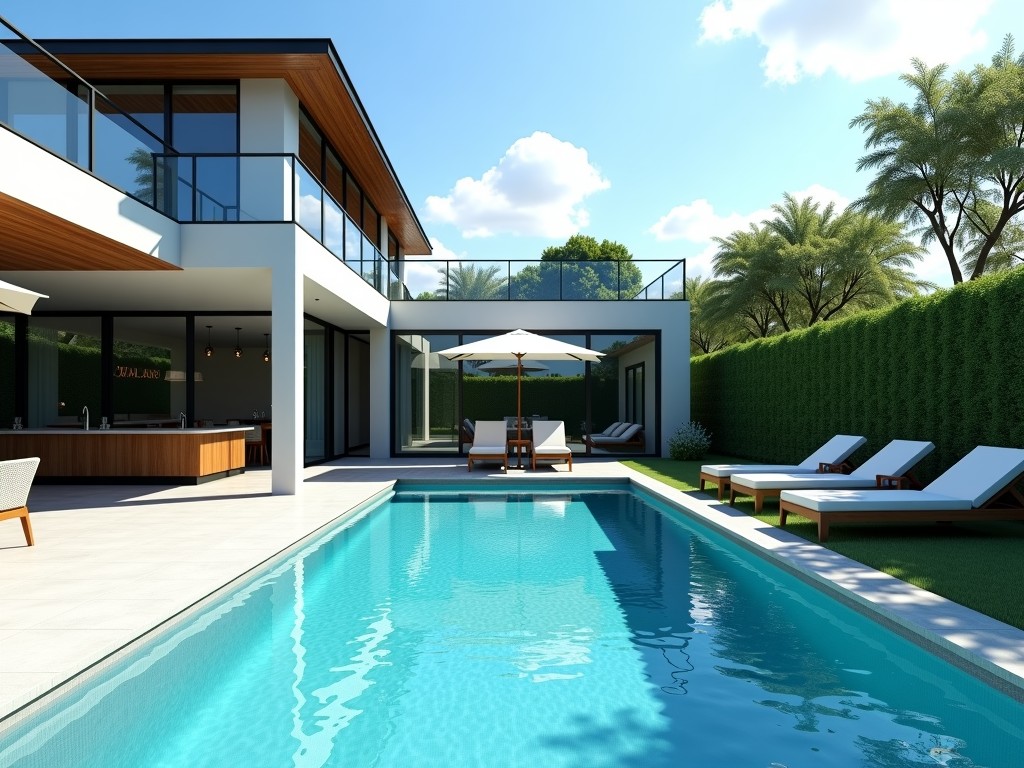
Engineering-Grade Pool Glass Fence Manufacturing: Precision Barrier Solutions
Designing a pool glass fence system requires a precise balance between structural integrity, optical clarity, and long-term corrosion resistance. As a specialized manufacturer, we focus on the technical integration of high-performance glass with structural hardware to create transparent barriers that withstand high impact loads and harsh chemical environments. Our production process prioritizes the mechanical properties of tempered glass and stainless alloy hardware, ensuring every installation meets rigorous safety standards and architectural specifications.
Material Selection for Harsh Aquatic Environments
Standard fencing materials often fail in pool environments due to constant exposure to chlorine, salt water, and humidity. We mitigate these risks by selecting materials based on their chemical stability and tensile strength. The primary component of our systems is laminated tempered glass, which provides a fail-safe mechanism: if the glass breaks, the interlayer holds the shards in place, preventing injury.
- Glass Composition: We utilize PVB (polyvinyl butyral) or SGP (sintered glass polymer) interlayers which offer superior moisture resistance compared to standard adhesives.
- Hardware Grade: Grade 316 Stainless Steel is the baseline for all structural components, providing essential molybdenum content to resist pitting corrosion in coastal or chlorinated-heavy zones.
- Surface Finishes: Electro-polishing or bead-coating is applied to enhance the passive oxide layer of the metal, preventing oxidation.
Technical Specifications and Load Calculations
The performance of a glass fence is determined by the tolerances of the mounting system and the thickness of the glass spans. Our manufacturing facility maintains strict dimensional tolerances to ensure that spans fit perfectly without creating stress points, which could lead to spontaneous fractures over time.
| Parameter | Standard Specification | Customizable Options |
|---|---|---|
| Glass Type | Laminated Tempered | SGP Interlayer for high-impact |
| Typical Thickness | 12mm to 19mm | Up to 32mm for frameless spans |
| Hardware Material | SUS 316 Stainless Steel | 316L (marine grade) |
| Mounting Method | Spandral / Post & Clamp | U-channel Floor Mounted |
| Load Capacity | 0.5 kN/m (linear) | Project-specific wind load |
Manufacturing Process and Quality Control
Our production workflow begins with precision CNC cutting of the glass blanks. Unlike standard glass production, the tempering process is managed in controlled thermal furnaces to ensure uniform stress distribution throughout the glass cross-section. This uniformity is critical for the glass's resistance to thermal shock.
Following glass treatment, the hardware undergoes a multi-stage inspection. We verify the chemical composition of the stainless steel through spectrometry testing to ensure it meets 316 grade requirements. Each batch of hardware is tested for torque-tension resistance to ensure the clamping pressure remains secure over decades of use.
OEM and Custom Project Integration
We recognize that architectural visions often require bespoke solutions that do not fit standard templates. We provide comprehensive engineering support to translate architectural drawings into manufacturable specifications. Whether it is custom curved glass for curvilinear pools or specialized mounting hardware for cantilever installations, our production line is adaptable to complex geometric requirements.
Discuss Your Project Requirements
Share your technical drawings, site conditions, and material preferences. Our engineering team will provide a feasibility analysis and a customized proposal based on your specifications.
Request Technical ConsultationFrequently Asked Questions
How does the system handle salt-water environments?
We utilize Grade 316 stainless steel which contains molybdenum, significantly increasing resistance to chloride-induced pitting and stress corrosion compared to standard 304 grade used in coastal areas.
What is the typical lead time for custom-dimension glass panels?
Lead times vary based on the complexity of the interlayer and hardware requirements, but custom orders typically range from 4 to 8 weeks from final engineering approval and deposit confirmation.