Top Tempered Glass Balustrade For Villa
Top Tempered Glass Balustrade For Villa
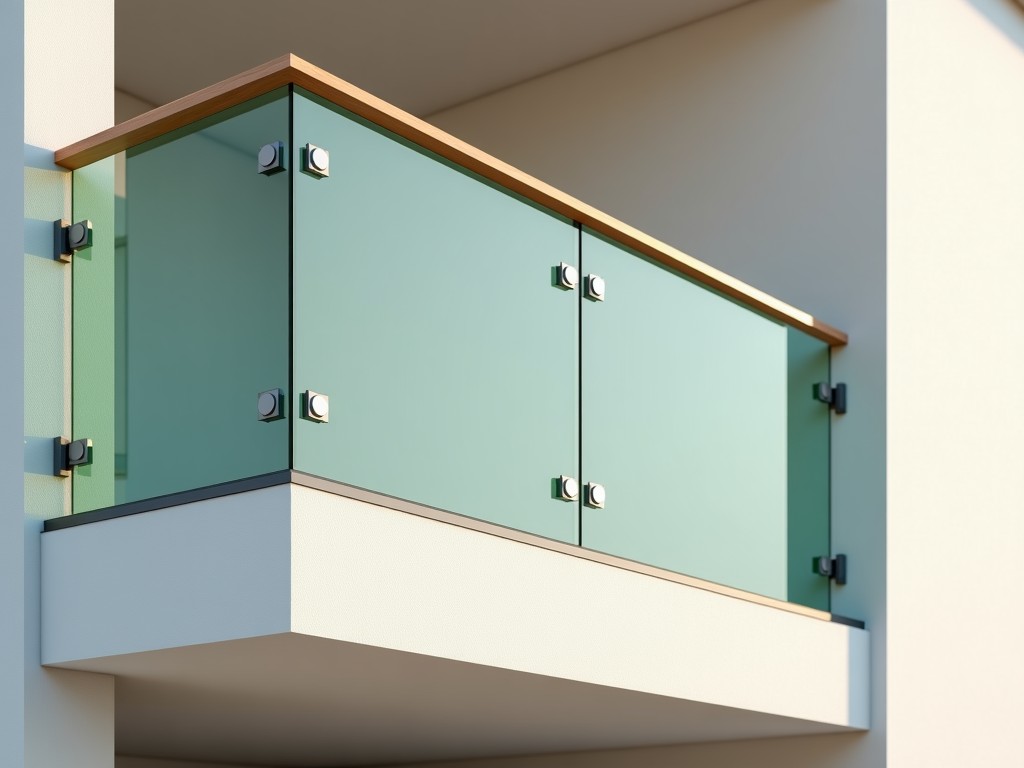
Engineering Specifications for Tempered Glass Balustrades in Villa Architecture
Integrating glass balustrades into residential design requires a balance between aesthetic transparency, structural integrity, and safety. Unlike standard glazing, villa-grade balustrades must withstand specific lateral loads and wind pressures while maintaining a low-profile architectural footprint. Our tempered glass solutions are engineered for thermal stability and mechanical impact resistance, ensuring that in the event of an impact, the material fractures into small, blunt granules rather than sharp shards, minimizing risk in high-traffic residential areas.
Material Selection and Structural Integrity
The selection of glass thickness and type is dictated by the mounting system—whether it be spigotted, base-channel, or point-fixed. For most modern villa applications, 12mm to 19mm tempered glass is the industry standard. However, in projects where maximum safety or extreme spans are required, laminated tempered glass (heat strengthened) is often specified. This combination utilizes an interlayer—typically PVB or Sentry—to hold fragments in place even if the glass layers fail, preventing a structural collapse.
Thermal tempering involves heating the float glass to approximately 620°C followed by rapid cooling. This process creates high compressive stresses on the surface and tensile stresses in the core, increasing the breaking strength by 4 to 5 times compared to annealed glass. For villa environments with high solar exposure, thermal-treated glass is critical to prevent thermal shock cracking caused by uneven heating.
Technical Specifications and Configurations
| Parameter | Typical Values / Range | Engineering Notes |
|---|---|---|
| Glass Type | Tempered / Laminated Tempered | Laminated preferred for high-fall safety. |
| Standard Thickness | 10mm, 12mm, 15mm, 19mm | Thickness depends on span and load requirements. |
| Surface Finish | Clear, Frosted, Tinted, Ultra-clear | Ultra-clear reduces iron content tint. |
| Edge Tolerance | ±±2mm (length/width) | Crucial for base-channel fit. |
| Load Capacity | 0.5kN/m to 2.0kN/m | Based on local building codes. |
Installation Systems and Hardware
The performance of a glass balustrade is heavily dependent on the hardware-glass interface. Procurement teams must evaluate the material grade of the fixings; 316-grade stainless steel is the minimum for coastal villa environments to prevent galvanic corrosion and pitting.
- Spigotted Systems: Uses stainless steel clamps to provide a "floating" look. Requires precision-drilled holes in the glass.
- Base Channels: A recessed aluminum profile bolted into the slab or bolted. Offers the cleanest aesthetic and simplifies installation by eliminating glass drilling.
- Post-Mounted: Vertical steel or aluminum posts hold brackets. Best for structural rigidity in long-span railings.
Quality Control and Testing Standards
To ensure long-term reliability, every batch undergoes rigorous testing before shipment. This includes stress point testing to ensure the tempering process was uniform and impact testing to verify surface strength. We also monitor for flatness deviations, as warped glass can cause stress concentrations in base-channel installations.
For large-scale villa developments, we provide technical documentation confirming the glass thickness and the properties of the interlayer used. This ensures that project architects can verify compliance with local safety regulations and structural engineering codes.
Frequently Asked Questions
Can tempered glass be cut after tempering?
No. Once the tempering process is complete, any cut will cause the entire pane to shatter. All dimensions, holes, and edge polishing must be completed prior to the tempering furnace.
What is the difference between clear and ultra-clear glass?
Standard clear glass has a slight green tint due to iron oxide content. Ultra-clear (low-iron) glass removes this tint, resulting in much higher transparency, which is preferred in high-end villa designs.
How is the glass packaged for transport?
We utilize custom wooden crates with internal foam-edge cushioning and vertical supports to prevent edge-to-edge impact during domestic or international transit.
Need a technical consultation for your current project?
Share your architectural drawings or structural requirements with our engineering team for a customized proposal.
Request Technical Specification