Apartment Entry Wooden Door Manufacturer
Apartment Entry Wooden Door Manufacturer
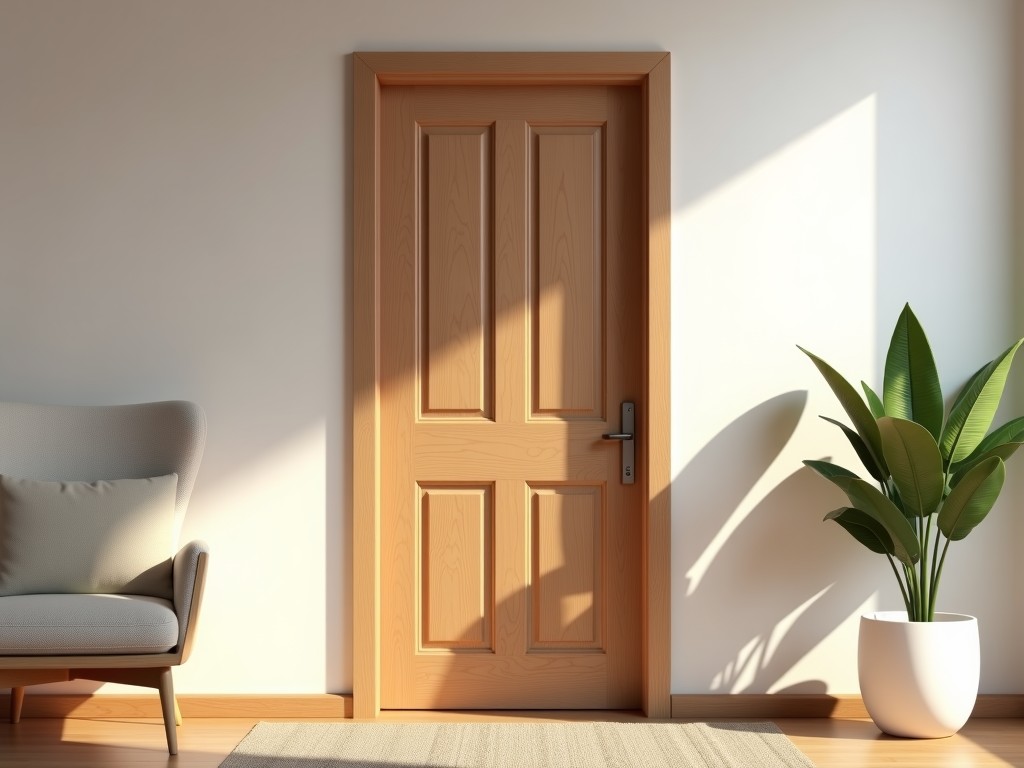
Apartment Entry Wooden Door: Technical Specifications and Selection Guide
Selecting an apartment entry wooden door requires balancing structural performance, fire resistance, acoustic insulation, and long-term dimensional stability under varying indoor humidity conditions. This guide explains the engineering considerations that affect door functionality in multi-unit residential buildings, helping procurement and design teams evaluate options based on measurable performance criteria rather than appearance alone.
Industry Challenge: Performance Requirements in Multi-Unit Residential Applications
Apartment entry doors serve as the primary barrier between private units and shared corridors, requiring compliance with building codes for fire resistance, sound transmission class (STC), and forced entry resistance. Unlike interior doors, they must maintain dimensional stability despite frequent exposure to humidity fluctuations from HVAC systems, cooking, and bathroom use. Warping, twisting, or sticking can compromise both security and accessibility, particularly in high-rise buildings where elevator lobbies create pressure differentials.
Material selection directly influences long-term performance. Solid wood cores offer natural acoustic damping but are susceptible to movement without proper sealing and stabilization. Engineered cores—such as particleboard, MDF, or mineral-filled composites—provide enhanced dimensional stability at the cost of reduced natural sound absorption. The choice between species, core construction, and edge banding affects not only initial cost but also maintenance intervals and lifecycle performance.
Material Selection: Species, Core Construction, and Stabilization Techniques
Common face veneers include oak, maple, walnut, and sapele, selected for grain stability and resistance to surface checking. Interior cores vary by performance priority: solid lumber cores (typically finger-jointed pine or poplar) provide high screw retention and impact resistance but require precise moisture content control (8–12% at factory) to prevent post-installation movement. Engineered cores like MDF or HDF offer uniform density and smooth surfaces for paint finishes but are more vulnerable to edge swelling if exposed to moisture.
To enhance stability, manufacturers often apply balanced construction—symmetrical veneer layers on both faces—and seal all edges with PVC, ABS, or wood veneer bands bonded with hot-melt or PUR adhesive. Some designs incorporate mineral-filled cores (e.g., calcium silicate or magnesium oxide boards) to achieve fire ratings of 20–90 minutes without adding excessive weight. These composites also improve screw holding in hinge and lock zones compared to standard particleboard.
Surface finishes range from clear UV-cured coatings to pigmented polyurethanes or laminates. Finish selection affects not only appearance but also moisture vapor transmission rates—critical for preventing uneven swelling. Factory-applied finishes typically offer better edge sealing and uniformity than field-applied alternatives, reducing callbacks related to finish cracking or peeling.
Manufacturing Process: Core Assembly, Pressing, and Finishing
Door blanks are assembled using cold or hot press cycles depending on core material. For veneered faces, adhesive spread rates are carefully controlled to prevent telegraphing or dry spots. After pressing, doors are sanded to uniform thickness tolerance (±0.5 mm for standard interior doors, ±0.3 mm for fire-rated assemblies) before edge banding and face finishing.
Fire-rated doors require additional steps: insertion of intumescent strips around the perimeter, which expand when heated to seal gaps between door and frame. These strips must be compatible with the door’s core material and tested as part of the full assembly—performance cannot be assumed from material ratings alone. Hinge and lock reinforcements (often steel plates or laminated hardwood blocks) are embedded during core assembly to resist screw pull-out under load.
Quality control includes moisture content testing of raw materials, post-press flatness checks (using dial indicators or laser scanners), and adhesion testing of face veneers and edge bands. Finished doors are typically conditioned in climate-controlled rooms (50% RH, 20°C) for 24–48 hours before packaging to stabilize moisture equilibrium.
Typical Specifications: Performance Ratings and Dimensional Options
| Specification | Typical Range / Value | Notes |
|---|---|---|
| Door Thickness | 35–45 mm | 44 mm common for fire-rated applications |
| Width (Single Leaf) | 800–900 mm | Custom widths available; corridor clearance requirements apply |
| Height | 2000–2100 mm | Standard; oversize requires reinforced hinges and frame |
| Fire Resistance Rating | 20, 45, 60, 90 min | Tested per UL 10C or EN 1634-1; requires compatible frame and hardware |
| STC Rating | 30–35 dB | Higher with solid core or mineral-filled composites; perimeter sealing critical |
| Weight (35 mm thick, 800x2000 mm) | 25–40 kg | Depends on core material; affects hinge selection and frame load |
| Moisture Content (Factory) | 8–12% | Equilibrated to local EMC; critical for dimensional stability |
Customization Options: Sizes, Finishes, and Hardware Integration
Non-standard dimensions—such as taller doors for lobbies with elevated ceilings or wider leaves for accessibility—require adjustments to core reinforcement and hinge placement. Custom sizes typically increase lead time by 2–4 weeks due to tooling adjustments and material sourcing. Finish matching to adjacent millwork or wall panels is possible through custom stain formulation or paint sampling, though field touch-up may be necessary for seamless integration.
Hardware preparation includes mortising for hinges, locks, and closers, as well as pre-drilling for cylinder and strike plates. For electronic access systems, wire chases can be routed through the core or stile during manufacturing. Pivot hinges or continuous geared hinges are often specified for heavy or high-use doors to distribute load and reduce frame stress.
Thresholds and weatherstripping are selected based on corridor pressure differentials and sound control requirements. Drop-down seals or automatic door bottoms improve acoustic performance by sealing the gap at the bottom when the door closes, without impeding accessibility.
Packaging, Logistics, and Installation Considerations
Doors are typically packaged individually in polyethylene sleeves with corner protectors and edge guards, then stacked on pallets with interstitial sheets to prevent surface abrasion. For export or long-distance transport, additional moisture barriers and desiccant packs may be included to maintain equilibrium during transit. Packaging is labeled with product code, fire rating, finish, and handling instructions.
Installation requires a plumb, square frame shimmed to accommodate floor unevenness. Clearance between door and frame should be 2–3 mm at the sides and top, 8–10 mm at the bottom (unless using an automatic door bottom). Hinge screws should penetrate into structural framing or reinforcement blocks—not just the jamb material—to prevent loosening over time. Post-installation adjustment is common after initial settling, particularly in new construction.
Maintenance and Lifecycle Performance
Routine maintenance includes checking hinge tightness, lubricating latch mechanisms, and inspecting weatherstripping for compression set or tearing. Finish condition should be assessed annually—particularly in high-traffic areas—for signs of wear, scratching, or moisture ingress at edges. Minor surface damage can often be repaired with touch-up kits matched to the original finish.
Unlike metal or plastic doors, wood doors can be refinished multiple times over their lifespan, extending service life beyond 20–30 years in protected interior environments. However, in high-humidity or poorly ventilated corridors, periodic inspection for edge delamination or core swelling is recommended. Proper initial sealing and finish selection significantly reduce long-term maintenance needs.
Selection Guide: Matching Door Performance to Project Requirements
Begin by defining the required fire rating based on local code and compartmentation strategy. For acoustic performance, prioritize solid or mineral-filled cores and ensure perimeter sealing includes a drop-down seal. In high-humidity environments, select species with low tangential movement (e.g., quartersawn oak) and confirm factory moisture content matches expected equilibrium moisture content (EMC).
Evaluate hardware load: heavier closers, electronic locks, or frequent use demand reinforced stiles and hinges rated for higher cycle counts. Request test data for the specific door assembly—not just material certifications—to verify fire and acoustic performance. Finally, consider finish durability: pigmented polyurethanes or laminates offer better scratch resistance than clear coats in high-contact zones.
| Selection Factor | Recommended Approach | Technical Rationale |
|---|---|---|
| Fire Rating Required | Select door tested as complete assembly | Material ratings alone do not guarantee assembly performance; intumescent seals and frame compatibility are critical |
| Acoustic Performance | Prioritize solid core + perimeter sealing | Mass and damping reduce sound transmission; leaks at gaps dominate flanking paths |
| Humidity Exposure | Confirm factory MC and edge sealing | Imbalanced moisture content causes warping; sealed edges minimize vapor exchange |
| Hardware Load | Specify reinforced stiles and hinge backers | Prevents screw pull-out and frame deformation under dynamic loads |
For project-specific requirements—including custom dimensions, fire-rated assemblies, acoustic upgrades, or finish matching to architectural specifications—provide detailed drawings or performance criteria. Our engineering team will review your needs and return a proposal with material options, lead times, and packaging details tailored to your supply chain and installation schedule.
Share your drawings or specifications for a customized proposal