China 60 Minute Fire Door
China 60 Minute Fire Door
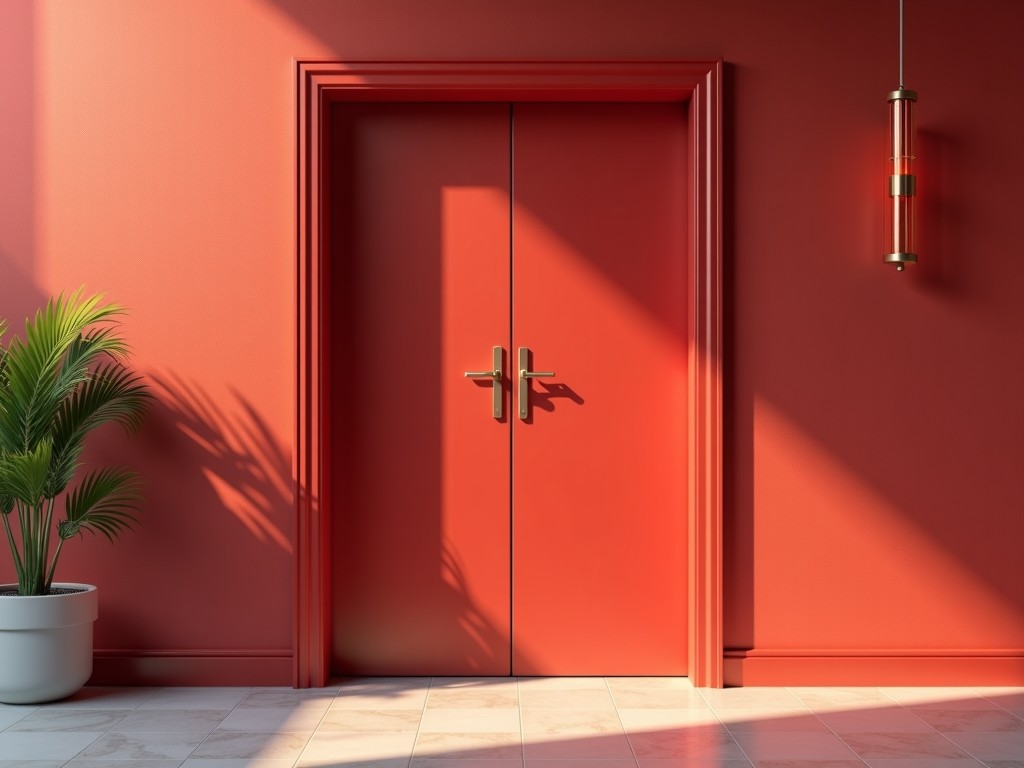
China 60 Minute Fire Door
In industrial and commercial facilities where fire safety compliance is non-negotiable, the performance of fire-rated door assemblies directly impacts life safety and property protection. A China 60 minute fire door is engineered to withstand standardized fire exposure for a minimum of 60 minutes under test conditions defined by GB 12955 or equivalent international standards such as EN 1634-1 or UL 10C. This duration provides critical time for evacuation, firefighter intervention, and containment of flame and smoke spread between compartments.
These doors are not standalone components but part of a certified system that includes the door leaf, frame, hardware, intumescent seals, and glazing (if applicable). The 60-minute rating signifies that the assembly maintains structural integrity, limits temperature rise on the unexposed side, and prevents passage of flames and hot gases throughout the test period — key factors evaluated in fire resistance testing.
Material Selection and Construction Logic
The core of a 60 minute fire door typically consists of non-combustible or fire-retardant materials selected for their ability to resist heat transfer and maintain stability under thermal stress. Common core materials include mineral wool, calcium silicate, or proprietary fire-resistant composites, each chosen based on density, thermal conductivity, and compatibility with facing materials.
Facings are often steel sheets (galvanized or cold-rolled) or timber laminates with fire-retardant treatment. Steel facings provide high impact resistance and dimensional stability, while timber options may be preferred in architectural applications where appearance matters. The choice between materials affects not only fire performance but also weight, corrosion resistance, and suitability for high-humidity or chemically aggressive environments.
Edge seals and perimeter gaskets incorporate intumescent materials that expand when exposed to heat, sealing gaps between the door and frame to prevent smoke and flame leakage. Hardware such as hinges, locks, and closers must also be fire-rated and tested as part of the assembly — standard commercial hardware will void the fire rating if not specifically certified for use with the door.
Manufacturing Process and Quality Control
Production of certified 60 minute fire doors involves precision lamination or pressing of core and facing materials under controlled temperature and pressure to ensure uniform bonding and eliminate voids that could compromise fire resistance. Dimensions are held to tight tolerances — typically ±1.5 mm for width and height, and ±2 mm for thickness — to ensure proper fit within the frame and consistent gap alignment for seal activation.
Each door undergoes visual inspection for surface defects, core integrity, and hardware alignment. Functional testing includes operational checks for smooth movement, proper latch engagement, and seal compression. Fire resistance validation is conducted on representative samples in accredited laboratories using standardized fire curves; ongoing production relies on factory production control (FPC) systems to ensure consistency with the tested design.
Traceability is maintained through batch records, material certifications, and production logs. This level of control is essential because even minor deviations in material thickness, adhesive coverage, or seal compression can significantly alter fire performance — a risk that cannot be mitigated through field adjustments.
Typical Specifications
| Parameter | Typical Value or Range |
|---|---|
| Fire Rating | 60 minutes (integrity and insulation) |
| Core Material | Mineral wool, calcium silicate, or fire-resistant composite |
| Facing Options | Galvanized steel, cold-rolled steel, or fire-retardant timber laminate |
| Leaf Thickness | 40–55 mm (depending on core and facing) |
| Maximum Leaf Size | Up to 1200 mm × 2400 mm (single leaf); larger via coupling |
| Intumescent Seal Type | Palusol-based or graphite-based strips in frame or leaf edge |
| Hardware Compatibility | Only fire-rated hinges, locks, closers, and panic bars as per certification |
| Surface Finish | Powder coating, PVC laminate, veneer, or primer for field painting |
Application Scenarios and Industry Fit
60 minute fire doors are commonly installed in stairwells, corridor partitions, service shafts, and compartment walls within office buildings, hospitals, schools, and manufacturing facilities. In high-rise structures, they protect vertical escape routes; in industrial settings, they separate process areas from storage or administrative zones to limit fire spread. The rating is often selected based on local fire codes, occupancy type, and travel distance requirements — for example, GB 50016 or NFPA 101 may mandate 60-minute protection in specific egress paths.
Unlike standard doors, these assemblies must be installed by trained personnel following the manufacturer’s approved instructions, including correct frame anchoring, seal continuity, and hardware alignment. Improper installation — such as leaving excessive gaps or using non-certified hardware — can reduce effective fire resistance to zero, regardless of the door’s inherent capabilities.
Maintenance requirements are minimal but necessary: periodic inspection of seal condition, hinge lubrication, latch operation, and clearance verification ensures long-term performance. Any damage to the core, facing, or seals must be repaired using approved methods or the door replaced — field modifications that alter the assembly void the fire rating.
Customization and OEM Considerations
While the fire rating is fixed by design, many aspects of the door can be adapted to project needs without compromising certification — provided changes are evaluated and approved within the scope of the original test or through supplemental analysis. Facings can be finished in custom colors, textures, or laminates to match architectural vision. Vision panels with fire-rated glass can be incorporated, though size and placement are restricted by test evidence to maintain thermal and structural performance.
Leaf dimensions, edge profiles, and hardware preparations (such as mortise locks or electrified strikes) are often adjustable within standard ranges. However, deviations beyond tested parameters — such as increasing leaf size, altering core composition, or changing seal type — require re-testing or engineering justification. OEM buyers should engage early with suppliers to confirm what modifications are permissible under existing certification.
Packaging for export typically includes edge protection, moisture barriers, and crate stabilization to prevent warping or corner damage during transit. Lead times depend on material availability, customization complexity, and production scheduling — generally ranging from 2 to 6 weeks for standard configurations, longer for bespoke orders requiring new tooling or material qualification.
Selection Guide for Procurement and Engineering Teams
When evaluating a China 60 minute fire door, focus first on certification validity — request the full test report and scope of approval, including which standards were tested (e.g., GB 12955-2008, EN 1634-1), what configurations are covered (single/double leaf, with/without glazing), and whether the report is issued by an accredited laboratory. Verify that the manufacturer’s production follows a documented FPC system aligned with the tested design.
Next, assess material suitability for the environment: steel facings for high-traffic or corrosive areas, timber for low-impact architectural spaces, and appropriate seal types based on expected smoke control requirements. Confirm hardware compatibility — do not assume standard components will work. Finally, clarify installation support, packaging standards, and warranty terms related to manufacturing defects, not field performance, which depends on correct installation and use.
Avoid selecting based solely on price or lead time without verifying technical compliance. A door that fails to maintain integrity during a fire event presents unacceptable risk, regardless of cost savings. Prioritize suppliers who provide transparent documentation, engineering support, and clear boundaries on what can and cannot be modified without re-certification.
Frequently Asked Questions
What does the 60 minute rating actually mean?
It means the door assembly, when tested as a complete system, prevents flame passage and limits temperature rise on the unexposed side for at least 60 minutes under standard fire conditions. It does not guarantee performance in every real-world fire, which depends on factors like installation quality, maintenance, and fire intensity.
Can I use standard hinges and locks on a fire door?
No. Only hardware specifically listed in the door’s certification test report is permitted. Using non-rated hardware invalidates the fire resistance, as it may fail early or create gaps that compromise seal effectiveness.
Is the fire rating affected by paint or finish?
Surface finishes like powder coating, primer, or thin laminates typically do not affect the rating if applied within manufacturer guidelines. However, thick coatings, intumescent paints not part of the tested system, or field-applied materials that alter thermal properties may require re-evaluation.
How do I know if a supplier’s fire door is genuinely certified?
Request the official test report from an accredited lab (e.g., CNAS, ILAC, or equivalent) and verify it matches the exact product configuration you intend to purchase. Be cautious of vague claims like “fire-rated” without reference to a specific standard, duration, and test evidence.