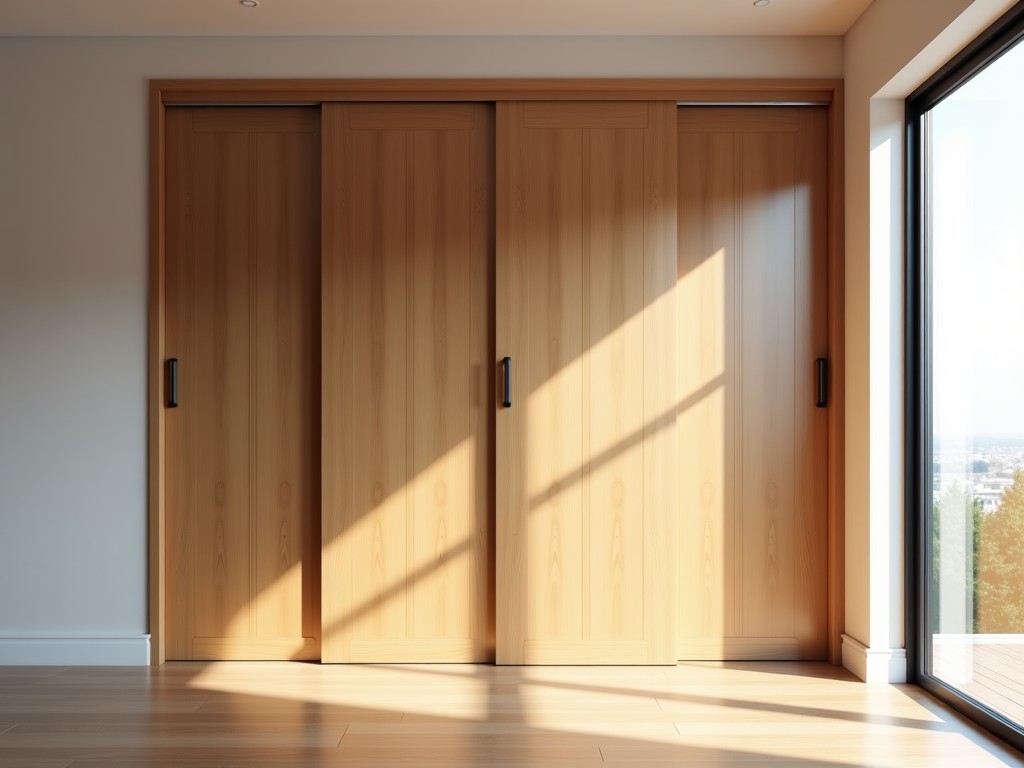
China Custom Bifold Door
China Custom Bifold Door
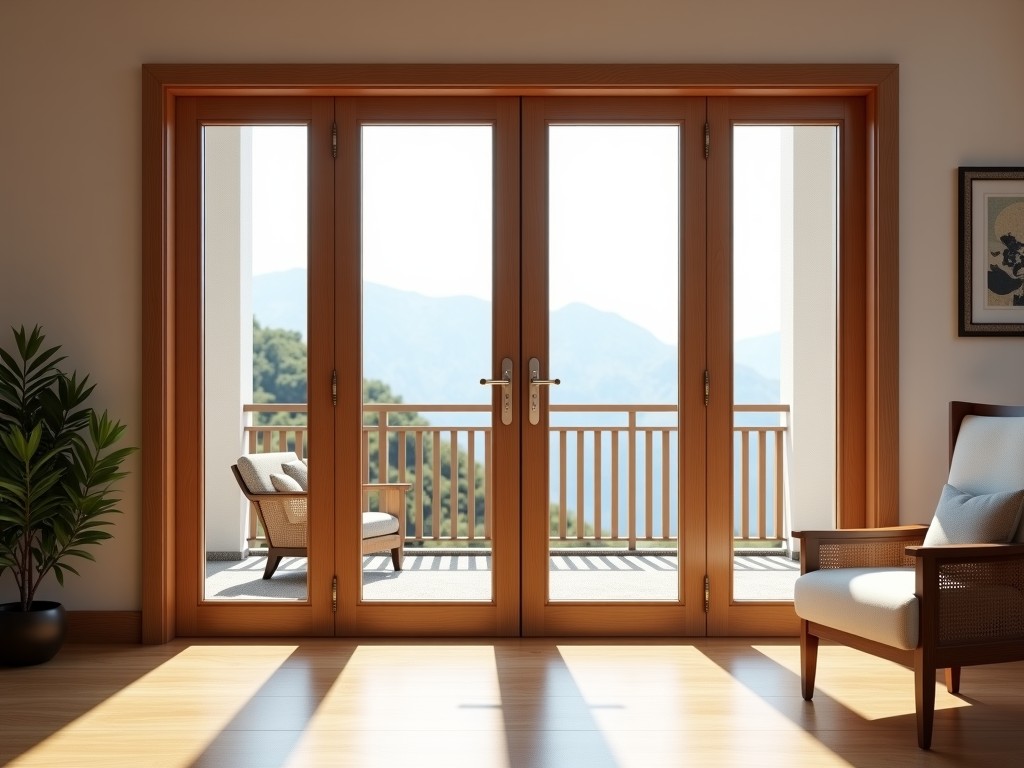
China Custom Bifold Door Solutions for Industrial and Commercial Applications
When standard door systems cannot meet specific opening dimensions, operational requirements, or environmental demands, custom bifold doors provide a practical alternative. Engineered for spaces where swing clearance is limited or where large, unobstructed access is required, these doors fold compactly to one or both sides, maximizing usable floor area. This page explains the technical considerations, material options, manufacturing processes, and customization capabilities involved in sourcing China-made bifold doors for industrial facilities, warehouses, retail environments, and specialized enclosures.
Industrial Challenge: Space Constraints and Operational Efficiency
In manufacturing plants, distribution centers, and commercial storefronts, doorways often serve as critical traffic points for personnel, equipment, or goods. Traditional hinged or sliding doors may consume excessive floor space during operation, interfere with workflow, or fail to accommodate wide openings without structural reinforcement. Bifold doors address these challenges by dividing the door panel into multiple hinged sections that fold in a zigzag pattern, reducing the required swing radius by up to 50% compared to a single-panel door of the same width. This makes them particularly suitable for areas with limited lateral clearance, such as between machinery aisles, alongside racking systems, or in retrofit installations where header height is constrained.
Working Principle and Configuration Options
A bifold door consists of two or more panels connected by hinges, rotating on a top-track and bottom-guide system. When opened, the panels fold sequentially, stacking against the jamb. Configurations vary based on opening width and traffic flow:
- Two-panel bifold: Each panel folds inward or outward, ideal for narrow openings (typically under 1.5m).
- Four-panel bifold: Two panels fold to each side, balanced operation for wider openings (1.5m to 3.0m).
- Multi-panel systems: Six or more panels for openings exceeding 3.0m, often incorporating a traffic door for frequent passage.
Hardware selection — including hinges, rollers, tracks, and handles — directly impacts smoothness, durability, and maintenance frequency. For industrial use, corrosion-resistant materials and sealed bearing systems are commonly specified to withstand dust, moisture, or temperature fluctuations.
Material Selection: Balancing Strength, Weight, and Environment
The choice of material affects not only the door’s structural performance but also its weight, thermal properties, and resistance to wear. Common options include:
- Aluminum alloy (6063-T5): Lightweight, naturally corrosion-resistant, and easy to extrude into complex profiles. Suitable for interior partitions, cleanrooms, and environments requiring frequent cleaning. Typical thickness: 1.2–2.0mm; surface treatments include anodizing (10–25μm) or powder coating (60–80μm).
- Galvanized steel: Higher strength-to-weight ratio than aluminum, ideal for security-focused or high-traffic applications. Zinc coating (Z120–Z275) provides baseline corrosion resistance; additional powder coating enhances durability in humid or chemically exposed areas.
- Stainless steel (304/316): Selected for harsh environments such as food processing, pharmaceuticals, or coastal facilities where resistance to chlorides and cleaning agents is critical. 316 grade offers superior pitting resistance.
- PVC or composite panels: Used for insulated or lightweight applications where thermal break or non-conductive properties are needed. Often filled with polyurethane foam (U-value as low as 1.4 W/m²K) for temperature-controlled spaces.
Material thickness, alloy temper, and surface finish are customized according to load requirements, expected cycle life, and environmental exposure. For example, a door in a freeze-thaw cycle may require thermal-break aluminum to prevent condensation, while a security grille might use reinforced steel with anti-lift hardware.
Manufacturing Process and Quality Control
Production begins with profile cutting to precise lengths using CNC saws, followed by machining for hinge and hardware mounting. Extruded aluminum or rolled steel components undergo surface treatment before assembly. Panels are joined with heavy-duty butt or continuous hinges, and roller carriages are installed on the top track. Bottom guides — either floor-mounted or recessed — ensure lateral stability during operation.
Quality checks include:
- Dimensional verification of panel width, height, and diagonal squareness (±2mm tolerance).
- Hardware alignment and smoothness of fold cycle (tested over 500 cycles).
- Surface finish uniformity and adhesion (cross-hatch test per ASTM D3359).
- Weatherstripping compression and seal continuity (for exterior or enclosed applications).
Packaging involves corner protection, stretch wrapping, and palletizing with foam edge guards to prevent deformation during transit. Export crates meet ISPM 15 standards when required.
Typical Specifications
| Parameter | Typical Range / Option |
|---|---|
| Opening Width | 800 mm – 4000 mm (customizable beyond) |
| Panel Height | 1800 mm – 3500 mm |
| Panel Thickness | 25 mm – 50 mm (depending on material and insulation) |
| Weight per Panel | 8 kg/m² (aluminum) – 25 kg/m² (steel) |
| Track Load Capacity | Up to 150 kg per roller carrier (industrial grade) |
| Surface Finish | Anodized, powder coated, PVDF, or mill finish |
| Weather Rating | IP54 (standard), IP65 (with optional gaskets) |
| Cycle Life | 20,000–50,000 operations (depending on hardware and maintenance) |
Application Scenarios
Bifold doors are selected based on how they solve specific operational challenges:
- Warehouse loading docks: Full-height bifold doors enable rapid truck loading while minimizing interior space loss when open. Steel construction with impact-resistant bottom rails handles forklift traffic.
- Cleanrooms and laboratories: Aluminum frames with seamless welds and powder-coated finishes prevent particle shedding. Integrated vision panels allow visibility without compromising pressure differentials.
- Retail storefronts and malls: Wide-opening bifold systems create seamless indoor-outdoor transitions. Thermal-break profiles reduce condensation in climate-controlled spaces.
- Agricultural facilities: Galvanized or stainless steel bifold doors resist ammonia, moisture, and frequent washdowns in livestock housing or grain storage.
- Transportation hubs: Lightweight aluminum systems in terminals or depots allow high-frequency operation with minimal maintenance.
Customization and OEM Services
China-based manufacturers typically offer full OEM/ODM support, including:
- Profile design and extrusion tooling (MOQ applies for custom dies).
- Integration of access control, automation, or interlocking systems.
- Custom hardware selection based on load, cycle rate, and environmental factors.
- Logo engraving, color matching, and special finishes (e.g., wood grain, metallic).
- Packaging optimization for containerized shipping or inland transport.
Lead times vary from 2–4 weeks for standard profiles to 6–8 weeks for fully customized systems, depending on material availability and tooling requirements. Sample production is available upon request for validation.
Installation and Maintenance Considerations
Proper installation ensures long-term performance. Key factors include:
- Track alignment: Top and bottom guides must be parallel within 1.5mm over the full height to prevent binding.
- Load distribution: Header and jamb structure must support concentrated loads from roller carriers, especially in wide-span openings.
- Clearance: Minimum 10mm gap at top and bottom allows for thermal expansion and uneven flooring.
- Hardware lubrication: Silicone-based lubricants on hinges and rollers every 6 months in dusty or humid environments.
Maintenance schedules are adjusted based on cycle frequency and exposure. High-use industrial doors may require quarterly inspections, while low-traffic commercial installations can be serviced annually.
Selection Guide for Procurement and Engineering Teams
When evaluating suppliers, consider:
- Manufacturing capabilities: In-house extrusion, surface treatment, and assembly reduce variability.
- Quality documentation: Request material certificates, finish thickness reports, and cycle test data.
- Packaging standards: Confirm export-ready crating and corner protection for long-distance shipping.
- After-sales support: Availability of spare parts (rollers, hinges, seals) and technical drawings for maintenance teams.
Avoid selecting based solely on price; instead, assess total cost of ownership, including expected lifespan, maintenance needs, and downtime risk.
Frequently Asked Questions
What information is needed for a quotation?
Provide opening width and height, number of panels, material preference, surface finish, hardware requirements (e.g., automatic operator, lock type), and any special conditions (e.g., wind load, corrosion exposure). Drawings or sketches are helpful but not required.
Can bifold doors be automated?
Yes. Motorized systems with safety sensors, push-button or remote activation, and interlock capabilities are available for high-traffic or hands-free operation.
How are large doors protected during shipping?
Frames are separated, panels stacked with foam interleaving, and hardware packed in labeled boxes. Corner protectors and stretch film prevent surface damage. Full crate options are available for high-value or delicate finishes.
What is the typical lead time for a custom order?
Standard configurations: 2–3 weeks. Custom profiles or special finishes: 5–7 weeks. Rush options may be available depending on factory capacity.
Are samples available?
Yes. Sample panels or hardware kits can be provided for material and finish validation. Shipping costs are typically borne by the requester.
For technical consultation or to discuss your specific bifold door requirements, share your project details with our engineering team. We will provide a detailed proposal including material recommendations, hardware selection, and timeline estimates based on your application.