China Door Architrave Supplier
China Door Architrave Supplier
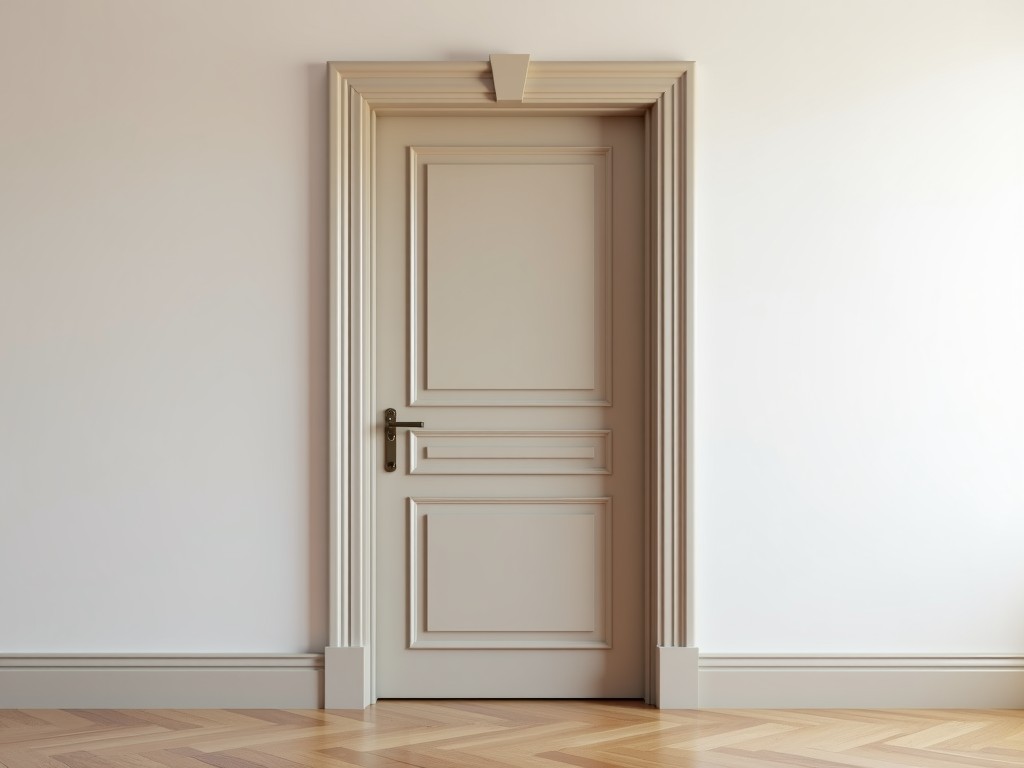
China Door Architrave Supplier
For architects, contractors, and interior finish suppliers, door architraves are not merely decorative elements—they are critical components that define the visual transition between door frames and surrounding walls while contributing to long-term durability in high-traffic environments. Sourcing these components requires precision in profile consistency, material stability, and finish uniformity, especially when supplying large-scale residential, commercial, or hospitality projects where replacement due to warping, delamination, or finish mismatch carries significant cost and scheduling risk.
As a specialized manufacturer based in China, we focus exclusively on producing engineered door architraves that meet the dimensional and aesthetic demands of OEMs, distributors, and project contractors. Our approach centers on material science, profile control, and finish adhesion—factors that directly influence performance in real-world installation conditions.
Material Selection for Structural and Aesthetic Stability
Unlike solid wood alternatives prone to seasonal movement, our standard architraves are manufactured from medium-density fiberboard (MDF) with a minimum density of 700 kg/m³, selected for its uniform internal structure and resistance to edge chipping during routing. This density range ensures consistent screw holding strength and minimizes surface fuzzing during sanding—critical for achieving a defect-free primer base.
For environments with elevated humidity, such as coastal developments or bathroom installations, we offer moisture-resistant (MR) MDF variants treated with paraffin wax and melamine formaldehyde resins during fiber bonding. These boards maintain dimensional stability under 80% relative humidity for extended periods, reducing the risk of joint opening or finish cracking commonly seen in standard grades.
Where impact resistance is a priority—such as in schools, hospitals, or public housing—we provide high-density fiberboard (HDF) options exceeding 900 kg/m³. The increased density improves edge durability during handling and reduces denting from cart impacts or tool drops, extending service life in high-abuse zones.
Profile Precision and Manufacturing Control
Architrave profiles are defined by strict tolerances on width, depth, and contour consistency—deviations as small as 0.5 mm can create visible shadow lines or prevent proper casing alignment. Our production uses CNC profiled cutter heads mounted on synchronized spindle shafts, with radial runout maintained below 0.02 mm to ensure repeatable contour fidelity across shifts.
Each board undergoes multi-stage calibration: initial thickness calibration to ±0.1 mm, followed by profile routing with compensated feed rates to counteract tool wear, and final sanding with oscillating belts to eliminate tool marks without rounding sharp arrises. This sequence preserves the designer’s intended shadow gap and bead definition, which are often lost in lower-precision milling.
For custom profiles—such as period-specific lambs tongue, ogee, or shallow rebate designs—we maintain a dedicated tooling library and can produce matched sets within 7–10 working days after drawing approval. Tooling costs are amortized over production runs, making customization viable even for mid-volume projects starting at 500 linear meters.
Finish Adhesion and Surface Preparation
The longevity of painted or laminated finishes depends entirely on substrate preparation. Our architraves receive a two-stage surface treatment: first, a 120-grit sanding pass to open the fiber structure, followed by a 180-grit pass to achieve a surface roughness (Ra) of 4–6 µm—optimal for primer penetration without excessive absorption.
Before priming, boards undergo vacuum degassing to remove loose fibers and dust particles trapped in surface pores. This step reduces pinhole formation in the primer coat by up to 70%, a critical factor when applying high-gloss or satin finishes where surface defects are magnified.
We apply a proprietary alkali-resistant primer formulated for MDF substrates, which seals alkaline compounds in the resin matrix that can cause yellowing or blistering under acrylic topcoats. Primer solids content is maintained at 42% ±2%, ensuring adequate build for sanding while minimizing shrinkage-induced cracking.
Typical Specifications and Dimensional Ranges
| Parameter | Typical Range | Notes |
|---|---|---|
| Board Density | 700–900 kg/m³ | MDF/HDF; MR grade available |
| Thickness | 12–25 mm | Custom thicknesses available |
| Width (Face) | 45–120 mm | Measured from wall to door frame edge |
| Length | 2.4–3.0 m | Standard lengths; random or fixed |
| Profile Tolerance | ±0.3 mm | Contour and width deviation |
| Surface Roughness (Ra) | 4–6 µm | After final sanding, pre-primer |
Customization and OEM Support
We work directly with joinery manufacturers and interior fit-out contractors to produce architraves that match specific door systems, including rebated profiles for flush door frames, widened casings for thick wall constructions, and integrated shadow gaps for minimalist detailing. All customizations begin with a submitted profile drawing or physical sample, which our engineering team validates for manufacturability—checking for tool access, draft angles, and minimum radius constraints.
For projects requiring color-matched finishes, we offer pre-primed boards ready for on-site spraying or can apply custom base coats in our controlled environment, ensuring uniform sheen and hiding power across batches. Color consistency is verified using spectrophotometric measurement (ΔE < 1.5) under D65 lighting before release.
Logistics-wise, architraves are packed in horizontal bundles with corner protectors and stretch-wrapped to prevent edge damage during transit. Each bundle includes a moisture barrier sheet and is labeled with batch number, profile code, and production date for traceability. Export packaging complies with ISPM 15 standards for wooden pallets, and we provide fumigation certificates upon request.
Quality Control and Process Consistency
Every production shift begins with a profile verification check using a laser scanner calibrated to NIST-traceable standards. The system compares the first and last piece of each run against the master profile, flagging any drift exceeding 0.2 mm in width or depth. This real-time feedback allows immediate tool adjustment, preventing batch-wide deviations.
Finished goods undergo random sampling for surface integrity, adhesion strength (via cross-hatch test per ASTM D3359), and edge chipping resistance. Boards are conditioned at 23°C/50% RH for 48 hours prior to testing to eliminate environmental variability. Only lots passing all criteria are released for shipment.
We maintain traceability from raw material intake through to final packing, recording board density, resin content, and press temperature for each batch. This data supports root cause analysis in the rare event of field performance concerns and enables continuous improvement in our MDF sourcing and pressing parameters.
Share your project specifications or profile drawings for a detailed technical review and customized proposal. Our engineering team will assess material suitability, profile feasibility, and finish compatibility to ensure seamless integration into your door system.
Discuss Your Project Requirements