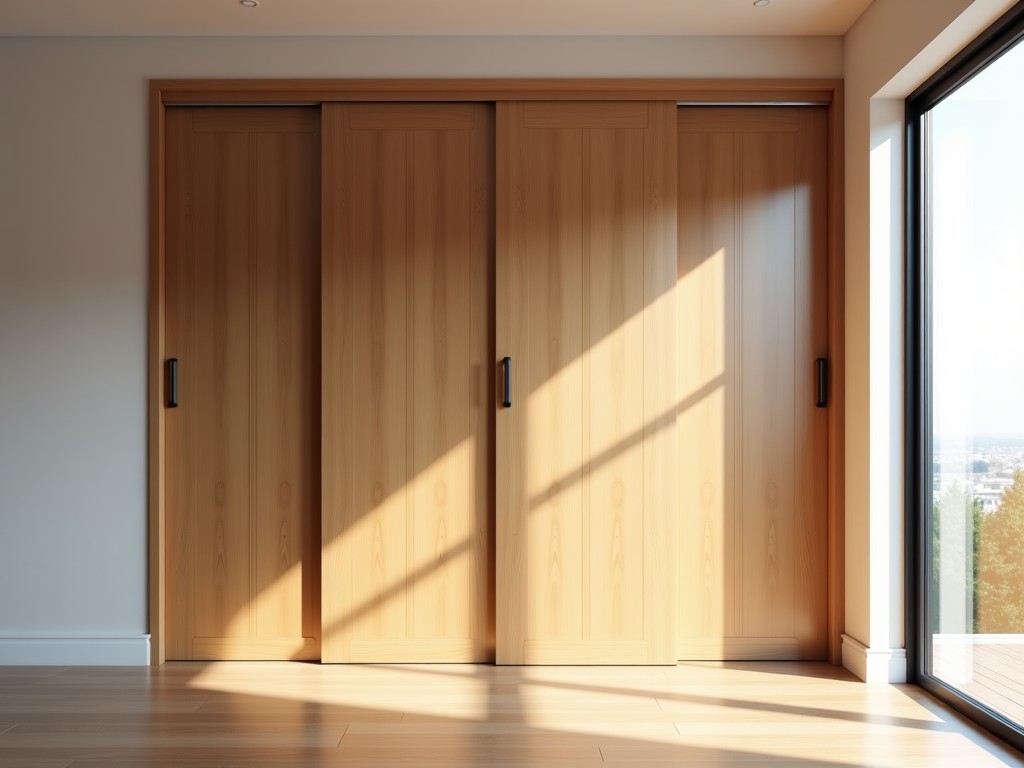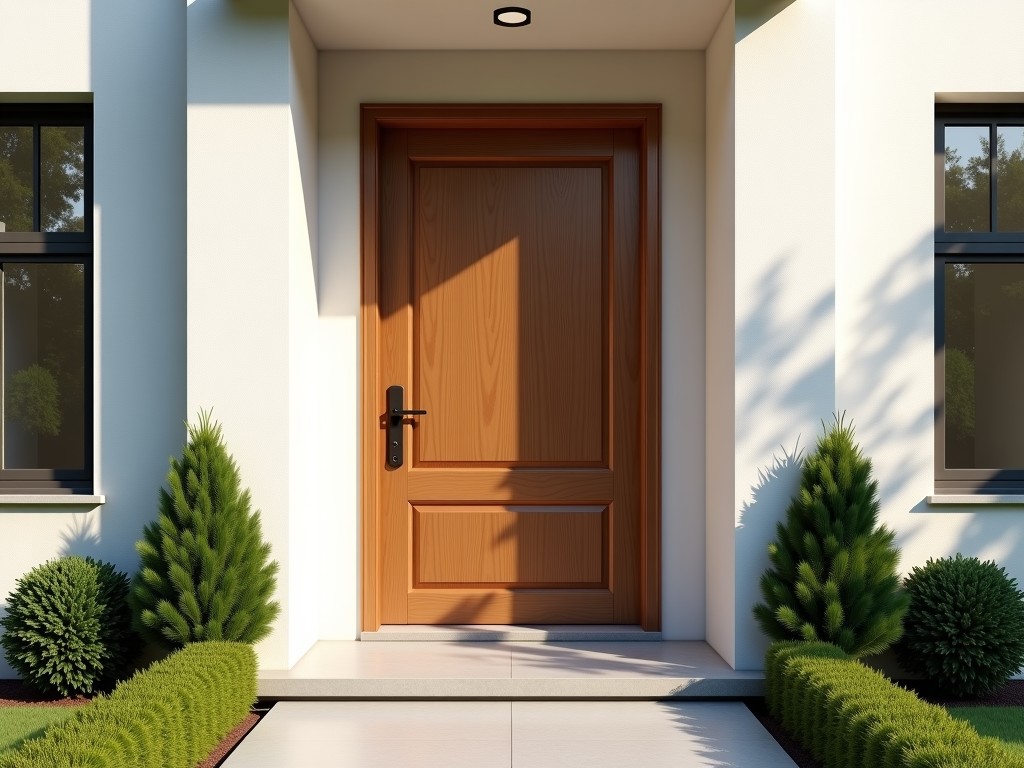
China Flush Veneer Door
China Flush Veneer Door
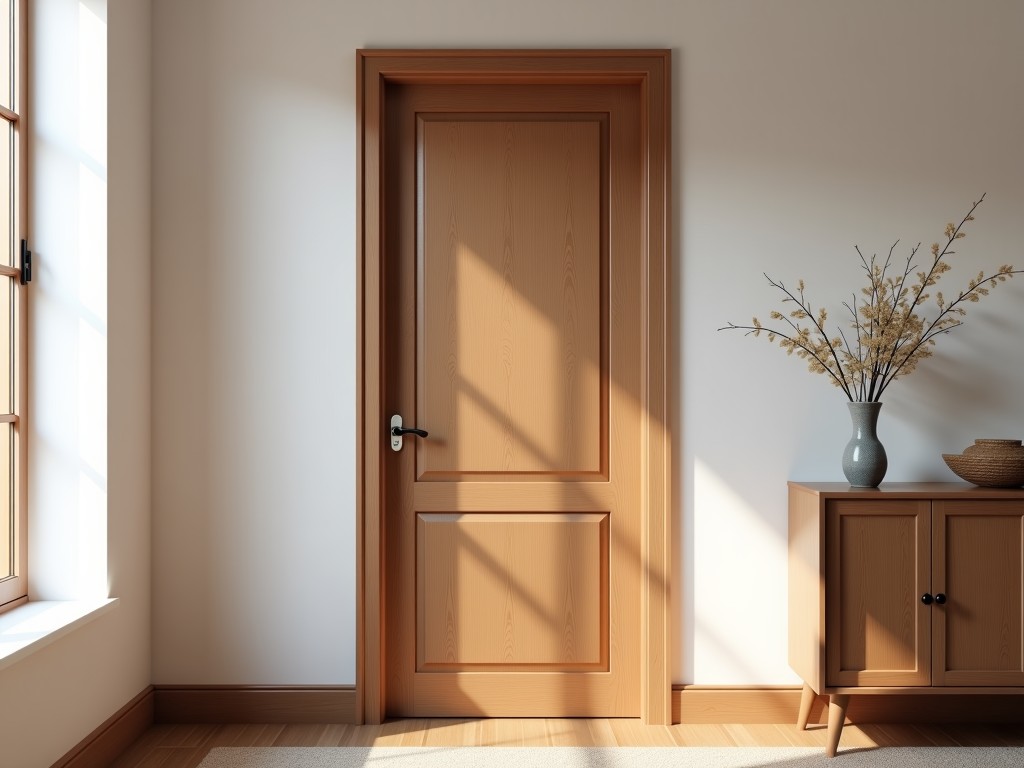
Flush Veneer Doors for Precision Interior Applications
Flush veneer doors are engineered for environments where dimensional stability, surface consistency, and long-term finish integrity are critical. Unlike solid wood or panel doors, they consist of a stable core bonded with thin wood veneer faces, providing a seamless appearance while minimizing movement due to humidity or temperature changes. This construction makes them suitable for high-traffic commercial interiors, office partitions, healthcare facilities, and institutional buildings where both aesthetics and performance must be maintained over years of use.
Core Material Selection and Structural Stability
The performance of a flush veneer door begins with its core. Common core materials include particleboard, MDF, and laminated veneer lumber (LVL), each selected based on the required balance of weight, screw holding strength, and resistance to warping. Particleboard cores offer cost-effective stability for standard interior applications, while MDF provides superior screw retention and a smoother surface for veneer adhesion—critical when maintaining tight tolerances over large door faces. LVL cores are used in heavier-duty installations where increased load-bearing capacity and reduced deflection are necessary, such as in hospital corridors or school buildings subject to frequent impact.
Core thickness typically ranges from 30mm to 45mm, depending on door height and intended use. Thicker cores reduce the risk of bowing in doors over 2100mm tall, especially in environments with fluctuating humidity. The core is bonded to the veneer faces using formaldehyde-free or low-emission adhesives to meet indoor air quality standards in sensitive environments like schools and healthcare facilities.
Veneer Face Quality and Finish Compatibility
The veneer face determines both appearance and long-term durability. Common species include oak, maple, walnut, and ash, selected for grain consistency, stain absorption, and resistance to surface checking. Veneer thickness is usually 0.6mm, providing enough material for multiple sanding and refinishing cycles over the door’s lifespan without compromising structural integrity. This is particularly important in facilities where doors may be refurbished rather than replaced during renovations.
Veneer is applied using hot or cold press methods with precision calenders to ensure uniform thickness and zero telegraphing of core imperfections. The adhesive layer must cure fully to prevent delamination, especially in high-moisture zones like restrooms or laundry areas. Properly manufactured flush veneer doors show no visible core pattern through the face, even under angled lighting—a key quality indicator inspected during factory acceptance testing.
Typical Specifications and Dimensional Control
Dimensional accuracy is essential for seamless integration into door frames and hardware systems. Flush veneer doors are manufactured to tight tolerances to ensure proper clearance, hinge alignment, and lock function. The following table outlines typical specifications, with actual values adjustable based on project requirements.
| Specification | Typical Range | Notes |
|---|---|---|
| Door Thickness | 35mm – 45mm | Selected based on core type and height |
| Width Tolerance | ±1.5mm | Ensures consistent frame fit |
| Height Tolerance | ±2.0mm | Critical for floor clearance and header alignment |
| Flatness (Face Deviation) | ≤0.5mm over 1000mm | Prevents visible warping under reflection |
| Veneer Thickness | 0.5mm – 0.6mm | Allows for light sanding and recoating |
| Edge Banding | PVC, ABS, or wood veneer | Matches face veneer; applied with hot-melt adhesive |
Application-Specific Considerations
In healthcare settings, flush veneer doors are often specified with antimicrobial coatings or sealed edges to support infection control protocols. The smooth, non-porous surface resists bacterial retention and allows for routine cleaning with hospital-grade disinfectants without degradation of the finish. In educational facilities, impact resistance is prioritized—doors may be specified with reinforced edges or higher-density cores to withstand cart traffic and frequent use.
For office interiors, acoustic performance becomes a factor. While not inherently sound-blocking, flush veneer doors can be paired with perimeter seals and drop-down bottoms to achieve STC ratings suitable for conference rooms and private offices. The mass of the core, particularly when using MDF or LVL, contributes to mid-frequency sound absorption, reducing speech transmission between adjacent spaces.
In all applications, proper acclimatization before installation is required. Doors should be stored flat in the installation environment for at least 48 hours to equalize moisture content with ambient conditions, minimizing post-installation movement.
Customization and OEM Flexibility
Flush veneer doors support extensive customization to meet project-specific design and performance needs. Veneer species, cut (plain slice, quartered, rift), and matching (book, slip, reverse slip) can be specified to achieve desired grain patterns and visual continuity across multiple doors. Core composition can be adjusted for fire rating requirements, with options available to meet 20-, 45-, or 60-minute fire door standards when combined with appropriate edge seals and hardware.
Hardware preparation is precision-machined to template, ensuring accurate placement of hinges, locks, and closers. CNC routing allows for consistent prep across large batches, reducing field adjustment time. Vision panels, louvers, or kick plates can be integrated during manufacturing, maintaining structural integrity and finish continuity.
Minimum order quantities for custom runs depend on core material and veneer availability, typically starting at 20–50 units for non-standard sizes or finishes. Samples of core, veneer, and finished door sections are available upon request for project approval.
Packaging, Logistics, and Damage Prevention
To prevent surface damage during transit, flush veneer doors are packaged individually with edge protectors, corner guards, and interleaving sheets between units. Stacks are secured on pallets with stretch wrap and strapping to resist shifting. For export shipments, moisture-barrier liners and desiccants are included to control humidity within the package, particularly important for long-haul container transport to regions with high humidity.
Each package includes a label with project reference, door number, orientation, and handling instructions. This supports efficient sorting and installation on-site, reducing the risk of misplacement or incorrect handing. Units are inspected prior to packaging for surface quality, dimensional accuracy, and hardware prep completeness.
Quality Control and Factory Testing
Every flush veneer door undergoes multiple inspection points during production. Core density is verified to ensure uniform bonding and resistance to compression. Veneer adhesion is tested via peel strength methods to confirm long-term durability under cyclic humidity changes. Surface finish is evaluated under standardized lighting for color consistency, gloss uniformity, and absence of defects such as blushing, orange peel, or insufficient curing.
Dimensional checks are performed using calibrated gauges at multiple points along the width and height to detect tapering, twisting, or bowing. Edge banding adhesion is tested to prevent premature peeling. For fire-rated configurations, samples are sent to accredited labs for validation, with documentation available upon request.
Random sampling from each production batch ensures consistency across large orders. Non-conforming units are segregated and either reworked or scrapped based on defect type and severity. This disciplined approach supports repeatable quality for OEMs and distributors requiring reliable, predictable performance.
Lead Time, Sampling, and Project Support
Standard flush veneer doors with common core and veneer combinations typically have a lead time of 3–4 weeks after drawing approval and material confirmation. Custom configurations—such as non-standard sizes, fire-rated cores, or rare veneer species—may extend lead time to 6–8 weeks, depending on material sourcing and tooling requirements.
Samples are available for evaluation, including full-size door sections or corner samples showing core, veneer, and edge banding. These allow project teams to assess finish quality, weight, and edge detail before committing to production. For large projects, pre-production samples can be manufactured to validate fit, finish, and hardware alignment.
Our engineering team reviews project specifications early in the process to identify potential risks—such as mismatched hardware prep, inadequate core selection for height, or veneer species unsuitable for expected UV exposure—and provides recommendations to avoid costly revisions later in the schedule.
Discuss Your Project Requirements
Selecting the right flush veneer door involves balancing appearance, performance, and long-term maintenance needs. Share your project drawings, performance requirements, or sample preferences with our engineering team to receive a tailored proposal that addresses material selection, dimensional tolerances, finish options, and logistics support.
Share Your Specifications for a Customized Proposal