Door Panel Supplier
Door Panel Supplier
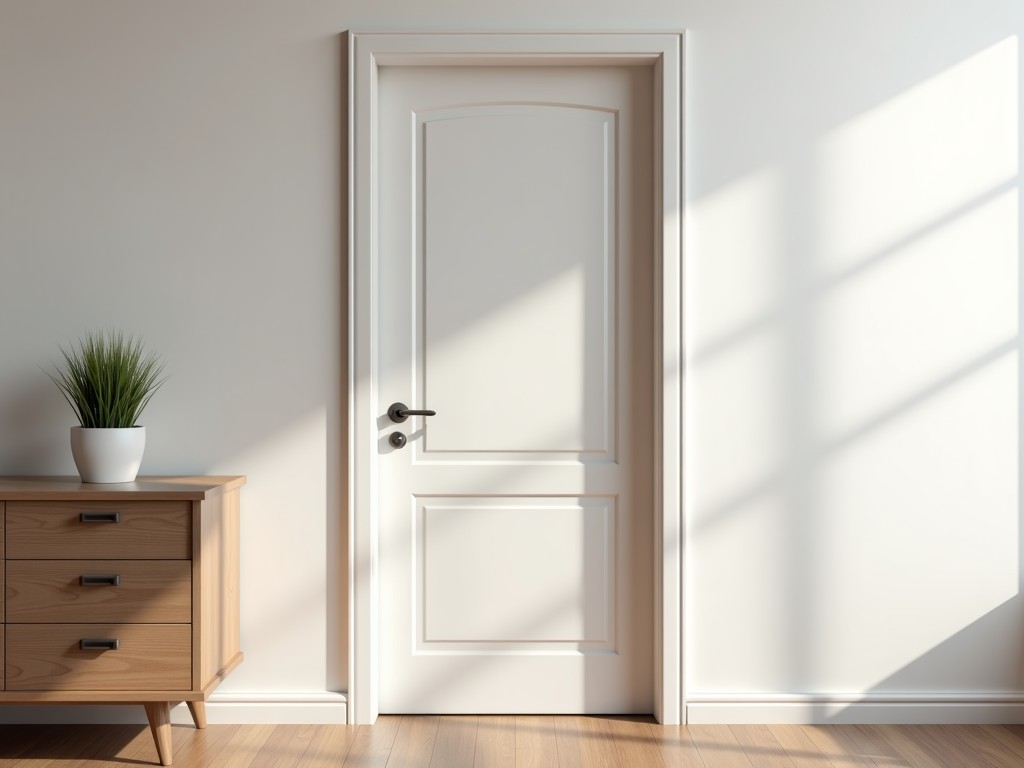
Door Panel Supplier: Engineering-Grade Solutions for Industrial Applications
Selecting door panels for manufacturing facilities, cleanrooms, or transportation equipment requires more than aesthetic consideration. Industrial buyers evaluate dimensional stability, material compatibility with operating environments, and long-term performance under cyclic loading. This page outlines the technical factors that influence door panel selection for OEMs, system integrators, and facility engineers.
Material Selection for Demanding Environments
The base material determines how a door panel resists deformation, corrosion, or thermal cycling. Common options include cold-rolled steel with galvannealed coating for general manufacturing, 304 stainless steel for washdown areas, and aluminum alloys (5052-H32 or 6061-T6) where weight reduction is critical. Each material exhibits distinct behavior under load: steel provides high stiffness (Young’s modulus ~200 GPa) but requires protection in humid conditions; aluminum offers ~1/3 the density of steel with adequate rigidity for non-structural panels when designed with appropriate stiffeners or core materials.
For temperature-controlled environments, panels may incorporate polyurethane or polystyrene cores with steel or aluminum facings. These composite assemblies achieve U-values as low as 0.25 W/m²K, reducing thermal bridging. Core density typically ranges from 30–50 kg/m³, balancing insulation performance with compressive strength to resist panel distortion during installation or under wind load.
Manufacturing Process and Dimensional Control
Door panels are produced via stamping, roll forming, or press braking depending on geometry and material thickness. Tolerances on critical dimensions—such as hinge pocket location, latch alignment, and overall squareness—are maintained within ±0.5 mm for standard production using CNC-guided tooling. For applications requiring tighter alignment (e.g., automated guided vehicle doors or cleanroom seals), tolerances can be reduced to ±0.2 mm through secondary machining or laser trimming.
Surface preparation follows material-specific protocols: galvannealed steel receives a phosphate coating prior to powder coating; stainless steel undergoes passivation to enhance corrosion resistance; aluminum is often anodized or left mill finish based on downstream assembly needs. Powder coating thickness averages 60–80 µm, providing uniform coverage that resists chipping in high-cycle environments.
Performance Characteristics Evaluated by Engineers
Beyond static strength, door panels are assessed for dynamic performance. Cycle life testing—simulating 100,000+ open/close operations—reveals potential fatigue points at hinges or reinforcement points. Panels designed with continuous hemmed edges or folded flanges exhibit 30–50% higher resistance to edge deformation compared to those with bare-cut edges. Acoustic performance, measured via STC (Sound Transmission Class), typically ranges from 28 to 35 for solid metal panels and increases to 40–45 when filled with dampening core materials.
Fire resistance is another key parameter. Panels constructed with mineral wool core and steel facings can achieve fire ratings up to 90 minutes (ASTM E84 or EN 13501-1), suitable for egress routes in industrial facilities. Surface flame spread ratings are documented per UL 723 or equivalent standards, with test reports available upon request.
Typical Specifications and Customization Options
| Parameter | Typical Range / Options | Notes |
|---|---|---|
| Panel Thickness | 0.8–2.0 mm (facings); 25–100 mm (core) | Varies by material and core type |
| Width | 200–1200 mm | Custom widths available |
| Height | 500–3000 mm | Limited by press brake or roll form capacity |
| Surface Finish | Powder coat (RAL colors), #4 brush, mill finish, anodized | Finish affects corrosion and wear resistance |
| Core Material | Honeycomb aluminum, polyurethane, polystyrene, mineral wool | Selected for thermal, acoustic, or fire performance |
| Tolerance (Critical Dim) | ±0.5 mm (standard); ±0.2 mm (precision) | Tighter tolerances may increase tooling cost |
Customization extends beyond dimensions. Engineers frequently request integrated features such as vision panels (tempered glass or polycarbonate), ventilation louvers with specific free-area ratios, or electromagnetic shielding for EMI-sensitive environments. These modifications require coordination during the design phase to ensure structural integrity is not compromised.
Packaging, Logistics, and Quality Assurance
To prevent surface damage during transit, panels are separated by polyethylene film or corrugated interleaving and stacked on wooden or plastic pallets with corner protection. Export packaging includes moisture-barrier wrap and desiccant packs for ocean freight. Each pallet is labeled with part number, quantity, and material code for traceability.
Quality control involves dimensional inspection at first article and periodic checks during production. Critical features are verified using CMM or height gauges; surface finish is assessed visually and with gloss meters where applicable. Mechanical properties such as coating adhesion (ASTM D3359) and core compressive strength are tested per batch or as required by the customer’s specification.
Application-Specific Considerations
In food processing facilities, door panels must withstand frequent cleaning with alkaline detergents and high-pressure washdowns. Here, 316 stainless steel with seamless edges and crevice-free design is preferred to prevent bacterial harborage. For cleanrooms, panels with smooth, non-particulating surfaces and minimal seams are specified to meet ISO 14644-1 Class 5–8 requirements.
Transportation equipment manufacturers prioritize weight-to-stiffness ratio. Aluminum honeycomb core panels with 0.8–1.0 mm face sheets provide high bending rigidity while minimizing mass, contributing to fuel efficiency in automotive or rail applications. These panels often undergo additional vibration testing to ensure durability over operational life.
For security applications—such as enclosure doors for electrical substations or telecommunications infrastructure—panels may be constructed from 1.5–2.0 mm steel with internal reinforcement grids and multipoint locking provisions. Impact resistance is evaluated using drop ball or pendulum tests to simulate forced entry attempts.
Design for Manufacturability and Assembly
Early collaboration between design engineers and suppliers reduces downstream issues. Features such as self-locating tabs, pre-punched fastener holes, and standardized flange profiles simplify installation and reduce field adjustment time. Designers should consider access for welding or riveting if panels are to be integrated into larger frames—these processes influence flange width and edge treatment.
Thermal expansion must be accounted for in long panels or those exposed to temperature swings. Aluminum expands approximately 23 µm/m·°C, nearly double that of steel. Designing with slip joints or flexible seals prevents buckling or seal failure in environments with seasonal temperature variations.
Supply Stability and Lead Time
Raw material availability—particularly for specialty alloys or coated steels—can affect lead times. Standard grades (e.g., DC01 galvannealed, 304 SS) typically maintain stable supply, while lead times for custom coatings or exotic materials may extend to 6–8 weeks. Tooling for new geometries requires 2–4 weeks for design and validation, depending on complexity.
Production capacity scales with part complexity. Simple flat panels can exceed 500 units/day per press line; panels with multiple bends, embosses, or integrated hardware average 100–200 units/day. Buffer stock is maintained for high-volume standard parts to accommodate urgent requests.
For OEMs seeking long-term supply agreements, we offer consignment inventory programs and blanket purchase agreements with scheduled releases. These arrangements help manage working capital and reduce the risk of production interruption due to material shortages.
To initiate a technical discussion or request a quote for custom door panels, share your application requirements, material preferences, and any relevant drawings or specifications. Our engineering team will review your needs and provide a detailed proposal including material recommendations, tolerance capabilities, and estimated lead time.