Hotel Room Doors Supplier
Hotel Room Doors Supplier
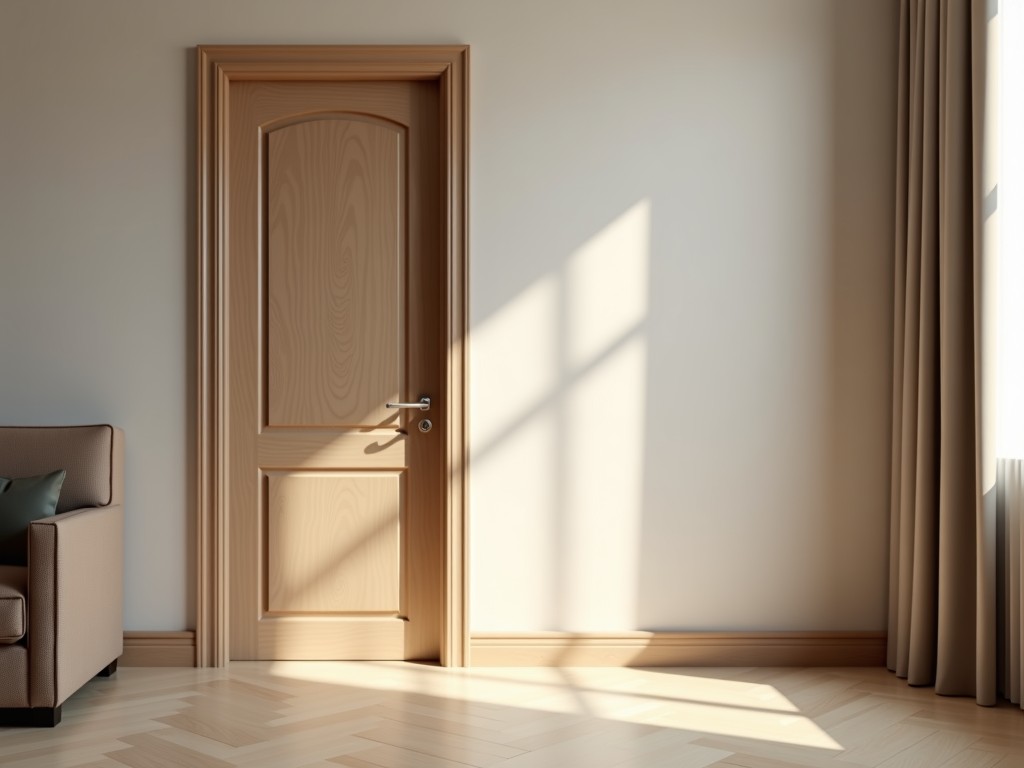
Hotel Room Doors: Engineering Considerations for Hospitality Applications
Selecting doors for hotel guest rooms involves balancing acoustic performance, durability under cyclic loading, fire safety compliance, and aesthetic integration with interior design. Unlike residential doors, hospitality applications demand higher cycle life, resistance to impact from luggage carts, and consistent operation across thousands of annual openings. This page outlines key technical factors procurement and engineering teams evaluate when sourcing hotel room doors for new construction or renovation projects.
Industry Challenge: Cyclic Durability and Acoustic Privacy
Guest room doors typically endure 150,000 to 250,000 cycles over a 7–10 year lifespan in mid-scale hotels, significantly exceeding residential use. Premature hinge sag, latch misalignment, or core deformation compromises both security and guest experience. Simultaneously, STC (Sound Transmission Class) ratings between 35 and 45 are commonly specified to minimize noise transfer from corridors, requiring precise mass, damping, and perimeter sealing—factors often overlooked in generic door specifications.
Material Selection: Core and Face Options
The door core directly influences weight, screw retention, fire resistance, and acoustic properties. Particleboard cores offer cost efficiency but limited screw withdrawal strength and moisture susceptibility. Mineral composite cores (e.g., calcium silicate) provide inherent fire ratings up to 90 minutes and superior dimensional stability in humid environments, though at higher weight. Solid wood or lumber core options deliver high impact resistance and premium aesthetics but require sealing to prevent warping. Face materials—typically HPL, PVC, or veneer—must resist abrasion from carts and cleaning agents while maintaining color stability under UV exposure from interior lighting.
Manufacturing Process: Ensuring Dimensional Consistency
Pressing temperature and time during lamination affect adhesive cure and surface flatness. Inconsistent pressure can cause telegraphing of core imperfections through the face laminate, leading to visible defects. Edge banding—critical for moisture protection—must be applied with precise temperature control to avoid delamination. Prefitting for hinges, locks, and strikes requires CNC routing to maintain tolerances within ±0.5mm; manual drilling risks misalignment that complicates field installation and voids fire ratings if not properly sealed.
Performance Advantages: Engineered for Hospitality Demands
Doors designed for hospitality incorporate reinforced lock blocks (typically hardwood or composite) to resist lever handle torque and prevent screw pull-out. Acoustic seals—often magnetic or compression-type—installed at the head and jambs improve STC ratings by 3–5 points over standard weatherstripping. Bottom sweeps with retractable mechanisms maintain clearance over uneven flooring while sealing when closed. These features address common field issues: sagging hinges from inadequate reinforcement, sound flanking paths, and moisture ingress at the base.
Typical Specifications
| Parameter | Typical Range / Option | Relevance to Application |
|---|---|---|
| Door Thickness | 35mm, 40mm, 44mm | Impacts weight, fire rating, and acoustic mass; 44mm common for STC 40+ |
| Core Type | Particleboard, Mineral Composite, Lumber Core | Determines fire resistance, weight, screw holding, and moisture stability |
| Face Material | HPL (0.7mm), PVC Foil, Veneer | Abrasion resistance, cleanability, and design flexibility |
| Fire Rating | 20, 45, 60, 90 min (subject to frame and hardware) | Required by local codes; core and edge sealing critical |
| STC Rating | 30–45 (dependent on mass, seals, and perimeter detail) | Key for guest privacy; flanking paths must be addressed |
| Cycle Rating (Hinge/Latch) | 200,000+ cycles (ANSI/BHMA Grade 1 equivalent) | Ensures longevity under high-traffic hospitality use |
Application Scenarios: Matching Door Type to Hotel Segment
Budget hotels often specify 35mm particleboard core doors with PVC foil faces and 20-minute fire ratings, prioritizing cost and ease of replacement. Mid-range properties typically upgrade to 40mm mineral composite cores for improved acoustics and 45-minute fire compliance, paired with HPL faces for durability. Luxury and boutique hotels frequently select 44mm lumber or composite cores with veneer or custom HPL finishes, incorporating acoustic seals and premium hardware to achieve STC 40–45 and enhanced tactile quality. Renovation projects may require fire-rated doors that match existing frame dimensions, necessitating precise undersizing or adhesive shimming techniques.
Customization Options: Beyond Standard Sizes
Non-standard heights (e.g., 2100mm for European markets) or widths for accessible rooms require adjusted core blanking and face lamination. Custom cutouts for electronic locks, door viewers, or ventilation grilles must maintain structural integrity and fire rating compliance—often requiring steel reinforcing plates or intumescent liners. Face finishes can be matched to specific interior color schemes or wood grain patterns via digital printing on HPL or UV-coated veneer. Edge profiles (square, eased, or radiused) influence both aesthetics and impact resistance, with radiused edges reducing chip vulnerability in high-traffic zones.
Packaging and Logistics: Preventing Transit Damage
Doors are typically stacked horizontally on pallets with interleaving sheets of corrugated cardboard or polyethylene foam to prevent surface abrasion. Corner protectors and edge guards mitigate impact damage during forklift handling. Export shipments often include moisture-barrier wrapping and desiccant packs to stabilize equilibrium moisture content, particularly for routes through high-humidity climates. Pallet dimensions are optimized for standard container widths (e.g., 1100mm or 1200mm width) to maximize load efficiency without overhang.
Installation and Maintenance: Field Performance Factors
Proper shimming behind hinges prevents long-term sag; stainless steel or nylon shims resist corrosion better than brass. Lock strike plates should be reinforced with longer screws into the jamb stud, not just the frame. Periodic inspection of acoustic seals—especially at the bottom sweep—ensures continued performance; compressed or hardened seals lose effectiveness and should be replaced. Over-tightening face screws during hardware installation can cause laminate cracking; torque-limiting drivers are recommended for field teams.
Quality Control: Ensuring Batch Consistency
Incoming core materials are checked for density variation and moisture content (typically 6–8% equilibrium). Post-lamination, doors undergo flatness measurement (e.g., <0.5mm deviation over 200mm span) and edge adhesion peel testing. Sample units from each production batch are subjected to cyclic operation testing (e.g., 50,000 cycles) to validate hinge and latch performance before shipment. Fire-rated doors require third-party witnessing of intumescent seal expansion during controlled burn tests to confirm compliance.
For projects requiring specific acoustic, fire, or dimensional criteria, sharing detailed schedules, frame drawings, or performance targets allows for precise engineering review. Discuss your project requirements with our engineering team to evaluate material options, tolerances, and customization paths suited to your hotel’s operational demands and design intent.