Oem Door Casing Factory
Oem Door Casing Factory
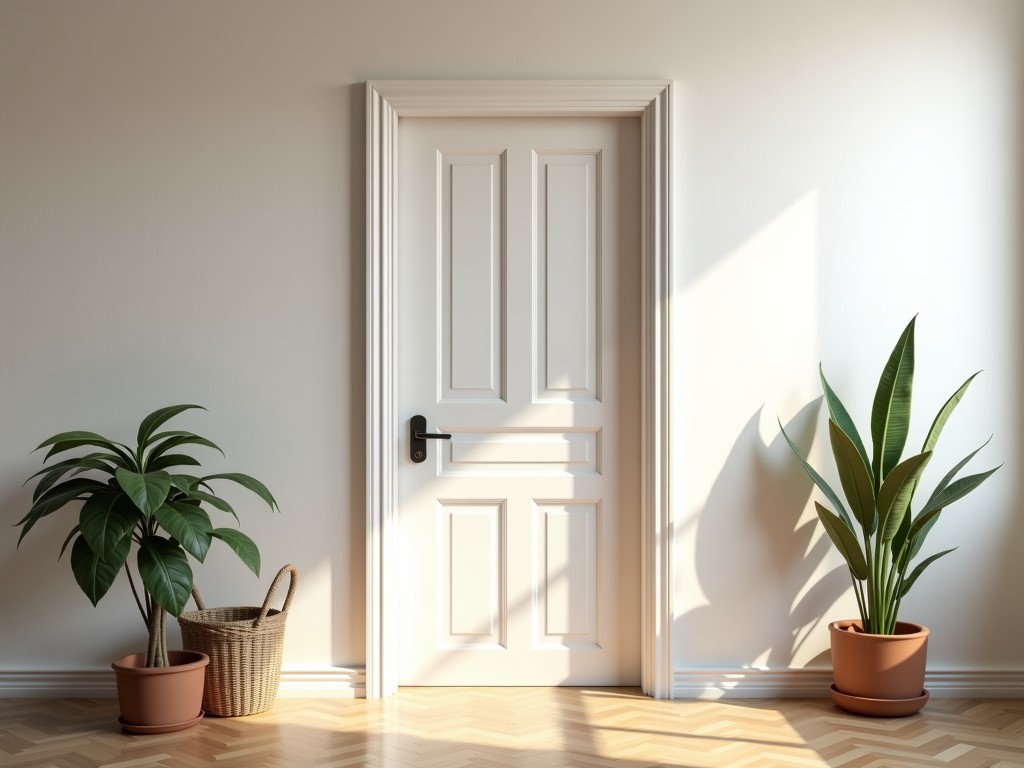
OEM Door Casing Factory: Precision Manufacturing for Architectural and Industrial Applications
When specifying door casings for commercial, institutional, or high-traffic environments, dimensional stability, surface integrity, and repeatable tolerances directly impact installation efficiency and long-term performance. As an OEM door casing factory, we focus on engineered solutions that meet strict architectural standards while accommodating project-specific material, finish, and dimensional requirements. This page details our manufacturing approach, material capabilities, quality controls, and customization processes to help procurement and engineering teams evaluate suitability for their applications.
Industry Challenge: Achieving Consistency in High-Volume Door Casing Production
Door casings must maintain tight dimensional tolerances to ensure proper alignment with door frames and hinges, especially in fire-rated or sound-rated assemblies. Variations in thickness, width, or profile consistency can lead to gaps, binding, or compromised sealing — issues that increase labor during installation and may require costly rework. In environments with fluctuating humidity or temperature, material movement exacerbates these risks. Buyers frequently ask: Can tolerances be held across production runs? How is warping or twisting minimized? What material options exist for specific environmental demands? These questions drive our process design.
Material Selection: Matching Substrate to Application Demands
Material choice affects not only appearance but also machinability, finish adhesion, and environmental resistance. We work with a range of substrates selected based on project requirements:
- MDF (Medium-Density Fiberboard): Common for painted interiors due to uniform density, minimal grain telegraphing, and excellent machinability for complex profiles. Typically available in 18mm thickness with ±0.2mm tolerance. Requires edge sealing in high-moisture areas.
- Particleboard: Cost-effective for low-traffic, dry environments. Higher susceptibility to edge swelling; often specified with melamine or PVC edgebanding for moisture resistance.
- Hardwood Veneer Core: Used when natural wood appearance is required. Offers better screw holding and dimensional stability than solid wood in wider widths. Available in oak, maple, or birch veneers with cross-banded cores to reduce movement.
- Composite PVC or WPC (Wood-Plastic Composite): Selected for high-humidity areas like bathrooms, kitchens, or exterior sheltered doors. Zero water absorption, resistant to mold and insects, and maintains dimensional stability over time.
Each material undergoes preconditioning to equilibrium moisture content before machining to minimize post-production movement. Selection guidance is based on end-use environment, finish type, and expected service life.
Manufacturing Process: From Raw Board to Finished Profile
Our production line integrates precision profiling, surface preparation, and inline inspection to ensure consistency:
- Board Preparation: Raw panels are cut to width and length with CNC saws, maintaining ±0.5mm dimensional accuracy. Edges are cleaned and pre-treated for adhesion.
- Profile Milling: Multi-spindle profilers shape the casing using carbide-tipped knives ground to exact radii and angles. Tool wear is monitored via laser measurement, with automatic compensation to maintain profile integrity over production runs.
- Surface Sanding: Progressive grit sanding (80 to 180) removes tool marks and prepares the surface for primer or finish. Dust extraction systems maintain air quality and prevent contamination.
- Primer or Finish Application (Optional): For pre-finished orders, we apply UV-cured primer, paint, or laminate using inline spraying or laminating stations. Film thickness is monitored via wet-film gauges to ensure uniformity.
- In-Line Inspection: Every 20th piece is checked for profile deviation using laser scanners, thickness variation with digital calipers, and surface defects under 500 lux lighting. Data is logged for SPC analysis.
This closed-loop approach minimizes variability and allows real-time adjustments — critical for maintaining tolerances across large orders.
Typical Specifications: What We Control and Customize
| Parameter | Typical Range / Control | Notes |
|---|---|---|
| Profile Height | 50mm – 120mm | Custom profiles available upon tooling |
| Thickness | 15mm – 25mm | MDF: 18mm standard; hardwood core: 20mm |
| Length | Up to 3000mm | Longer lengths via scarf joint or splicing |
| Dimensional Tolerance | ±0.2mm (width/thickness); ±0.5mm (length) | Tighter tolerances available for precision fit applications |
| Surface Roughness (Ra) | 0.8µm – 1.6µm (after sanding) | Suitable for direct painting or laminating |
| Moisture Content | 8% – 12% (equilibrium conditioned) | Measured per batch; critical for stability |
All specifications are validated during first-article inspection and monitored throughout production. Custom profiles require approved tooling and sample sign-off before full production.
Quality Control: Building Confidence Through Process Control
We do not rely solely on final inspection. Quality is built into each stage:
- Material certification review upon receipt (density, formaldehyde class, moisture content)
- First-article approval with dimensional and profile verification against CAD model
- In-process SPC tracking of thickness, width, and profile deviation
- Final audit: 100% visual inspection for surface defects, end squareness, and edge quality
- Packaging verification: correct quantity, labeling, and protection
Test reports, including material safety data sheets (MSDS) and formaldehyde emission levels (e.g., CARB Phase 2, E0), are available upon request. We maintain traceability from raw batch to finished order.
Customization Options: Beyond Standard Profiles
While we maintain a library of standard casing profiles (e.g., colonial, bead-and-reveal, flat stock, bullnose), many projects require unique geometries to match architectural details or integrate with specific door systems. Our customization process includes:
- Profile development from customer drawings, DXF/DWG files, or physical samples
- Prototype machining and sample approval (typically 5–7 business days)
- Tooling fabrication and wear compensation programming
- Finish matching: paint, stain, laminate, or veneer to specified RAL, NCS, or wood tone
- Edge treatment: square, rounded, chamfered, or applied edgebanding (PVC, ABS, wood veneer)
- Length optimization: fixed cut lengths, random lengths, or pre-notched for hinges/strikes
MOQ for custom profiles starts at 200 linear meters, depending on complexity and material. Tooling costs are amortized over production volume or quoted separately.
Packaging and Logistics: Protecting Integrity Through Transit
Damage during shipping increases claims and delays installation. Our packaging is designed to prevent edge chipping, surface abrasion, and moisture uptake:
- Pieces stacked flat with interleaving kraft paper or polyethylene sheets
- End caps applied to prevent impact damage
- Corner protectors on vertical stacks
- Stretch-wrapped pallets with top and bottom cardboard sheets
- Humidity indicator cards included in each pack for long-term storage monitoring
Pallets are sized for standard container loading (typically 20–22 pallets per 40ft HQ). We provide export documentation including fumigation certificates (if required), packing lists, and country-of-origin markings. Lead time is typically 15–25 days after sample approval, depending on material availability and order volume.
When to Engage an OEM Door Casing Supplier
Consider partnering with a dedicated OEM casing manufacturer when:
- Project requires consistent profile across multiple door sizes or phases
- Specific material performance is needed (e.g., low-VOC, moisture-resistant, fire-retardant)
- Lead time predictability reduces on-site storage needs
- Technical support is valued for DFM (design for manufacturability) feedback
- Supply chain stability is critical for just-in-time delivery
We work directly with OEMs, architectural millwork contractors, and procurement teams to align on specifications, approve samples, and maintain production continuity.
Frequently Asked Questions
What file formats do you accept for custom profiles?
We accept DXF, DWG, PDF, or physical samples. 2D vector files with clear dimensions and section views are preferred for accurate tooling setup.
Can you match an existing paint or stain color?
Yes. Provide a RAL, NCS, or manufacturer code, or submit a coated sample for color matching. We produce a spray-out card for approval before full production.
What is your minimum order quantity?
For standard profiles: 100 linear meters. For custom profiles: typically 200 linear meters, depending on complexity and material.
How do you ensure straightness and prevent twisting?
Material is preconditioned, and profiles are milled with balanced cutter stacks to minimize internal stress. Random sampling includes twist and bow checks over 1-meter lengths.
Do you provide samples?
Yes. We offer free samples of standard profiles (shipping collected). Custom profile samples require a tooling deposit, refundable upon order placement.
Share your drawings or specifications for a customized proposal