
Oem Insulated Garage Door
Oem Insulated Garage Door
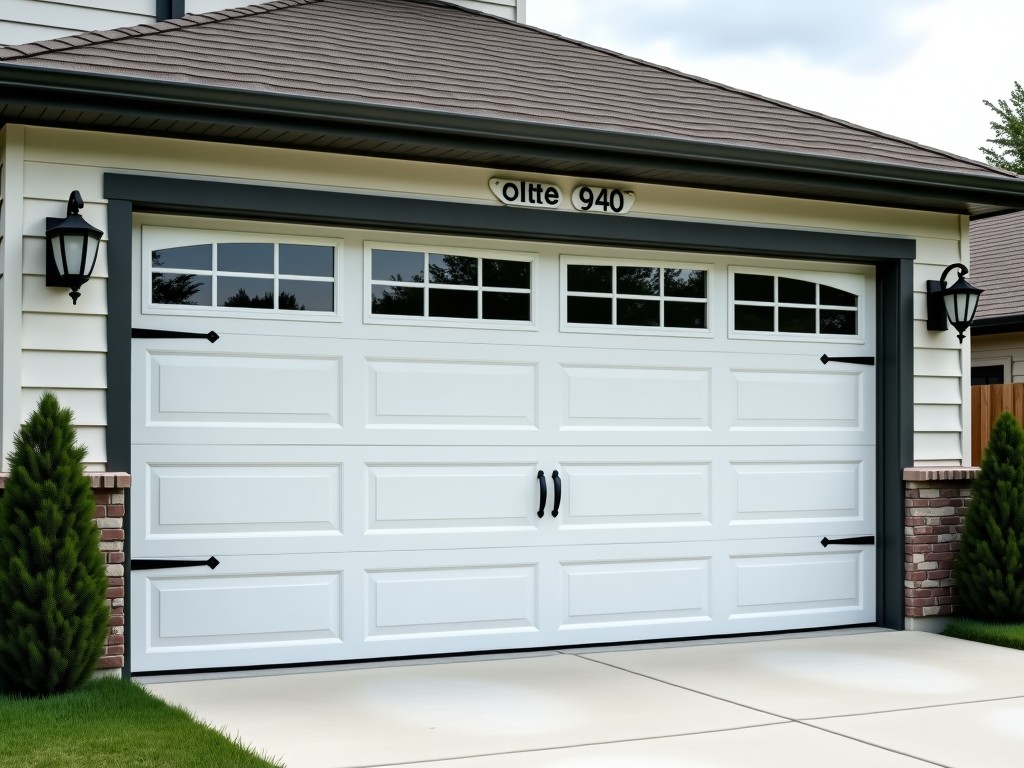
OEM Insulated Garage Door Systems
For manufacturing facilities, distribution centers, and commercial workshops requiring thermal performance, structural integrity, and long-term operational reliability, insulated garage doors serve as critical envelope components. Selection involves evaluating panel construction, insulation type, thermal transmittance, air infiltration resistance, and compatibility with high-cycle operation. This page details the engineering considerations behind OEM-specified insulated garage doors, focusing on material behavior, manufacturing consistency, and performance validation relevant to industrial procurement and design teams.
Thermal Performance and Panel Construction
The primary function of an insulated garage door in industrial settings is to minimize heat transfer across the building envelope while maintaining structural stability under repeated cycling. Panel cores typically utilize either polyurethane foam or polystyrene insulation, each offering distinct thermal and mechanical characteristics. Polyurethane, injected as a liquid and expanded in-place, achieves higher R-values per inch (typically R-6 to R-8) due to its closed-cell structure and strong adhesion to metal facings. Polystyrene boards, while lower in R-value per inch (R-4 to R-5), provide dimensional stability and are often selected where cost sensitivity or specific fire ratings are priorities. Facings are commonly 24- to 27-gauge galvanized steel, pre-painted for corrosion resistance, with embossing or striations to increase panel stiffness and resist oil-canning.
Air Infiltration and Sealing Systems
Thermal efficiency is significantly compromised by air leakage around the door perimeter and between panels. Effective sealing relies on multiple components: a flexible vinyl bottom seal conforming to floor irregularities, side and top weatherstripping made of compressible EPDM or thermoplastic elastomer, and interlocking panel joints designed to minimize gaps during operation. In high-cycle environments, seal materials must resist cracking, compression set, and degradation from UV exposure or temperature extremes. Some OEM specifications include dual-seal designs or magnetic strips at the meeting stiles to enhance closure pressure and long-term sealing performance, particularly in climate-controlled warehouses or cleanroom-adjacent zones.
Structural Design and Cycle Life
Industrial garage doors are subjected to far higher duty cycles than residential counterparts, often exceeding 20 cycles per day in shipping docks or maintenance bays. This necessitates robust hardware: 14-gauge or thicker galvanized steel hinges, 11-gauge rollers with sealed ball bearings (nylon or steel), and lift cables rated for minimum 10,000-cycle life. Spring systems — either torsion or extension — are sized based on door weight, which increases with insulation thickness and panel gauge. Torsion springs, mounted on a solid steel shaft above the door, offer smoother operation and better balance for wide or heavy doors, while extension springs require safety cables to contain potential breakage. Track systems use 2-inch or 3-inch galvanized steel with continuous welding and precise alignment to prevent roller derailment under load.
Typical Specifications
| Parameter | Typical Range or Specification | Notes |
|---|---|---|
| Panel Thickness | 1-3/8" to 2" | Impacts R-value and structural rigidity |
| Insulation Type | Polyurethane or Polystyrene | Polyurethane offers higher R-value/inch |
| R-Value (per inch) | R-4 to R-8 | Dependent on core material and density |
| Air Infiltration | < 0.5 cfm/ft² @ 25 Pa | Tested per ASTM E283 |
| Wind Load Resistance | Up to 20 psf | Dependent on reinforcement and track design |
| Cycle Rating | 25,000+ cycles | With proper maintenance and spring selection |
| Operating Temperature | -20°F to 120°F | Seal and lubricant performance limits |
Customization for OEM Integration
OEM buyers frequently require doors tailored to specific opening dimensions, architectural constraints, or integration with automated systems. Customization options include non-standard widths and heights (up to 24 feet wide and 20 feet high in industrial applications), custom latch preparations for access control integration, motor operator mounting provisions, and window lite configurations with impact-resistant glazing. Panel color can be matched to corporate standards using factory-applied baked enamel or powder-coated finishes. For facilities with stringent hygiene requirements, such as food processing or pharmaceutical manufacturing, door assemblies can be specified with smooth, crevice-free interiors and USDA-accepted seal materials. All customizations are subject to tooling considerations and may affect lead time, particularly when novel panel profiles or reinforcement schemes are involved.
Quality Control and Testing
Consistent performance begins with validated manufacturing processes. Panel foam density is monitored during injection to ensure uniform thermal properties. Facings are checked for coating adhesion, thickness, and uniformity before lamination. Finished panels undergo deflection and crush testing to verify stiffness-to-weight ratios. Assembled doors are cycled under load to validate spring balance, track alignment, and seal compression. Air leakage and water penetration resistance are evaluated in accordance with ASTM E283 and E331, respectively, for projects requiring compliance with energy codes or building envelopes standards. Documentation of material certifications, test reports, and process traceability is available upon request for projects requiring third-party verification.
Packaging and Logistics
Industrial door shipments require protection against deformation, surface damage, and moisture ingress during transit and storage. Panels are typically stacked horizontally with corrugated dividers and wrapped in stretch film or placed in individual polybags. Hardware kits are sealed in labeled, moisture-barrier bags. Complete assemblies or knockdown kits are secured on pallets with edge protectors and strapped to prevent shifting. For export shipments, additional vapor barriers and corner reinforcement may be applied. Clear labeling includes part numbers, orientation markers, and handling instructions to reduce installation errors and field adjustments. Lead times depend on complexity, material availability, and current production load, with standard configurations typically shipping within 4–6 weeks.
Installation and Maintenance Considerations
Proper installation is critical to achieving specified performance. Tracks must be plumb and level within 1/8 inch over the door height, with adequate sideroom and headroom confirmed prior to framing. Spring tension should be adjusted to balance the door so it remains stationary at any point during manual operation. Lubrication of rollers, hinges, and springs with non-drip, temperature-stable grease is recommended every 3–6 months in high-cycle or harsh environments. Seal inspection should occur quarterly, with replacement recommended when cracking, hardening, or permanent compression set is observed. Facilities with corrosive atmospheres may benefit from upgraded hardware finishes or more frequent maintenance intervals.