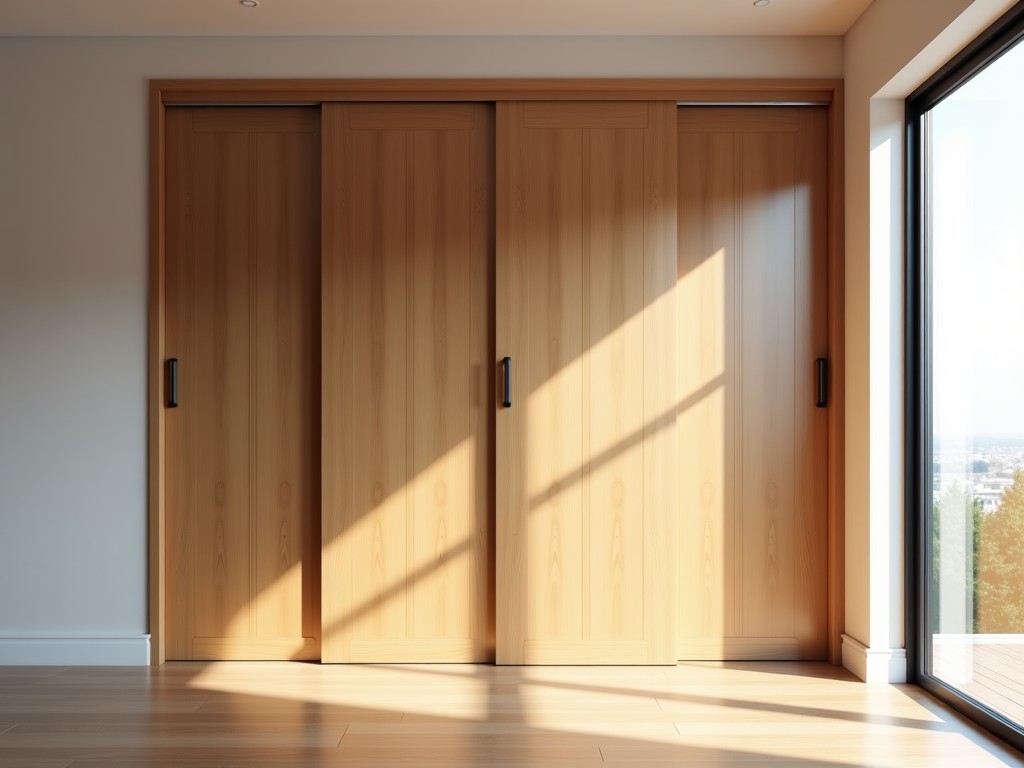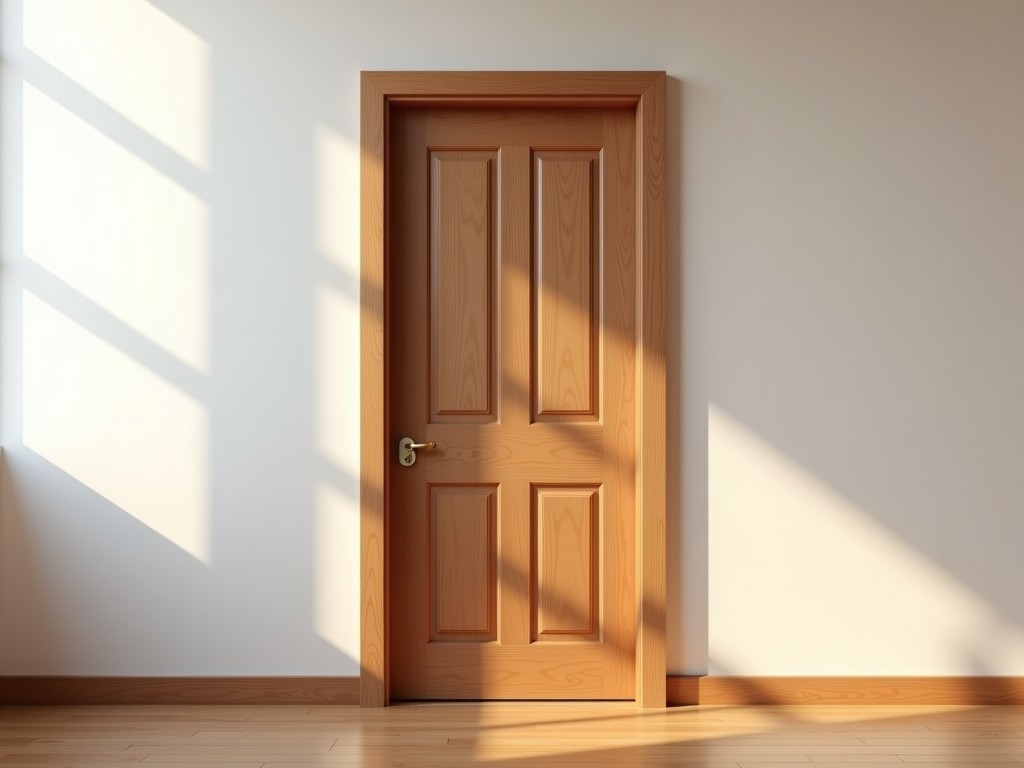
Oem Interior Flush Door
Oem Interior Flush Door

OEM Interior Flush Door
For manufacturers requiring seamless integration into cabinetry, wall systems, or modular interiors, flush doors provide a clean, uniform surface that supports both aesthetic and functional design goals. Unlike raised-panel or molded doors, flush constructions eliminate visible seams or protrusions, enabling tight tolerances in automated assembly lines and reducing interference with hardware or adjacent components.
Material Selection and Core Construction
The performance of an interior flush door begins with its core material, which influences weight, stability, screw retention, and resistance to environmental fluctuations. Common options include particleboard, MDF, and hollow-core configurations, each suited to different load and insulation requirements. Particleboard offers cost-effective rigidity for low-traffic partitions, while MDF provides superior surface uniformity for painted or laminated finishes, minimizing telegraphing of grain or texture. Hollow-core designs reduce overall mass for large-span applications where structural load is minimal, often incorporating cardboard or lattice cores to maintain dimensional stability without excessive weight.
Face veneers or overlays are applied to both sides to ensure balance and prevent warping. Options range from natural wood veneers (oak, maple, birch) for stained finishes to melamine, PVC, or HPL overlays for scratch resistance and ease of cleaning. The adhesive bond between core and facing is critical—polyurethane or PVA systems are selected based on environmental exposure and required durability, with edge sealing often added to prevent moisture ingress in humid environments.
Manufacturing Process and Tolerance Control
Production typically involves cold pressing of pre-cut core and facing layers under controlled pressure and temperature to ensure uniform adhesion and avoid bubbling or delamination. CNC routing is used for precise cutting of openings for locks, hinges, or electrical pass-throughs, maintaining repeatability across large batches. Post-processing includes edge banding with matching or contrasting materials, applied via hot-air or laser systems to create a seamless finish that resists peeling.
Dimensional tolerances are held to ±0.5 mm on width and height, and ±0.3 mm on thickness, depending on core material and pressing consistency. These standards support interchangeability in OEM applications where doors are pre-fitted into frames or sliding systems. Surface flatness is verified using laser or dial-indicator methods, with acceptable deviation typically under 1.0 mm across a 1-meter span to prevent binding or uneven reveal.
Typical Specifications
| Parameter | Typical Range | Notes |
|---|---|---|
| Thickness | 28 mm – 45 mm | Selected based on hardware load and span |
| Width | 600 mm – 900 mm | Custom widths available |
| Height | 1800 mm – 2400 mm | Standard and custom lengths |
| Core Type | Particleboard, MDF, Hollow | Affects weight, cost, and finish quality |
| Face Overlay | Melamine, Veneer, HPL, PVC | Determines surface durability and appearance |
| Edge Finish | Matching banding, PVC, ABS, Wood | Applied via hot-air, laser, or ultrasonic |
Application Scenarios
OEM interior flush doors are commonly integrated into modular office systems, healthcare cabinetry, retail fixtures, and residential unit partitions where a consistent, low-profile interface is required. In hospital environments, for example, smooth surfaces minimize particle accumulation and allow for efficient disinfection, while in retail displays, the uniform plane supports seamless graphic application or backlit panels. Their use in kitchen and bathroom vanities benefits from moisture-resistant overlays and sealed edges, reducing swelling or delamination in high-humidity zones.
For automated production lines, the absence of protrusions allows for robotic handling and precision insertion into pre-machined housings without collision risk. This is particularly valuable in high-volume furniture or prefabricated wall panel manufacturing, where cycle time and repeatability directly impact throughput. Designers also specify flush doors in acoustic partitions when paired with specialized cores, as the mass and damping properties can be tuned to meet specific STC ratings without compromising surface integrity.
Customization and OEM Support
Customization extends beyond dimensions to include core composition, face material, edge treatment, and pre-machining for hardware. OEM clients often require specific screw withdrawal values or surface resistance to cleaning agents, which can be addressed through material selection and adhesive tuning. Pre-drilling for hinges, locksets, or cable conduits is performed to client specifications, reducing on-site labor and alignment errors.
Tooling and setup costs are amortized over production volume, with typical MOQs starting at 50–100 units for standard configurations and increasing for unique cores or overlays. Prototypes or first-article samples are available for validation before full-scale release, allowing engineering teams to verify fit, finish, and functional performance under simulated conditions. Lead times generally range from 2–4 weeks for standard builds, extending to 6–8 weeks for highly customized orders requiring special material sourcing or new press configurations.
Packaging and Logistics
To prevent surface damage during transit, doors are stacked horizontally on pallets with interleaving sheets of corrugated cardboard or polyethylene foam between units. Corner protectors and stretch wrapping secure the load, while humidity indicators may be included for long-distance or overseas shipments. Each pallet is labeled with SKU, quantity, and handling instructions, and optional tracking tags can be added for supply chain visibility.
For export, ISPM 15-compliant pallets are used, and documentation includes material safety data sheets (where applicable), origin declarations, and compliance statements for VOC emissions (e.g., CARB Phase 2, E0, or F★★★★ ratings). Volume optimization is achieved through standardized pallet configurations, typically accommodating 20–30 units per pallet depending on thickness and height, reducing freight cost per unit.
Quality Control and Inspection
Incoming raw materials are inspected for core density, moisture content, and facing uniformity before pressing. During production, pressure and temperature logs are monitored to ensure consistent bonding, and random samples are tested for adhesion strength using peel or shear methods. Final inspection includes dimensional verification, surface defect assessment (under 500 lux lighting), and edge banding integrity, with acceptable limits defined by AWMAC or WIMA standards where applicable.
Functional checks may include hinge load cycling or resistance to impact, particularly for doors intended in high-traffic zones. All records are retained for traceability, and non-conforming units are segregated for rework or scrapping based on defect type and severity. Customers may request third-party inspection reports or video documentation of key process steps upon agreement.
Inquiry and Technical Support
To initiate a quotation or discuss specific requirements, provide detailed drawings or specifications including dimensions, core preference, face overlay, edge finish, and any required machining. Our engineering team will review for manufacturability, suggest material optimizations if needed, and return a formal proposal with lead time, pricing, and packaging options.
Share your drawings or specifications for a customized proposal