Oem Laminate Interior Door
Oem Laminate Interior Door
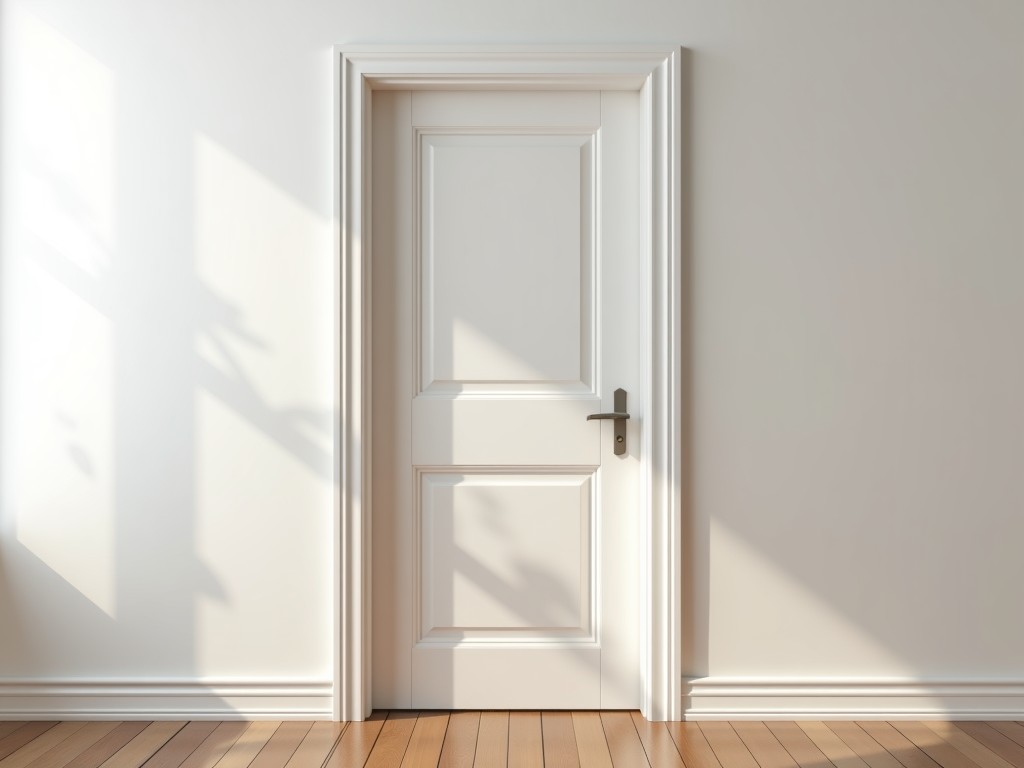
OEM Laminate Interior Door Solutions for Industrial and Commercial Applications
Selecting interior doors for OEM integration requires understanding how surface stability, edge integrity, and core composition affect long-term performance in high-cycle environments. Laminate-faced doors offer a engineered balance of dimensional stability, surface durability, and finish consistency that meets the demands of repeated installation, cleaning, and operational wear.
Material Selection and Core Construction
The performance of a laminate interior door begins with its substrate. Common core materials include particleboard, MDF, and hollow core constructions, each selected based on required weight, screw retention, and acoustic properties. For OEM applications where doors are machined for hardware, hinges, or strikes, particleboard cores provide consistent density and minimal voids, reducing the risk of fastener pull-out during repeated use. MDF cores offer superior edge machinability for complex profiles but may require edge sealing in humid environments to prevent moisture absorption.
Laminate overlays are typically thermoset melamine or low-pressure laminate (LPL) bonded to the core under heat and pressure. This process creates a wear-resistant surface that resists scratching, staining, and fading under typical interior lighting and cleaning regimens. The bond integrity between laminate and core is critical; delamination risk increases if adhesive curing is incomplete or if the door is exposed to prolonged moisture cycles. Quality manufacturers control press temperature, pressure, and dwell time to ensure a uniform bond line, which can be verified through peel adhesion testing per ASTM D903.
Dimensional Stability and Tolerance Control
In OEM supply chains, door dimensions must align with frame specifications and hardware prep within tight tolerances to avoid field adjustments. Typical width and height tolerances range from ±1.5 mm to ±3.0 mm, depending on core material and manufacturing process. Thickness consistency is equally important for hinge alignment and strike plate engagement; standard thicknesses of 35 mm, 40 mm, and 44 mm are maintained within ±0.5 mm through calibrated sanding and calibration stations post-pressing.
Warping and bowing are primary concerns in laminate doors, especially in environments with fluctuating humidity. Symmetric construction—using identical laminate grades on both faces and balanced core layers—minimizes internal stresses. Some manufacturers incorporate moisture-resistant additives in the core or apply edge sealants to further enhance stability. Buyers should request camber and bow test data, particularly for doors exceeding 2100 mm in height, where deflection becomes more pronounced.
Edge Treatment and Durability
Edges are vulnerable points in laminate doors, susceptible to chipping, impact damage, and moisture ingress. Common edge treatments include PVC edgebanding, ABS edgebanding, and laminate wrapped edges. PVC and ABS bands are applied via hot-melt adhesive and provide a seamless barrier against moisture and mechanical wear. Laminate-wrapped edges, while offering color continuity, require precise mitering and are more prone to separation if not properly bonded.
For high-traffic commercial applications such as offices, schools, or healthcare facilities, impact-resistant edgebanding or reinforced edge seals may be specified. Edge thickness typically ranges from 0.4 mm to 2.0 mm, with thicker bands offering greater durability but requiring adjustments in machining clearances for hinges and locks. OEMs should confirm edge adhesion strength and resistance to delamination under cyclic humidity testing when evaluating suppliers.
Typical Specifications
| Parameter | Typical Range | Notes |
|---|---|---|
| Core Material | Particleboard, MDF, Hollow Core | Selected based on weight, screw retention, and cost |
| Face Laminate | Melamine, LPL, 0.15–0.30 mm thickness | Wear resistance varies by laminate grade (AC3–AC5) |
| Door Thickness | 35 mm, 40 mm, 44 mm | Tolerance: ±0.5 mm |
| Width/Height Tolerance | ±1.5 mm to ±3.0 mm | Dependent on core stability and pressing accuracy |
| Edge Treatment | PVC/ABS edgebanding, laminate wrap | Adhesion critical for moisture resistance |
| Surface Finish | Matte, satin, low-gloss | Affects visibility of fingerprints and cleaning ease |
Customization and OEM Considerations
OEM buyers often require doors tailored to specific hardware preps, frame interfaces, or aesthetic requirements. Common customizations include CNC-machined cutouts for locks, hinges, and vision panels; pre-drilled holes for concealed hardware; and non-standard sizes to match proprietary frame systems. Tooling costs and lead times vary based on complexity; simple hole patterns may be accommodated with standard fixtures, while complex contours require dedicated programming and fixturing.
Finish matching is another frequent request, particularly when doors must align with wall panels, cabinetry, or furniture systems. Laminate suppliers offer thousands of standard colors and patterns, with custom color matching available upon request, though this may increase MOQ and lead time. Surface texture—such as wood grain, linen, or matte solid—can also be specified to influence both appearance and tactile perception.
Packaging for OEM shipment typically involves individual polyethylene wrapping, corner protectors, and flat stacking on pallets with interstitial sheets to prevent surface abrasion. For export or long-term storage, moisture-barrier bags and desiccant packs may be added. Clear labeling with part numbers, PO references, and handling instructions reduces misidentification during distribution.
Quality Control and Testing
Consistent quality in laminate doors relies on in-process controls and final inspection. Key checks include laminate bond strength, edge adhesion, dimensional accuracy, surface defect assessment (per ASTM D3023 for staining resistance), and flatness measurement. Manufacturers may conduct cyclic humidity tests to evaluate warping tendency or impact tests on edges to verify chipping resistance. While specific test values are application-dependent, requesting a copy of the quality control plan and sample test reports helps buyers assess process discipline.
Traceability is increasingly important in OEM supply chains. Batch labeling, core material certification, and laminate traceability allow for root cause analysis if field issues arise. Some manufacturers maintain digital records of press parameters, adhesive lot numbers, and inspection results linked to each production run, supporting audit readiness and continuous improvement.
Selection Guide for Procurement and Engineering Teams
When evaluating laminate interior doors for OEM use, begin by defining the operational environment: expected cycle frequency, humidity exposure, cleaning agents, and impact risk. Match core material to load and hardware requirements—particleboard for standard hinged doors, MDF for routed profiles, hollow core for lightweight partitions where strength is secondary. Confirm that edge treatment aligns with durability needs and that tolerances are compatible with your frame and hardware specifications.
Request samples to evaluate surface finish, edge quality, and weight. Verify that the supplier can accommodate your required tolerances and customization needs without excessive tooling charges. Discuss packaging methods to ensure doors arrive scratch-free and ready for installation. Finally, assess supply stability: lead times, MOQ flexibility, and the supplier’s capacity to scale with your production schedule.