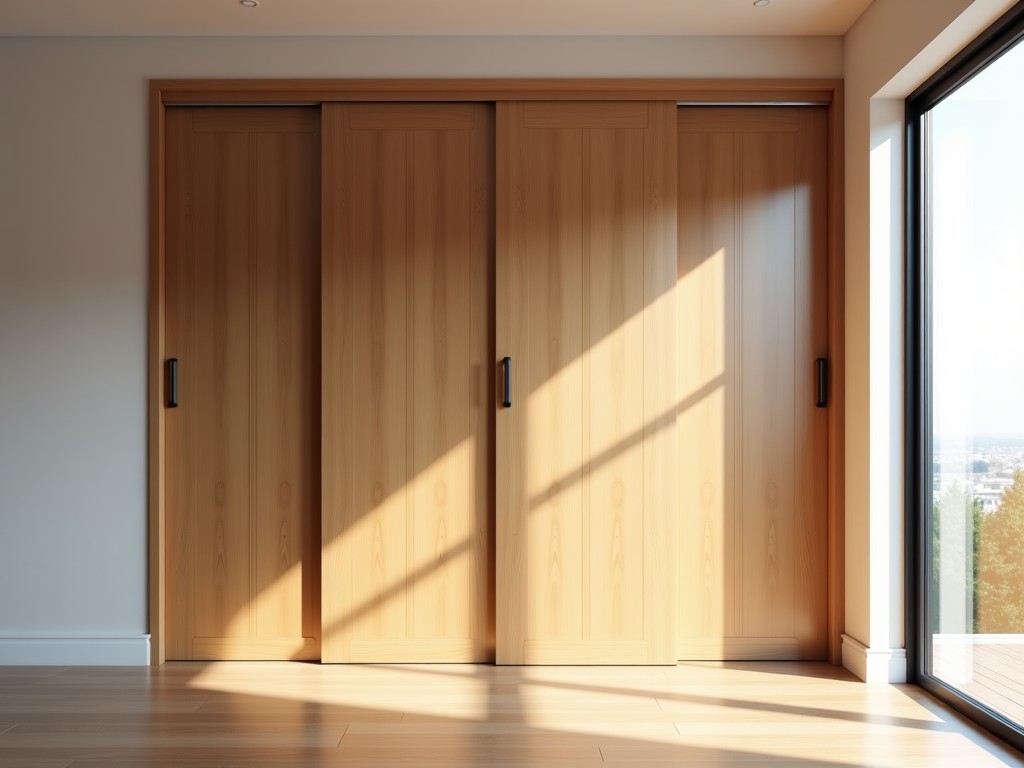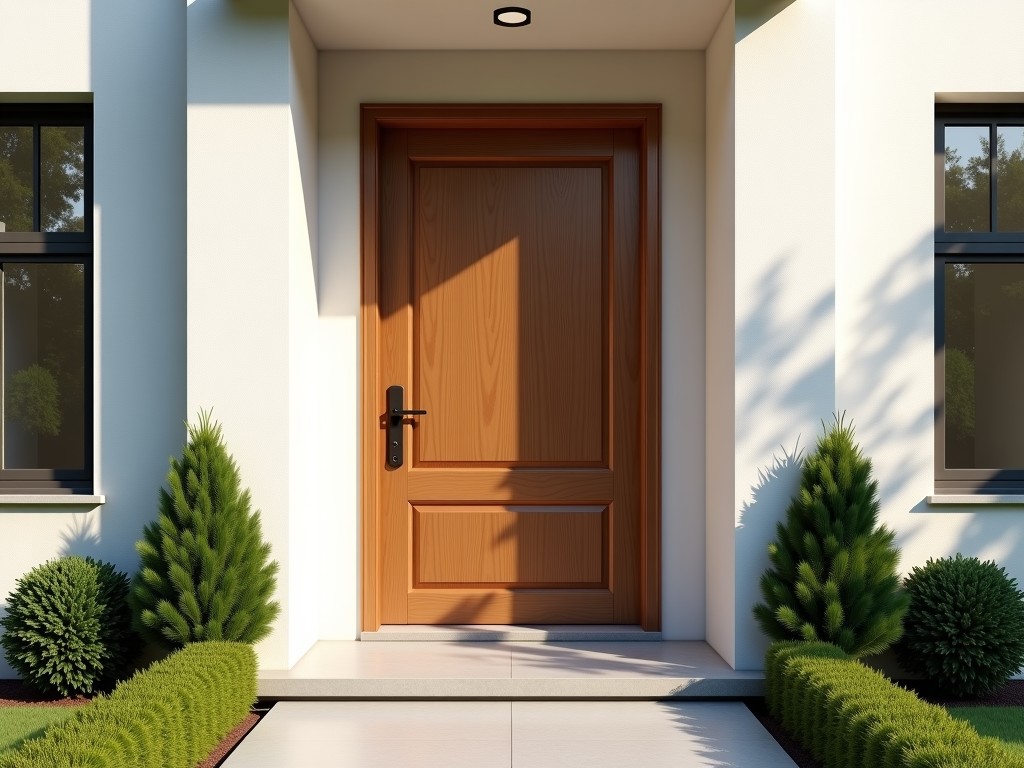
OEM Mdf Flush Door Supplier
OEM Mdf Flush Door Supplier

MDF Flush Door: Technical Specifications and Industrial Applications
Medium-density fiberboard (MDF) flush doors are engineered panel products commonly used in commercial interiors, institutional buildings, and precision manufacturing environments where dimensional stability and surface consistency are critical. Unlike solid wood or veneer-faced alternatives, MDF flush doors provide a uniform substrate that eliminates grain variation, reduces telegraphing, and supports high-quality finishes under controlled conditions.
The core is manufactured by breaking down hardwood or softwood residuals into wood fibers, combining them with wax and a resin binder—typically urea-formaldehyde (UF) or melamine-urea-formaldehyde (MUF)—and forming panels under high temperature and pressure. This process results in a dense, homogeneous material with consistent internal structure, minimizing warping, twisting, or cupping when properly sealed and installed in stable humidity environments.
Material Composition and Manufacturing Process
MDF flush doors typically use panels with densities ranging from 600 to 800 kg/m³, selected based on required mechanical performance and screw holding capacity. The face and back veneers are often omitted in true flush constructions, with the MDF core itself serving as the primary surface. Edge sealing is applied using PVC, ABS, or melamine tape to prevent moisture ingress at vulnerable points, particularly in high-humidity areas like laboratories, healthcare facilities, or multi-story office buildings.
Manufacturing involves cutting MDF panels to precise dimensions using CNC saws, routing for locksets and hinges, and applying edge bands via hot-air or hot-roll lamination. Surface preparation includes sanding to achieve Ra values between 1.2 and 1.8 µm, ensuring optimal adhesion for primers, paints, or laminates. For applications requiring enhanced moisture resistance, MR (moisture-resistant) grade MDF—treated with melamine-modified resins—is available, offering improved performance in environments with intermittent humidity fluctuations.
Dimensional Stability and Tolerance Control
One of the primary advantages of MDF flush doors in precision applications is their predictable movement characteristics. Compared to natural wood, MDF exhibits lower hygroscopic expansion—typically 0.02–0.04% per 1% change in relative humidity—making it suitable for installations where tight clearances are maintained, such as in cabinetry systems, cleanroom antechambers, or automated production lines.
Standard thickness tolerances adhere to ANSI A208.1 or EN 622-5 specifications, with common variations of ±0.3 mm for 18–25 mm panels. Length and width tolerances are generally held to ±1.5 mm, depending on cutting method and post-processing. These values are critical for OEMs integrating doors into modular wall systems or automated guided vehicle (AGV) pathways where misalignment can trigger safety interlocks or operational faults.
Surface Finish and Compatibility
The homogeneous surface of MDF allows for consistent coating absorption, reducing the risk of bleed-through or uneven gloss when applying water-based primers, polyurethanes, or UV-cured finishes. This predictability reduces rework in high-volume finishing lines and supports color matching across large batches—important for architectural projects requiring uniform appearance over extended timelines.
For applications demanding higher wear resistance, such as in schools, transit hubs, or industrial control rooms, MDF flush doors can be overlaid with high-pressure laminate (HPL), melamine-faced panels, or PVC films. These overlays not only enhance abrasion resistance (typically exceeding 150 cycles under Taber testing) but also improve chemical resistance to common cleaning agents, disinfectants, and light oils.
Typical Specifications
| Parameter | Typical Range | Notes |
|---|---|---|
| Thickness | 16–30 mm | Custom thicknesses available upon request |
| Density | 600–800 kg/m³ | Higher density improves screw hold and impact resistance |
| Length | Up to 2800 mm | Limited by handling and transportation constraints |
| Width | Up to 1200 mm | Standard widths: 600, 700, 800, 900 mm |
| Edge Seal | PVC, ABS, Melamine | Prevents moisture ingress at cut edges |
| Surface Finish | Primer-ready, HPL, Melamine, PVC | Determined by end-use environment |
Application Scenarios in Industrial and Commercial Settings
MDF flush doors are frequently specified in environments where aesthetic consistency, ease of finishing, and cost-effective scalability outweigh the need for natural wood grain. In semiconductor fabrication support areas, for example, their low outgassing potential—when sealed with appropriate edge bands and finishes—makes them suitable for adjacent administrative or metrology rooms where particle control is managed through HVAC pressure differentials.
In data centers and network operations centers (NOCs), MDF flush doors with conductive or static-dissipative overlays help mitigate electrostatic discharge (ESD) risks when integrated into grounded wall systems. Their non-conductive core, combined with surface treatments, allows engineers to meet IEC 61340-5-1 requirements without introducing ferromagnetic materials that could interfere with sensitive equipment.
Pharmaceutical manufacturing facilities often select MR-grade MDF flush doors for corridor partitions and changing rooms due to their smooth, non-porous surface when finished, which facilitates cleaning and reduces microbial retention points. The absence of knots, resin pockets, or grain direction eliminates common failure points found in wood-based alternatives under repeated sanitization cycles.
Customization and OEM Integration
Manufacturers can accommodate project-specific requirements including cutouts for vision panels, louvered vents, or pass-throughs for cabling and pneumatic tubing. These modifications are typically performed post-lamination using CNC routers to maintain edge integrity and prevent delamination. Hole patterns for hinges, locks, and access panels are drilled to ±0.1 mm positional accuracy using template-guided systems, ensuring repeatability across production runs.
Lead times for standard configurations range from 2 to 4 weeks, depending on panel thickness, edge treatment, and surface finish. Custom sizes, special grades (such as fire-retardant or low-formaldehyde MDF), or integrated hardware may extend timelines. Packaging involves horizontal stacking with corner protectors, stretch wrapping, and placement on pallets with moisture barriers to prevent deformation during transit and storage.
Quality Control and Inspection
Finished doors undergo visual inspection for surface defects, edge bond integrity, and dimensional accuracy. Random samples are tested for screw withdrawal strength (per EN 320), surface abrasion resistance, and formaldehyde emission rates (per EN 717-1 or CARB Phase II). For regulated industries, documentation such as material safety data sheets (MSDS), formaldehyde test reports, and compliance declarations can be provided upon request.
Buyers are advised to store MDF flush doors flat in dry, temperature-controlled environments (18–22°C, 40–60% RH) and to acclimatize them on-site for at least 48 hours before installation. Proper sealing of all cut edges and fastener points is essential to maintain long-term performance, particularly in environments with cyclic humidity changes.