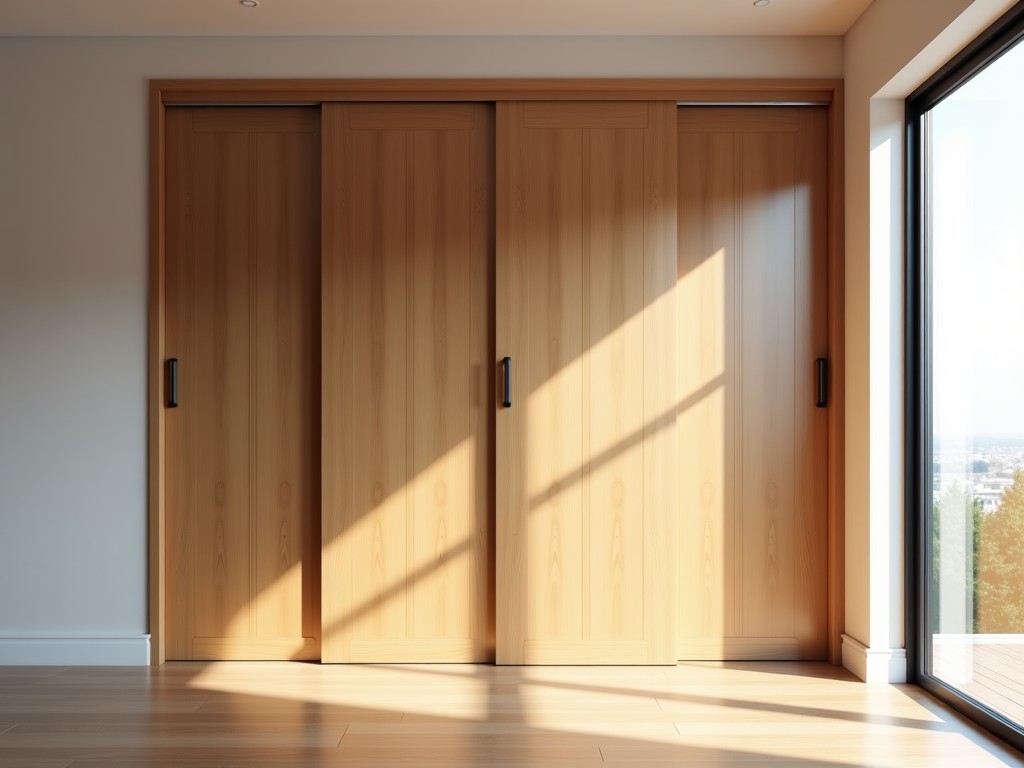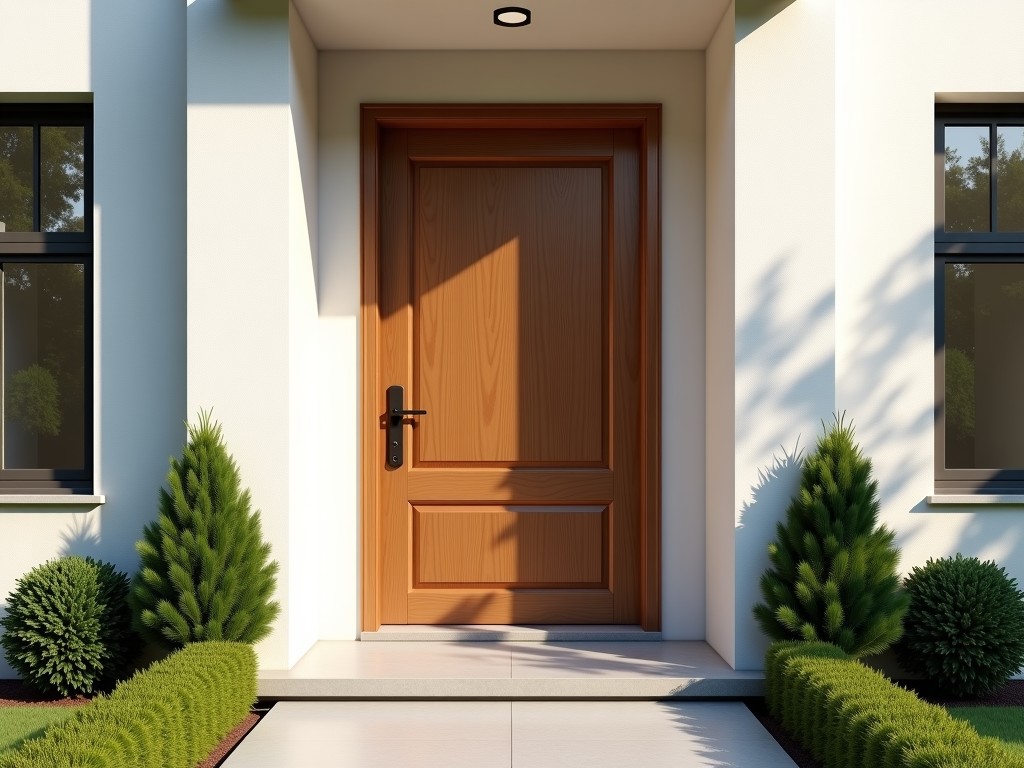
Oem Mdf Interior Door
Oem Mdf Interior Door

OEM MDF Interior Door: Engineered for Precision Fit and Finish Consistency
In high-volume residential and commercial interior production, achieving uniform door appearance and dimensional stability across thousands of units requires more than surface finishing—it begins with the core material. OEM MDF interior doors are specified when tight tolerances, smooth substrate quality, and repeatable machining performance directly impact downstream processes like laminating, painting, or veneering. This page explains how material selection, manufacturing controls, and design considerations affect performance in OEM supply chains.
Why MDF is Selected for OEM Interior Door Production
Medium-density fiberboard (MDF) provides a homogeneous, isotropic core with minimal internal stress, making it ideal for applications where edge profiling, routing, and laminating consistency are critical. Unlike solid wood or particleboard, MDF lacks grain direction, reducing the risk of tear-out during CNC machining and ensuring uniform screw holding strength across all faces and edges. Its density typically ranges from 650 to 800 kg/m³, offering sufficient rigidity for standard interior door thicknesses (30–45 mm) while remaining lightweight enough for efficient handling and installation.
For OEMs, the primary advantage lies in surface quality: MDF produces a smooth, pore-free finish that accepts primers, paints, and melamine films with minimal preparation. This reduces surface preparation steps, lowers rejection rates in finishing lines, and supports high-gloss or textured laminate applications where substrate imperfections would be visible. The absence of knots, voids, or resin pockets eliminates common defects found in wood-based alternatives, contributing to higher first-pass yield in automated production.
Material Composition and Manufacturing Controls
OEM-grade MDF used in interior doors is manufactured from refined wood fibers bonded with urea-formaldehyde (UF) or melamine-urea-formaldehyde (MUF) resins under high temperature and pressure. The resin content and curing cycle are precisely controlled to balance internal bond strength (≥0.6 MPa typical), screw holding capacity (≥1200 N face, ≥800 N edge), and thickness swelling (<8% after 24h water immersion). These properties are verified through internal quality checks aligned with ANSI A208.2 or EN 622-5 standards, though exact values depend on resin formulation and density target.
To meet OEM requirements for dimensional stability, manufacturers monitor fiber mat formation, press pressure distribution, and post-conditioning humidity. Variations in these parameters can lead to telegraphing, core show-through, or edge swelling—issues that become apparent only after lamination or painting. Reputable suppliers implement statistical process control (SPC) on thickness (±0.2 mm typical), density profile, and moisture content (4–8% ex-factory) to ensure batch-to-batch consistency, especially important for just-in-time delivery schedules.
Design Considerations for OEM Integration
When specifying MDF interior doors for OEM programs, engineers evaluate not only the door slab but also how it interfaces with frames, hinges, and hardware. Standard edge treatments include square, eased, or profiled edges (e.g., bullnose, bevel) machined directly from the MDF core. For applications requiring increased edge durability—such as high-traffic corridors or hotel rooms—PVC, ABS, or acrylic edgebanding is applied using hot-melt or laser bonding techniques, with bond strength tested to withstand delamination under cyclic humidity changes.
Pre-drilling for hinges, locks, and handles is performed using CNC routers with vacuum fixturing to prevent tear-out. Hole placement tolerances are typically held to ±0.5 mm to ensure proper hardware alignment. For fire-rated or acoustic variants, MDF cores may be combined with fire-retardant additives or layered with mineral-filled barriers, though these modifications affect weight, machining parameters, and adhesive compatibility—factors that must be evaluated during prototype validation.
Typical Specifications for OEM Evaluation
| Parameter | Typical Range / Value | Notes |
|---|---|---|
| Thickness | 30–45 mm | Custom thicknesses available; tolerance ±0.2 mm |
| Density | 650–800 kg/m³ | Higher density improves screw holding but increases weight |
| Internal Bond | ≥0.6 MPa | Measured per ASTM D1037; critical for edge integrity |
| Screw Holding (Face) | ≥1200 N | Ensures reliable hinge and hardware retention |
| Thickness Swelling (24h) | <8% | Indicates resistance to moisture-induced distortion |
| Moisture Content | 4–8% | Ex-factory; stabilized to local equilibrium conditions |
| Surface Roughness (Ra) | ≤10 µm | Ensures uniform coating adhesion and laminate bonding |
Customization and OEM Support
OEM MDF interior doors are rarely supplied as standard catalog items. Instead, they are developed through collaborative engineering, where door dimensions, core specifications, edge treatments, hole patterns, and finish preparation are defined per project requirements. Tooling costs and minimum order quantities (MOQs) depend on design complexity—simple flush doors with standard machining may have lower MOQs, while custom profiles, embedded reinforcement, or multi-layer cores require dedicated fixturing and validation runs.
Suppliers typically request CAD drawings, 3D models, or detailed schematics to assess manufacturability, estimate material yield, and identify potential bottlenecks in machining or finishing. Prototypes are often produced for approval before full-scale production, allowing OEMs to validate fit, finish, and functional performance under simulated conditions. Lead times vary based on design complexity, material availability, and production scheduling, but are communicated early in the quotation process.
Packaging, Logistics, and Damage Prevention
To prevent edge chipping, surface scratching, or warping during transit, OEM MDF doors are packaged using corner protectors, edge guards, and horizontal stacking on pallets with intermediate slip sheets. Stretch film or shrink wrap is applied to stabilize the load, and humidity indicators may be included for long-distance or sea freight shipments. Packaging methods are designed to withstand forklift handling, container stacking, and multiple transfer points without compromising surface integrity.
For export shipments, ISPM 15-compliant pallets are used when required, and documentation includes material safety data sheets (MSDS) for resins, formaldehyde emission ratings (e.g., CARB Phase 2, E1), and compliance with regional building codes. Buyers are advised to acclimatize doors to local humidity levels for 48–72 hours before installation to minimize post-installation movement.
Quality Control and Inspection Protocols
Quality assurance for OEM MDF doors extends beyond final inspection to include in-process checks at key stages: fiber mat uniformity, press exit thickness, sanding grit consistency, edge band adhesion, and hole placement accuracy. Sampling plans follow ANSI/ASQ Z1.4 guidelines, with critical dimensions inspected at 100% or AQL levels depending on risk. Non-conformances such as delamination, uneven sanding, or incorrect machining are documented and traced to specific batches or machines for root cause analysis.
Finish readiness is assessed using UV fluorescence for coating adhesion, gloss meters for sheen uniformity, and tape tests (ASTM D3359) for paint or laminate bond strength. These checks ensure that doors meet not only dimensional specs but also the surface preparation standards required by downstream finishing lines—reducing rework and improving overall equipment effectiveness (OEE) in assembly operations.
For OEMs seeking a consistent, machinable substrate for interior door production, MDF offers a balanced combination of workability, surface quality, and dimensional predictability. To discuss your project’s specific requirements—including dimensions, edge treatments, hole patterns, or finish preparation—share your drawings or specifications with our engineering team for a tailored evaluation.