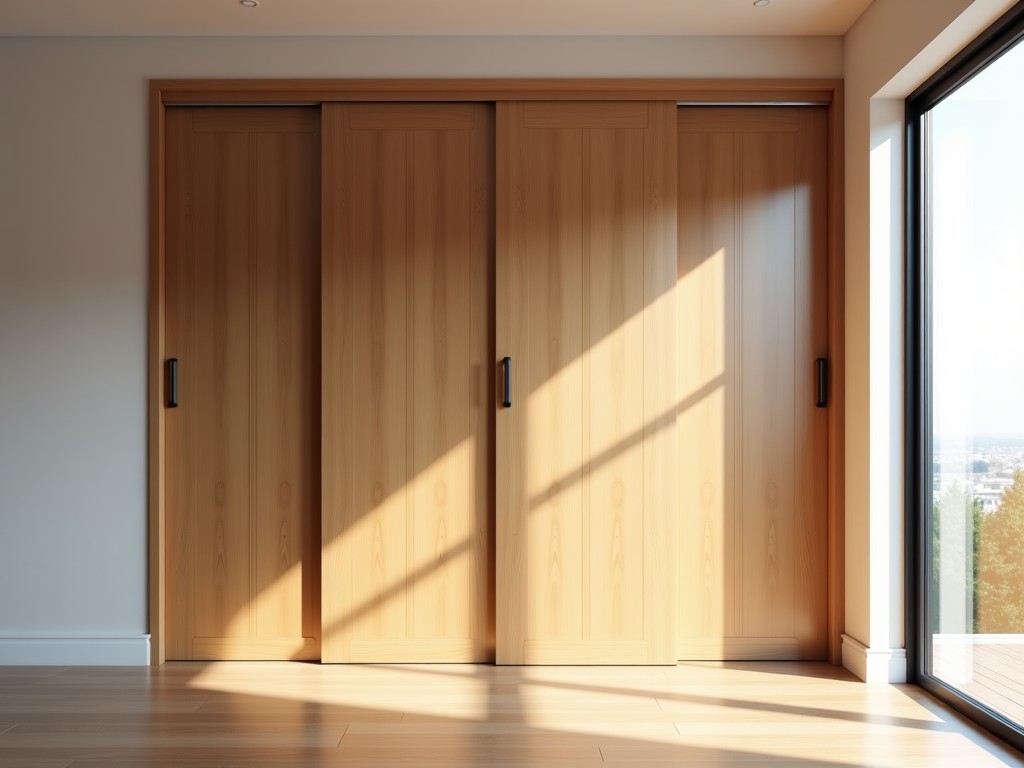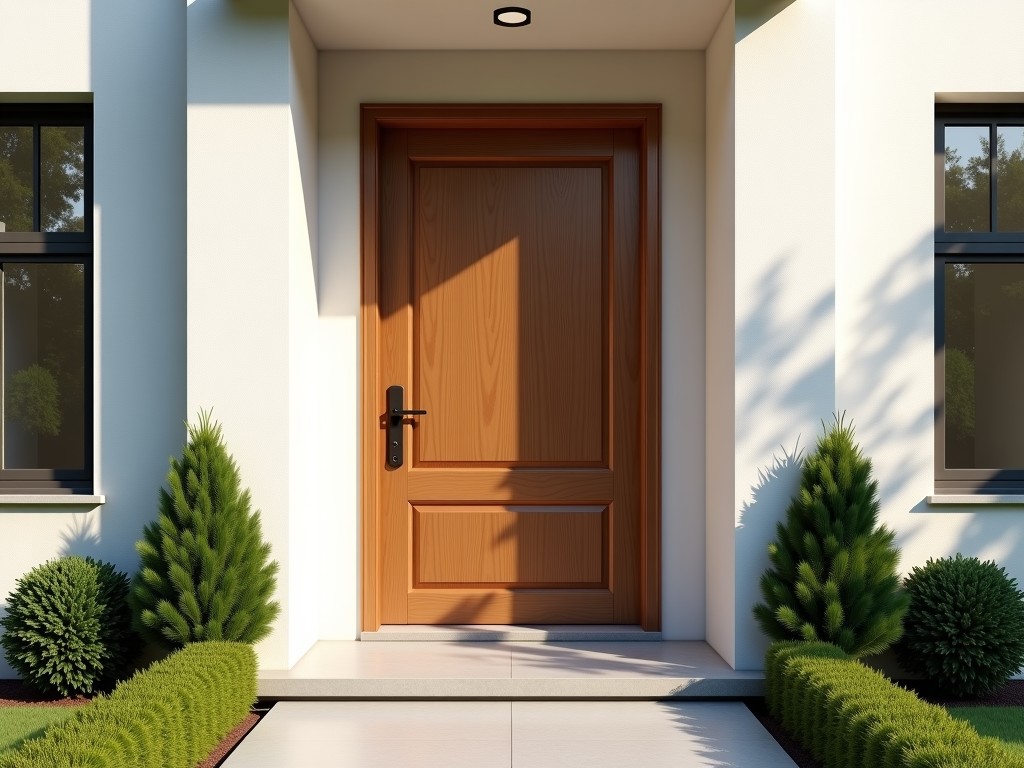
OEM Smoke Seal Wooden Door
OEM Smoke Seal Wooden Door

Smoke Seal Wooden Door for Fire Safety Compliance
In commercial and institutional buildings where fire-rated assemblies are required, smoke infiltration through door gaps presents a critical life-safety risk. Smoke seal wooden doors integrate intumescent or elastomeric sealing systems into the door leaf or frame to restrict smoke migration during the early stages of a fire, providing additional protection beyond fire resistance ratings alone. These doors are commonly specified in healthcare facilities, schools, high-rise residential buildings, and data centers where maintaining tenable conditions along egress paths is essential.
Engineering Principle of Smoke Sealing in Wooden Doors
Smoke seals function by closing the gap between the door and frame when exposed to heat or through constant mechanical compression. Unlike fire-rated cores that resist flame penetration, smoke seals specifically target the passage of smoke and toxic gases, which can spread faster than fire and impair visibility and respiration. The sealing mechanism typically activates via thermal expansion (intumescent) or remains permanently compressed (elastomeric gaskets), ensuring continuity of the seal even under door movement or slight warping of the wood substrate.
For wooden doors, the seal is often routed into the stile or rail, or mounted on the frame stop, to maintain aesthetic continuity while achieving the required leakage performance. Proper installation is critical—misalignment or insufficient compression can render the seal ineffective, underscoring the need for precision manufacturing and factory-assembled hardware where possible.
Material Selection for Door Leaf and Seal Integration
The door leaf is typically constructed from solid wood, engineered lumber (such as LVL or particleboard with wood veneer), or a composite core faced with hardwood or softwood veneers. Species selection—such as oak, maple, or poplar—affects not only appearance but also dimensional stability, screw holding capacity, and resistance to warping under cyclic humidity changes, which is vital for maintaining seal integrity over time.
The smoke seal itself may be made from silicone, neoprene, EPDM, or intumescent tape composed of expandable graphite or sodium silicate compounds. Silicone and EPDM offer durable compression seals with wide temperature tolerance (-40°C to 120°C), while intumescent seals remain inconspicuous at ambient temperatures but expand significantly (up to 20x volume) when exposed to temperatures above 150–200°C, sealing gaps that may widen due to thermal distortion of the door or frame.
Manufacturing Process and Quality Control
Production begins with precise CNC routing of the door leaf to accommodate the seal profile, ensuring consistent depth and width for optimal seal compression. The seal is then either inserted into the groove (for compression types) or adhered with heat-activated adhesive (for intumescent strips). Each door undergoes functional testing to verify seal continuity and compression force, typically measured in newtons per meter, to confirm compliance with leakage standards such as UL 1784 or EN 1634-3.
Quality control includes visual inspection for seal seating, adhesion strength testing, and cycle testing to simulate long-term door operation. Doors are often factory-prepared for hinges, locks, and closer reinforcements to minimize field adjustments that could compromise the seal plane. Packaging uses edge protectors and moisture-barrier wrapping to prevent damage during transit, particularly important for veneer-faced doors susceptible to chipping or delamination.
Typical Specifications and Performance Parameters
| Parameter | Typical Range or Specification |
|---|---|
| Door Thickness | 40 mm to 54 mm (customizable) |
| Seal Type | Elastomeric (silicone/EPDM) or intumescent |
| Seal Compression Force | 1.5–3.5 N/mm (measured at 25% deflection) |
| Smoke Leakage Rating (UL 1784) | Class L (less than 3.0 cfm/ft² at 0.10 in. w.g.) |
| Fire Rating Compatibility | 20, 45, 60, 90 minute (with appropriate core) |
| Operating Temperature Range | -20°C to 60°C (elastomeric); intumescent activates >150°C |
| Veneer Options | Oak, maple, walnut, painted MDF, laminate |
| Core Materials | Solid wood, particleboard, mineral core, agri-fiber |
Application Scenarios and Industry Use Cases
In healthcare facilities, smoke seal wooden doors are installed in patient room corridors, ICU suites, and anesthesia zones to limit smoke spread during surgical fires or electrical faults, supporting evacuation and protecting vulnerable occupants. The aesthetic compatibility of wood finishes with interior design standards allows compliance without compromising the healing environment.
In high-rise residential buildings, these doors are used at stairwell exits and corridor separations where smoke control is mandated by local fire codes. The ability to match existing wood doors in renovation projects makes them ideal for retrofits where visual consistency is required.
Data centers and telecommunications rooms specify smoke seal doors to protect equipment areas from smoke contamination, which can cause corrosion and short-circuiting even without direct flame contact. Here, the seal’s long-term stability under continuous HVAC pressure differentials is a key selection factor.
Customization Options and OEM Support
Manufacturers can adapt smoke seal wooden doors to project-specific requirements, including non-standard dimensions, fire-rated cores with integrated sealing, and custom veneer matching to existing architectural woodwork. Seal placement—whether on the door edge, frame stop, or meeting stile—can be adjusted based on frame type (wood, steel, or aluminum) and hardware configuration.
For OEM clients, private labeling, custom packaging, and pre-installation of hardware (hinges, locks, closers) are available to streamline downstream assembly. Technical support includes providing shop drawings, leakage test reports, and compliance documentation for UL, Intertek, or CE marking, depending on the target market.
Lead times vary based on core material and finish complexity, typically ranging from 3 to 6 weeks for standard configurations. Samples of seal performance and door finish can be provided upon request for project approval.
Discuss your project requirements with our engineering team to review specifications, leakage performance, and compliance needs for your facility.