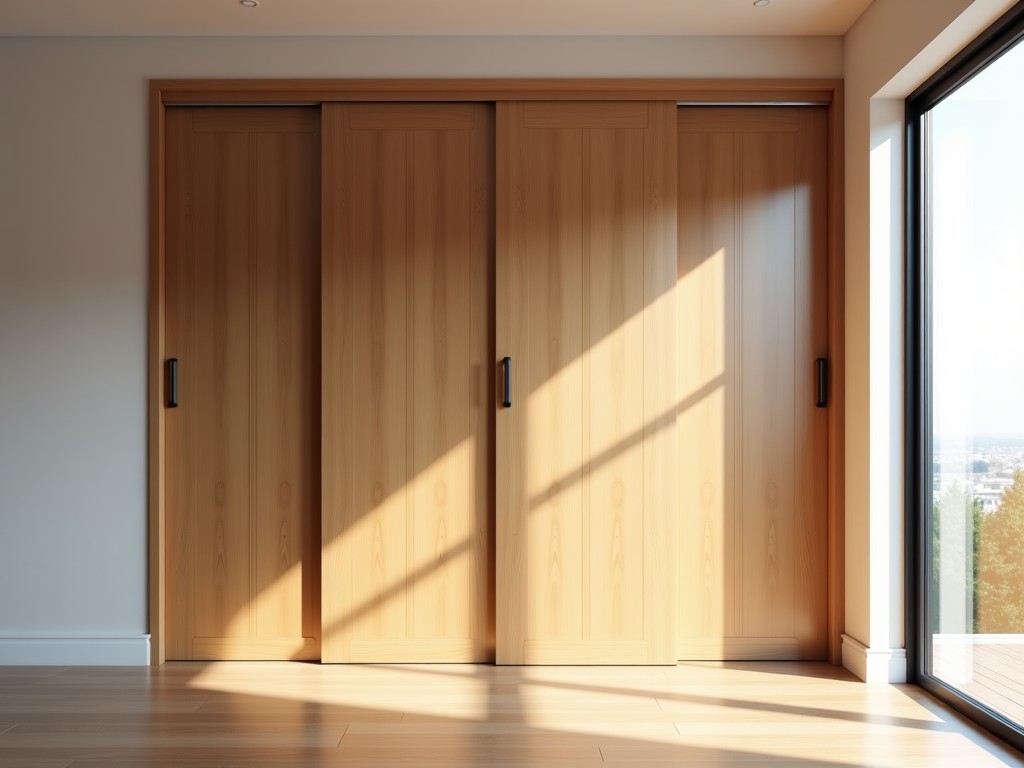
Pocket Wooden Door Factory
Pocket Wooden Door Factory

Pocket Wooden Door Factory: Engineering Precision for Flush-Mounted Door Systems
In commercial and high-end residential construction, pocket doors require precise alignment, smooth operation, and long-term durability to function reliably within wall cavities. A pocket wooden door factory specializes in manufacturing door leafs and frames engineered specifically for this application, where dimensional stability, edge sealing, and hardware compatibility directly impact performance. This page outlines the technical considerations, manufacturing processes, and specification parameters that define a capable pocket wooden door supplier, helping engineers and procurement teams evaluate suitability for their projects.
Industry Challenge: Tolerance Sensitivity in Cavity-Mounted Systems
Unlike hinged doors, pocket doors slide entirely into a wall cavity, leaving minimal clearance for error. Typical installations allow only 3–6 mm of total side and top clearance, meaning any warping, twisting, or inconsistent thickness in the door leaf can cause binding, uneven wear, or failure to fully retract. Environmental factors such as humidity swings in bathrooms or kitchens exacerbate movement in wood, making material selection and construction method critical. A pocket wooden door factory must address these challenges through controlled drying, engineered core structures, and edge sealing techniques that maintain dimensional stability over the product lifecycle.
Engineering Perspective: Core Construction and Material Selection
The door leaf is typically constructed using a stave-core or engineered lumber approach, where strips of hardwood or softwood are laminated with alternating grain directions to counteract internal stresses. Common species include poplar, pine, or engineered MDF cores with hardwood veneers, selected based on stiffness, screw-holding capacity, and finish compatibility. For applications requiring higher moisture resistance, such as healthcare or hospitality environments, factories may offer cores treated with borate or encapsulated in moisture-resistant overlays. The stiles and rails are often finger-jointed for length consistency and glued under pressure to prevent delamination, with tolerances held to ±0.5 mm in thickness and width across production batches.
Manufacturing Process: From Raw Material to Finished Leaf
Production begins with kiln-dried lumber conditioned to 8–12% moisture content, monitored via inline moisture meters to ensure stability. Staves are finger-jointed, edge-glued, and pressed into panels using urea-formaldehyde or PVA adhesives selected for low creep and high shear strength. The core is then sanded to calibrated thickness before veneer application or overlay lamination. CNC routing creates precise mortises for hinges, strikes, and pocket hardware, with positioning accuracy maintained within ±0.3 mm. Edge sealing is applied using PVC or acrylic edge bands, heat-activated to form a moisture barrier that prevents end-grain absorption—a critical detail often overlooked in standard door manufacturing but essential for pocket door longevity.
Performance Advantages: Design for Cavity Integration
A pocket wooden door factory optimizes design for the unique demands of sliding systems. The door leaf is typically manufactured 2–3 mm narrower than the framed opening to allow smooth travel, with top and bottom edges eased or radiused to prevent catching on the track or floor guide. Stile width is increased on the leading edge to accommodate anti-jump plates and overlap with the jamb, reducing light gaps when closed. Hardware preparation includes pre-drilled holes for top-mounted rollers and bottom guides, aligned to factory jigs to ensure repeatability. Surface finishes—whether UV-cured lacquer, water-based stain, or pre-finished laminate—are applied after machining to avoid damage to edges and ensure uniform coverage, with adhesion tested per ASTM D3359 standards.
Typical Specifications: Engineering Parameters for Evaluation
| Parameter | Typical Range / Detail |
|---|---|
| Door Thickness | 35 mm, 40 mm, 45 mm (customizable) |
| Width Range | 600–900 mm (standard), up to 1200 mm (custom) |
| Height Range | 1900–2400 mm (standard), up to 3000 mm (custom) |
| Core Material | Poplar stave, pine, MDF, or engineered composite |
| Face Veneer | Oak, maple, walnut, or painted MDF overlay |
| Edge Sealing | PVC, acrylic, or wood veneer edge band |
| Moisture Content | 8–12% (kiln-dried, monitored) |
| Tolerance (Thickness/Width) | ±0.5 mm (controlled via inline gauging) |
| Hardware Prep | Pre-mortised for rollers, guides, strikes (customizable) |
Note: Values represent typical production capabilities. Exact dimensions, materials, and tolerances are confirmed during technical review based on project requirements, wall construction, and hardware specifications.
Application Scenarios: Where Precision Matters
Pocket wooden doors are specified in environments where space optimization and aesthetic continuity are priorities. In healthcare facilities, they enable unobstructed corridor access for beds and equipment while maintaining acoustic privacy. In hospitality suites, they maximize usable floor area without compromising design cohesion. High-end residential projects use them to separate living spaces or conceal storage areas, relying on smooth operation and quiet closure to enhance user experience. In all cases, the door’s resistance to warping, consistent edge sealing, and accurate hardware preparation determine long-term reliability—factors directly controlled by the manufacturing processes of a specialized pocket wooden door factory.
Customization Options: Engineering-Driven Adaptation
Customization begins at the engineering level, not as a cosmetic add-on. Factories adjust core composition based on load requirements—such as reinforcing stiles for heavier hardware or adding acoustic dampening layers for sound-sensitive areas. Veneer selection is guided by finish durability, UV exposure, and cleaning protocols, with options for fire-retardant overlays or antimicrobial surfaces where mandated by building codes. Hardware preparations are modified to accommodate specific roller types, soft-close mechanisms, or floor guides, with drilling templates provided to installers for field verification. Edge treatments can be upgraded to water-resistant profiles for wet areas, and dimensions are adjusted to match non-standard wall cavities or thick insulation layers, all while maintaining tolerance control through jig-based production.
Quality Control: Process Consistency Over Sampling
Rather than relying on end-of-line inspection, a capable pocket wooden door factory implements statistical process control at critical stages: moisture content after drying, glue line strength during pressing, thickness calibration post-sanding, and positional accuracy of machined features. Each batch is sampled for edge adhesion and surface finish hardness, with records maintained for traceability. Warping and twist are evaluated using dial indicators on a reference surface, with acceptance criteria typically set below 1.5 mm over the door’s length. Packaging includes corner protectors and stretch wrapping to prevent edge damage during transit, with units stacked flat on pallets to avoid residual stress—critical for maintaining the tight tolerances required in pocket door installations.
Selection Guide: What Procurement Teams Should Verify
When evaluating a pocket wooden door factory, request documentation on material sourcing, drying protocols, and adhesive specifications. Ask for sample doors to test slide resistance and edge sealing integrity, preferably after conditioning to local humidity levels. Confirm whether hardware preparations are performed to your exact roller and guide specifications, and whether CNC programs are available for review. Inquire about batch-to-batch consistency reports and whether the factory can provide material test certificates upon request. A transparent discussion of these parameters indicates a supplier focused on engineering reliability rather than cosmetic appeal alone.
For projects requiring precision-engineered pocket wooden doors, technical consultation ensures compatibility with wall construction, hardware systems, and environmental conditions. Share your project specifications, including opening dimensions, hardware type, and finish requirements, to receive a manufacturable proposal tailored to your application.
Discuss your project requirements with our engineering team.