Project Mdf Door Supplier
Project Mdf Door Supplier
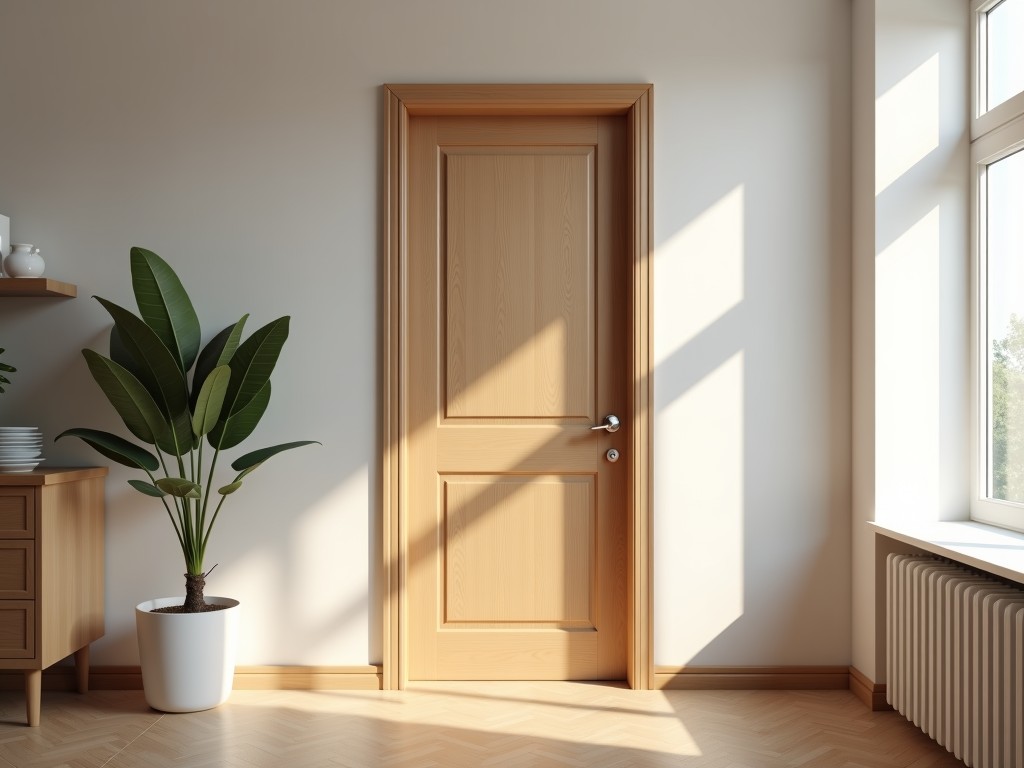
Project MDF Door Supplier – Custom Manufacturing for Industrial & Commercial Applications
When sourcing MDF doors for large-scale projects, procurement teams prioritize dimensional stability, surface consistency, and reliable supply chain performance. This page outlines how engineered MDF door solutions are manufactured, tested, and delivered to meet the specific demands of industrial interiors, retail fit-outs, and institutional buildings.
Material Selection for Structural Integrity
Medium-density fiberboard (MDF) used in project doors is manufactured from refined wood fibers bonded with urea-formaldehyde or melamine-urea-formaldehyde resins under high temperature and pressure. The resulting panel offers uniform density — typically 650–750 kg/m³ — minimizing internal stress and reducing the risk of warping or telegraphing through finishes. For environments with fluctuating humidity, moisture-resistant (MR) grade MDF is available, incorporating paraffin wax and melamine additives to limit thickness swelling to less than 5% after 24-hour immersion, per EN 622-5 standards.
Surface quality depends on fiber refinement and pressing precision. Fine-fiber MDF provides a smooth substrate ideal for direct painting, laminating, or veneering without surface preparation. Edge stability is critical in door applications; therefore, edges are often sealed with hot-melt PVC or ABS edgebanding to prevent moisture ingress and mechanical damage during handling and installation.
Manufacturing Process for Project Consistency
Door production begins with CNC cutting of MDF blanks to exact dimensions, maintaining tolerances of ±0.5 mm on length and width, and ±0.3 mm on thickness. This precision ensures consistent reveal gaps and proper hinge alignment across large quantities. Door cores may be solid MDF or engineered with internal reinforcement — such as laminated staves or honeycomb cores — to reduce weight while maintaining screw holding strength (typically >1,200 N for face screws and >800 N for edge screws).
After routing for hinges, locks, and hardware, surfaces are sanded to 120–150 grit before priming. For factory-finished doors, UV-cured primers and topcoats are applied in controlled environments to achieve film thickness of 60–80 microns, providing scratch resistance and adhesion suitable for high-traffic areas. All finishing processes include inline quality checks for gloss uniformity, color delta-E (<1.5), and edge coverage.
Typical Specifications for Project MDF Doors
| Parameter | Typical Range / Option |
|---|---|
| Door Thickness | 30 mm, 35 mm, 40 mm |
| Maximum Panel Size | 2440 mm x 1220 mm (custom cuts available) |
| Core Type | Solid MDF, MR MDF, Honeycomb Core, Laminated Stave |
| Surface Finish | Primer Only, Melamine Laminate, Veneer, Painted (RAL/NCS) |
| Edge Treatment | Raw, PVC/ABS Edgebanding, Veneer Edge, Solid Wood Lipping |
| Fire Rating (Optional) | B-s2,d0 (Euroclass) via FR-MDF or intumescent coating |
| Packaging | Individual PE wrapping, corner protectors, stacked on pallets with top/bottom cardboard |
Customization Options for OEM & Project Requirements
Customization extends beyond dimensions. Hardware prep — including hinge mortises, lock blocks, and strike plate recesses — is programmed directly from CAD drawings to eliminate field adjustments. For projects requiring acoustic performance, doors can be manufactured with dampening layers or perimeter seals to achieve STC ratings of 30–35. Fire-rated configurations use FR-grade MDF or intumescent paint systems tested to BS 476 Part 22 or EN 1634-1.
Veneer matching is available for projects requiring grain continuity across multiple doors. Book-matched or slip-matched layups ensure visual consistency, particularly important in executive suites, hotel corridors, and healthcare facilities. Edge banding colors and textures are selected to match or contrast with face finishes, with options for laser-edged ABS to eliminate visible glue lines.
Packaging, Logistics & Damage Prevention
Finished doors are wrapped in 50-micron polyethylene film to protect against moisture and surface abrasion during transit. Corner guards and edge protectors are applied to vulnerable points, and doors are stacked flat on ISPM-15 compliant pallets with intermediate cardboard layers to prevent sticking. Unit loads are secured with PET strapping and stretch film, designed for containerized shipping and long-term storage without deformation.
Each pallet includes a packing list with SKU, dimensions, finish code, and quantity. For OEM shipments, labels can include barcodes or QR codes linked to technical datasheets and installation guides. Lead times typically range from 10–25 days after drawing approval, depending on finish complexity and order volume — available upon request.
Quality Control & Inspection Protocol
Every production batch undergoes incoming material verification for density, moisture content (target: 6–8%), and formaldehyde emission (E1 or CARB Phase 2 compliant). In-process checks include dimensional verification after routing, sanding uniformity, and primer adhesion (cross-hatch test per ASTM D3359). Final inspection measures flatness (<0.5 mm deviation over 1m), edge coverage, and finish continuity. Random samples are subjected to 24-hour humidity cycling to validate dimensional stability before release.
Documentation includes material safety data sheets (MSDS), finish compliance reports, and packing certificates. Third-party inspection is supported upon customer request, with hold points available for pre-shipment review.
Common Applications in Industrial & Commercial Projects
MDF doors are widely specified in environments where surface finish quality and dimensional predictability outweigh the need for extreme impact resistance. Typical applications include:
- Office interiors and partition systems
- Retail store fixtures and fitting rooms
- Hotel guest rooms and corridor doors
- Healthcare facility administrative areas
- Educational institution classrooms and libraries
- Exhibition stands and display units
In these settings, the ability to achieve a seamless, factory-finished appearance reduces on-site labor and minimizes variability between units — critical for large-scale rollouts where aesthetic consistency affects perceived quality.
Discuss Your Project Requirements
Share your door schedules, drawings, or performance specifications for a detailed review. Our engineering team evaluates material suitability, hardware integration, finish durability, and packaging needs to provide a customized proposal aligned with your project timeline and quality standards.