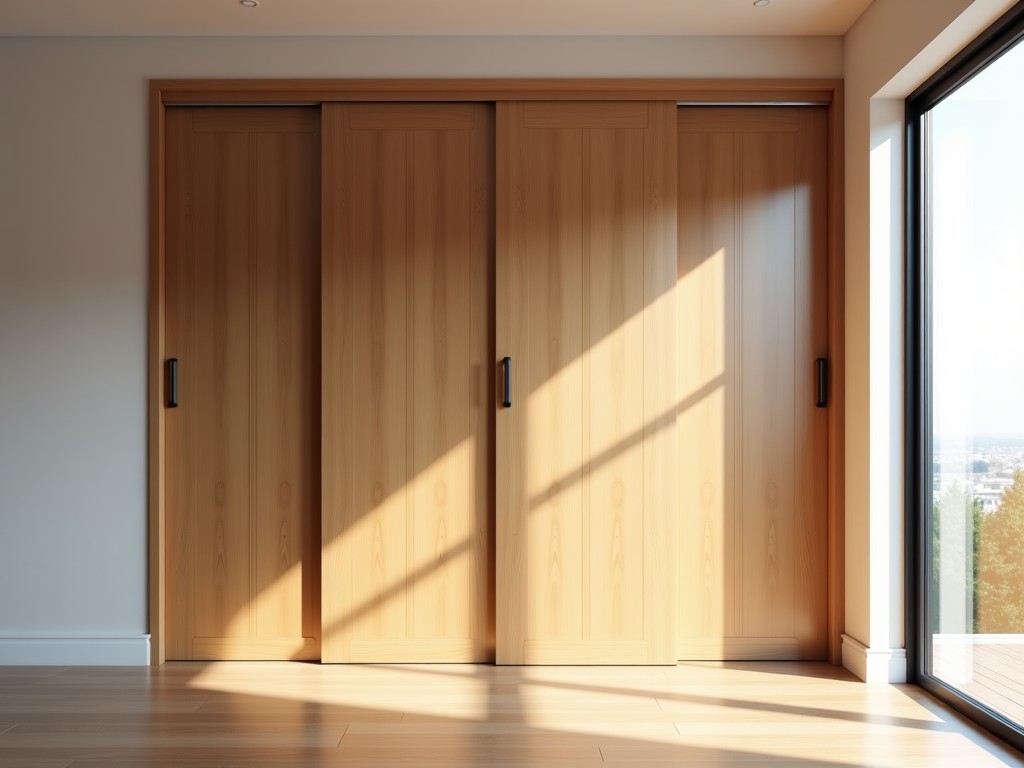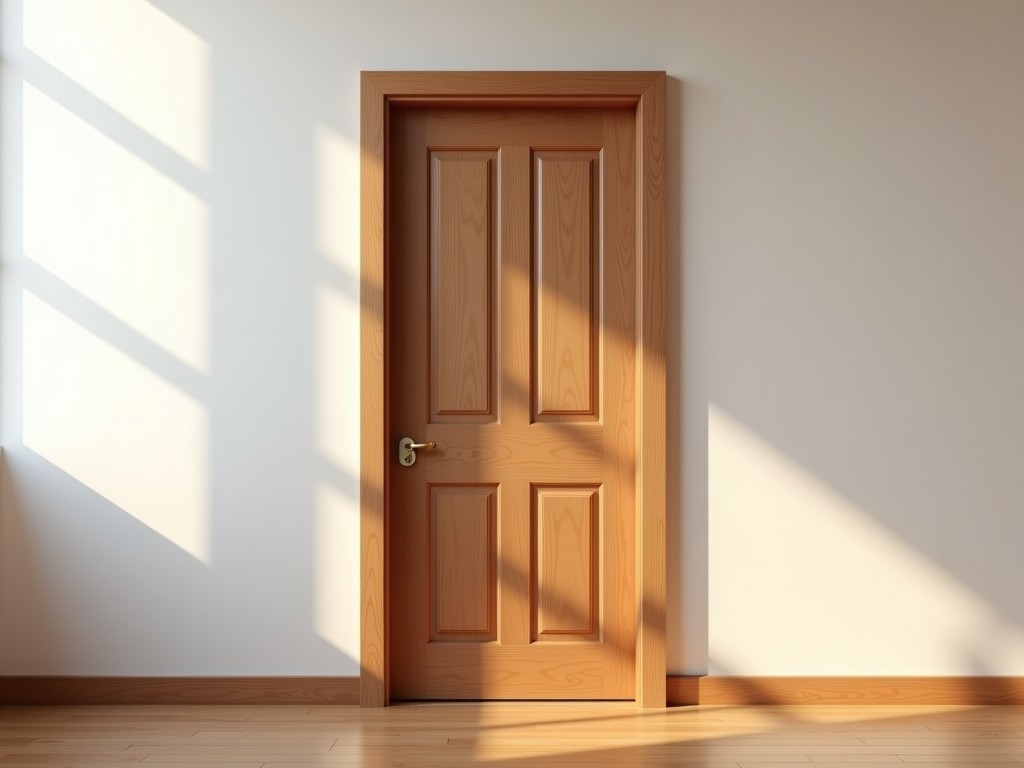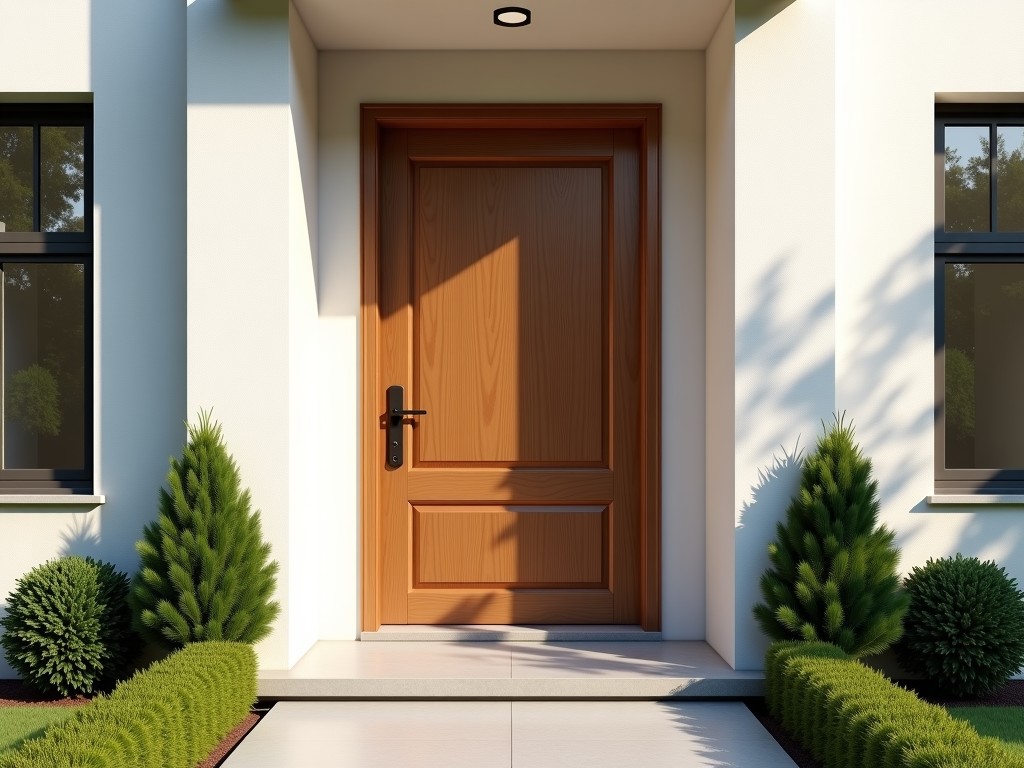
Scratch Resistant Wooden Door Factory
Scratch Resistant Wooden Door Factory

Scratch Resistant Wooden Door: Engineering Solutions for High-Traffic Industrial Environments
In manufacturing facilities, distribution centers, and institutional buildings, wooden doors face constant mechanical stress from carts, pallet jacks, and frequent contact with tools and equipment. Standard veneers and finishes quickly show surface degradation, compromising both appearance and hygiene. Scratch resistant wooden doors address this through engineered surface treatments and substrate selection designed to maintain integrity under repeated abrasion while preserving the dimensional stability and acoustic properties expected of wood.
Material Selection and Substrate Engineering
The foundation of a scratch resistant door begins with the core material. High-density fiberboard (HDF) or particleboard with uniform density minimizes internal voids that can lead to uneven wear or delamination under impact. For applications requiring moisture resistance, marine-grade plywood or formaldehyde-free composite cores provide dimensional stability in humid environments without sacrificing machinability for hinges, locks, and vision panels.
Surface layers are typically hardwood veneers such as maple, birch, or oak selected for their natural hardness and tight grain structure. These species resist surface indentation better than softer woods like pine or poplar. The veneer is bonded using phenol-formaldehyde or melamine-urea-formaldehyde adhesives that maintain bond integrity under cyclic humidity changes, preventing edge lifting or bubbling that exposes the substrate to wear.
Surface Treatment Technologies
The scratch resistance is achieved through multiple layers of engineered coatings applied over the veneer. UV-cured acrylic or polyurethane topcoats form a cross-linked polymer matrix with surface hardness exceeding 2H on the pencil scale, significantly reducing micro-scratches from routine contact. These coatings are applied in controlled environments to ensure uniform thickness (typically 0.03–0.05 mm) and full coverage, including edges and machined cutouts.
Some formulations incorporate aluminum oxide or silicon carbide nanoparticles dispersed within the coating matrix. These hard particulates (Mohs hardness 8–9) protrude slightly to absorb abrasive forces, protecting the underlying polymer and wood fibers. Unlike wax-based finishes that degrade with cleaning agents, these cured systems resist common industrial cleaners, alcohol-based disinfectants, and light oils without clouding or softening.
Performance Characteristics and Testing
Abrasion resistance is evaluated using standardized methods such as Taber Abraser (ASTM D4060) with CS-10 wheels under 500g load, where scratch resistant doors typically show less than 80 mg weight loss over 1000 cycles — significantly lower than untreated veneer (>300 mg). Impact resistance is assessed via drop-ball tests (ASTM D5420), where the surface withstands 500g steel ball dropped from 1m without cracking or coating delamination.
Chemical resistance is tested per ASTM D1308, exposing coated surfaces to solvents, acids, and bases for 24 hours. Acceptable performance shows no whitening, blistering, or loss of adhesion. These properties ensure the door maintains appearance and functionality in environments requiring frequent cleaning, such as food processing areas, laboratories, or healthcare corridors.
Typical Specifications
| Parameter | Typical Range | Notes |
|---|---|---|
| Core Material | HDF, Particleboard, Plywood | Density: 650–800 kg/m³ |
| Veneer Species | Maple, Birch, Oak, Walnut | Face and back balanced |
| Coating Type | UV-cured Acrylic/PU | Solid content: 100% |
| Surface Hardness | 2H–4H (pencil scale) | ASTM D3363 |
| Abrasion Resistance | <80 mg loss/1000 cycles | Taber CS-10, 500g |
| Thickness | 35–50 mm | Customizable |
| Standard Sizes | 813×2032 mm, 915×2032 mm | Other sizes per project |
Application Scenarios
These doors are specified in environments where surface durability directly impacts operational efficiency and maintenance costs. In automotive assembly plants, they withstand contact with tool carts and overhead conveyor trolleys in body shops and paint areas. In pharmaceutical facilities, they resist scratching from mobile equipment while maintaining cleanability required for ISO 14644 cleanroom classifications.
Educational institutions use them in high-traffic corridors and laboratory wings where backpacks, equipment carts, and frequent use cause rapid wear on standard doors. Distribution centers specify them for office-to-warehouse transition zones where forklift traffic and pallet movement create abrasive conditions unsuitable for conventional finishes.
Customization and Integration
Doors can be manufactured to accommodate vision panels, louvers, or access control cutouts without compromising surface integrity. Edge sealing options include PVC, ABS, or matching wood veneer to prevent moisture ingress at machined surfaces. For fire-rated applications, mineral cores or intumescent strips are integrated while maintaining the scratch resistant face — tested to BS 476 Part 22 or EN 1634-1 for 30–60 minute ratings.
Acoustic performance can be enhanced with perimeter seals and mass-loaded layers, achieving STC ratings of 30–35 depending on construction. This is valuable in office partitions, testing labs, or control rooms where noise transmission must be minimized without sacrificing surface durability.
Packaging and Logistics
Each door is wrapped in polyethylene film to protect the coating during transit, then placed between corrugated cardboard sheets with corner protectors. Units are stacked on pallets with horizontal spacers to prevent surface contact and secured with stretch wrap. For export, ISPM-15 compliant pallets and fumigation documentation are available upon request.
Lead time typically ranges from 3–6 weeks for standard configurations, depending on core material availability and coating line scheduling. Custom sizes, fire ratings, or special veneers may extend timelines. Samples of coating finishes and core materials are available for evaluation prior to bulk order.
Quality Control and Inspection
Incoming veneer is checked for grain consistency, moisture content (8–12%), and absence of defects. Core density is verified via sampling, and adhesive bond strength is tested per ANSI A208.1. Post-coating, each unit undergoes visual inspection under 500 lux lighting for uniformity, edge coverage, and absence of pinholes or thin spots. Gloss levels are measured to ensure consistency across batches (typically 15–30% depending on formulation).
Random samples are subjected to abrasion and adhesion testing (tape test, ASTM D3359) to validate process control. Documentation of material certifications, coating specifications, and test results is provided with each shipment upon request.
Selection Considerations
When evaluating scratch resistant doors, buyers should confirm the coating system’s compatibility with their cleaning protocols — some industrial solvents may require specific formulations. Edge protection is critical in high-impact zones; even the best coating cannot prevent substrate damage if edges are left exposed. For humid environments, ensure the core material is rated for the expected relative humidity to avoid swelling or delamination over time.
Request samples coated with the exact finish intended for production, as color and gloss can vary between batches. Confirm whether the manufacturer provides edge sealing as a standard option or if it requires additional specification. For fire-rated assemblies, verify that the scratch resistant layer does not interfere with intumescent performance — some coatings may require special formulation to maintain fire test compliance.
Discuss your project requirements with our engineering team to determine the optimal core material, coating system, and dimensions for your facility’s specific wear conditions and regulatory requirements.