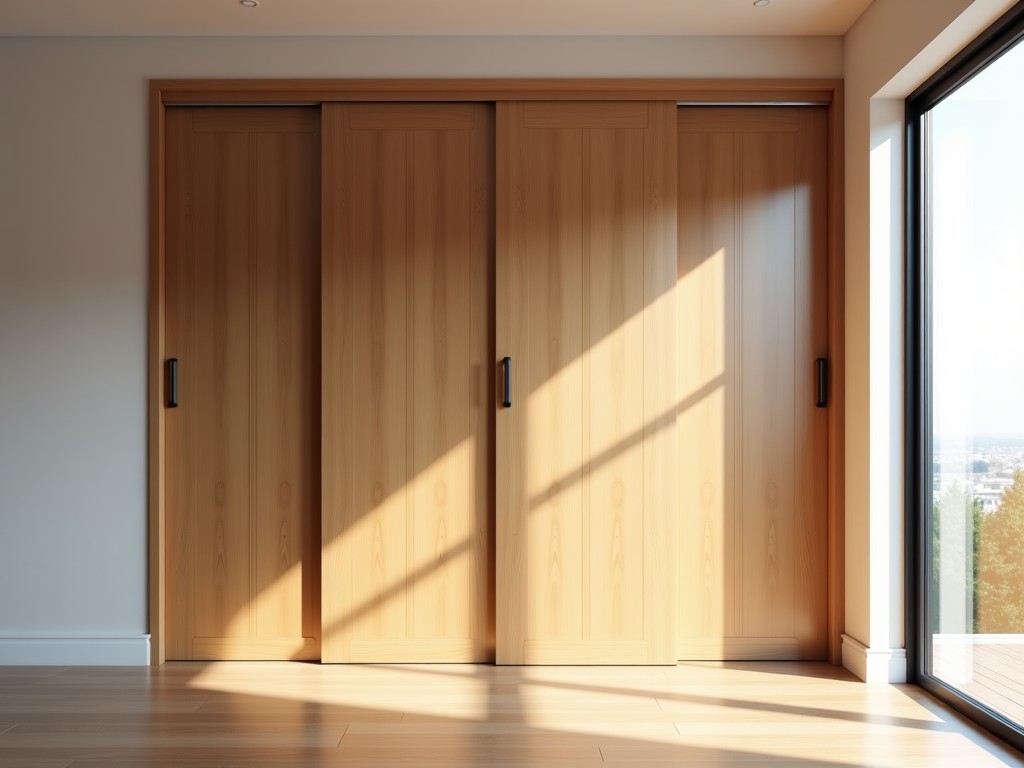
Shaker Cabinet Door Panels Exporter
Shaker Cabinet Door Panels Exporter

Shaker Cabinet Door Panels: Precision-Engineered for Consistent Cabinet Assembly
Shaker-style cabinet doors remain a cornerstone of residential and commercial millwork due to their clean lines, enduring appeal, and adaptability across design aesthetics. The success of these doors hinges on the dimensional stability, surface quality, and joint integrity of the panel component—a critical element that must resist warping, telegraphing, and seasonal movement while maintaining tight tolerances for seamless integration with stiles and rails.
Engineering Challenges in Shaker Panel Production
Cabinet manufacturers frequently encounter issues with panel flatness, edge chipping during machining, and inconsistent thickness leading to visible gaps or binding in frame-and-panel assemblies. These problems are exacerbated when using core materials with high internal stress, uneven density, or inadequate moisture buffering—particularly in environments with fluctuating humidity. For OEMs and high-volume producers, such inconsistencies increase rework rates, slow assembly lines, and compromise long-term product performance.
Material Selection for Dimensional Stability
The core material directly influences how a shaker panel responds to environmental changes and mechanical stress. Medium-density fiberboard (MDF) is commonly selected for its uniform density, minimal grain directionality, and excellent machinability—allowing for crisp routed profiles without tear-out. For applications requiring enhanced moisture resistance, moisture-resistant (MR) MDF or engineered wood cores with formaldehyde-free adhesives are used, meeting CARB Phase 2 and TSCA Title VI compliance. In high-end architectural projects, solid wood panels (such as poplar or maple) may be specified for stain-grade applications, though they require careful drying and acclimatization to minimize movement.
Manufacturing Process and Tolerance Control
Panels are produced using precision CNC routing or high-speed shaper tooling to achieve the characteristic recessed panel profile with consistent depth and width. Critical dimensions—including panel thickness, rabbet depth, and overall length/width—are held to tight tolerances to ensure proper fit within the frame groove. Typical thickness tolerances are maintained within ±0.15 mm, while profile depth variation is controlled to ±0.2 mm to prevent binding or rattling during assembly. Edge quality is prioritized through sharp tooling and optimized feed rates to minimize fuzzing or burning, especially in MDF cores.
Typical Specifications and Customization Options
| Specification | Typical Range / Option |
|---|---|
| Panel Thickness | 12 mm, 16 mm, 18 mm, 20 mm |
| Core Material | Standard MDF, MR-MDF, Particleboard, Solid Wood (Poplar, Maple, Oak) |
| Profile Depth | 6 mm to 12 mm (customizable) |
| Rabbet Size | 6 mm x 6 mm to 10 mm x 10 mm (frame-dependent) |
| Surface Finish | Raw, Primed, Prefinished (Melamine, Veneer, UV Coating) |
| Maximum Panel Size | Up to 1220 mm x 2440 mm (custom sizes available) |
| Edge Treatment | Square, Beveled, Radius (matched to frame profile) |
All panels are manufactured to order based on client-provided drawings or specifications. Customization extends to non-standard profiles, arched or cathedral tops, and integrated features such as finger pulls or glass retainers. Material substitutions, adhesive types, and surface treatments are adjusted per project requirements—including low-VOC finishes for healthcare or educational environments. Prototypes or first-article samples are available upon request to validate fit and finish before full production.
Packaging and Logistics for Damage-Free Delivery
To prevent edge damage and surface marring during transit, panels are stacked flat with protective interleaving sheets between each unit and secured within rigid, edge-reinforced cartons or crates. Corner protectors and stretch wrapping are used for palletized shipments. For export orders, ISPM 15-compliant packaging is standard, and moisture-barrier layers are included for long-haul or high-humidity routes. Each bundle is labeled with part numbers, quantities, and orientation marks to streamline receiving and inventory management at the customer facility.
Quality Control and Inspection Protocols
Dimensional verification occurs at multiple stages: after routing, during stacking, and pre-shipment. Each panel is checked for thickness, width, length, and profile consistency using calibrated gauges and optical comparators. Surface quality is assessed under standardized lighting to detect scratches, dents, or finish defects. Moisture content is monitored for hygroscopic materials to ensure stability post-delivery. Random sampling and first-article inspection reports are available, and full traceability is maintained from raw material input to final pack.
Discuss your project requirements with our engineering team. Share your drawings or specifications for a customized proposal, including material options, lead times, and sample availability.