Shaker Painted Wooden Door Top Supplier
Shaker Painted Wooden Door Top Supplier
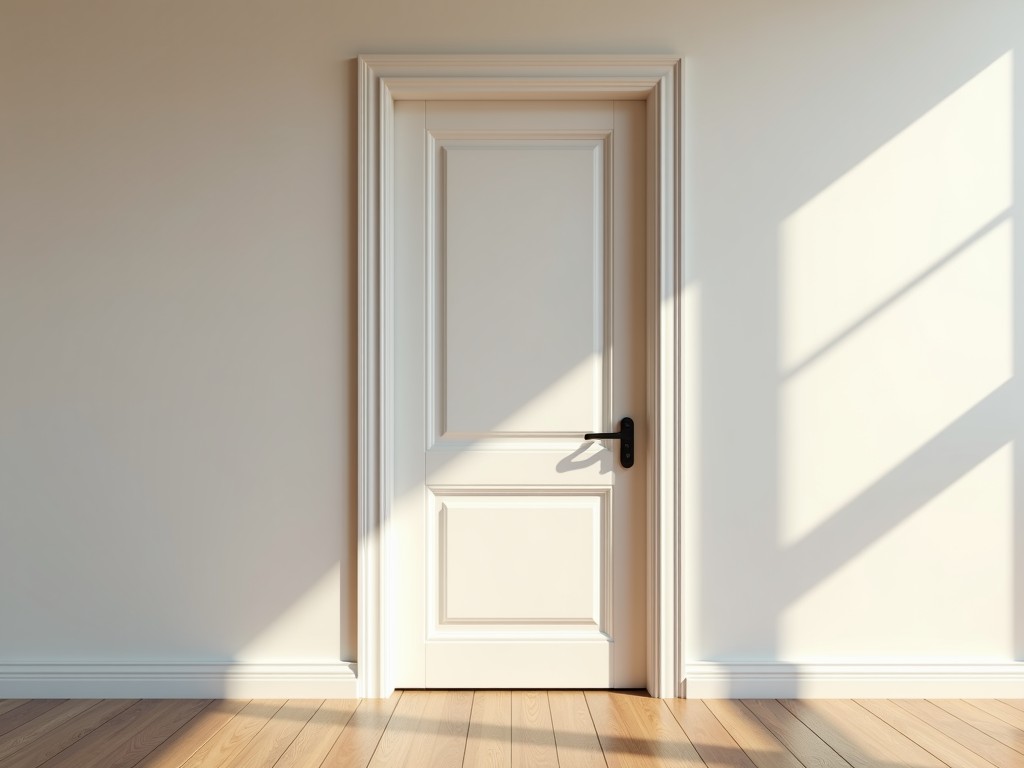
Shaker Painted Wooden Door
In high-cycle commercial and institutional environments, door performance is dictated by material stability, finish adhesion, and dimensional consistency under fluctuating humidity and mechanical stress. Shaker-style wooden doors, valued for their clean lines and durability, require precise manufacturing to maintain both aesthetic integrity and functional reliability over extended service life.
Material Selection and Core Construction
The foundation of a durable Shaker painted door begins with substrate selection. Typically, solid hardwoods such as maple, birch, or poplar are used for stiles and rails due to their resistance to warping and consistent grain structure. For core panels, engineered options like MDF or particleboard with moisture-resistant additives are common in paint-grade applications, providing a uniform surface that minimizes telegraphing and ensures smooth paint adhesion. The choice between solid wood and engineered core depends on environmental conditions — solid wood performs better in stable, controlled climates, while engineered cores offer superior dimensional stability in areas with seasonal humidity swings.
Manufacturing Process and Joinery
Shaker doors are constructed using traditional cope-and-stick or mortise-and-tenon joinery, which provides mechanical strength without relying solely on adhesives. This method allows for natural wood movement while maintaining joint integrity over time. After assembly, doors are sanded to a uniform surface profile — typically 120-grit for initial smoothing, progressing to 220-grit for final preparation — ensuring optimal paint adhesion and minimizing the risk of finish cracking or peeling. Precise milling tolerances (±0.5 mm on thickness, ±1.0 mm on width and height) are maintained to ensure proper fit within frames and consistent reveal around the perimeter.
Paint System and Finish Durability
The painted finish is applied in a controlled environment using either water-based or solvent-based urethane systems, selected based on required durability, VOC compliance, and curing time. A typical multi-coat system includes a primer, intermediate coat, and topcoat, with total dry film thickness ranging from 60 to 100 microns. This build provides resistance to scratches, UV degradation, and mild chemical exposure common in healthcare, education, and office settings. Edge sealing is critical — all six sides are coated to prevent moisture ingress, which is a leading cause of substrate swelling and finish failure in wooden doors.
Typical Specifications
| Specification | Typical Range |
|---|---|
| Door Thickness | 35 mm, 40 mm, 45 mm |
| Stile and Rail Width | 70 mm to 110 mm |
| Panel Recess Depth | 6 mm to 10 mm |
| Paint Dry Film Thickness | 60–100 microns |
| Edge Sealing | All six sides coated |
| Custom Sizes | Available upon request |
Application Suitability
Shaker painted wooden doors are commonly specified in environments where a balance of aesthetics, durability, and maintenance practicality is required. In healthcare facilities, their smooth, seamless surfaces support infection control protocols by minimizing crevices where contaminants can accumulate. In educational institutions, the finish resists frequent cleaning and incidental impact from carts and equipment. Office environments benefit from the doors’ ability to maintain visual consistency across large installations, even under varying lighting conditions. Unlike laminate or veneer alternatives, painted wood allows for localized touch-up repair without full panel replacement, reducing lifecycle maintenance costs.
Customization and OEM Support
Customization extends beyond dimensions to include panel configuration (flat, raised, or recessed), sticking profiles (beaded, ogee, or square), and paint sheen levels (matte, satin, semi-gloss). For OEM projects, doors can be pre-drilled for specific hardware templates, including hinges, locks, and panic bars, according to client-provided drawings. Lead times typically range from 4 to 6 weeks for standard configurations, with extended timelines for complex finishes or non-standard sizes. Packaging involves individual door sleeves, corner protectors, and palletizing with stretch wrap to prevent surface damage during transit — critical for maintaining finish integrity upon arrival.
Quality Control and Inspection
Each door undergoes multi-stage inspection: after assembly for joint integrity and square, after sanding for surface uniformity, and post-paint for gloss consistency, adhesion (cross-hatch test), and thickness uniformity. Random samples are subjected to humidity cycling and impact resistance testing to validate long-term performance. While specific test standards vary by client requirement, common references include ISO 2813 for gloss, ISO 2409 for adhesion, and internal protocols for edge seal coverage and finish continuity.
For projects requiring precise coordination between architectural specifications, finish performance, and delivery schedules, sharing detailed drawings or performance requirements enables our engineering team to provide a tailored proposal. Discuss your project needs to review material options, tolerances, and finishing systems suited to your operating environment.