Slab Cabinet Door Panels Top Supplier
Slab Cabinet Door Panels Top Supplier
Slab Cabinet Door Panels
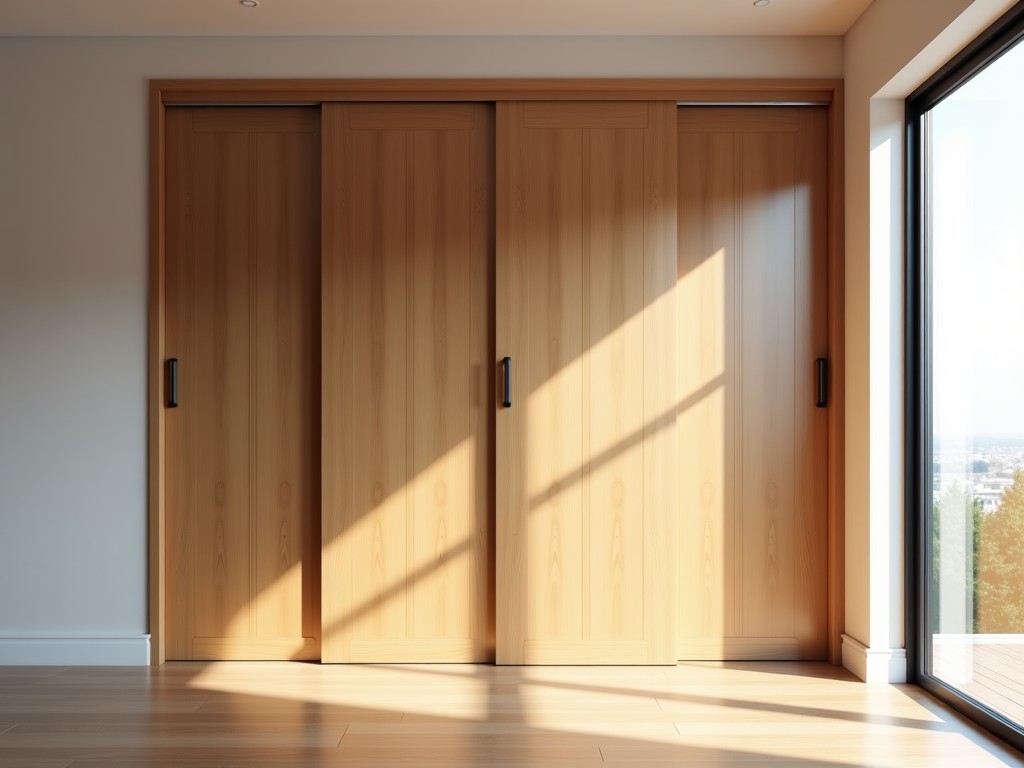
Slab cabinet door panels are flat, frameless door components commonly used in modern cabinetry for residential, commercial, and institutional applications. Unlike raised-panel or shaker-style doors, slab doors provide a seamless, uninterrupted surface that supports minimalist design aesthetics while offering functional benefits in cleaning, durability, and integration with hardware systems.
Material Selection and Substrate Options
The performance and appearance of slab door panels depend largely on the core material and surface finish. Common substrates include medium-density fiberboard (MDF), particleboard, plywood, and engineered wood composites, each selected based on dimensional stability, screw holding strength, and resistance to warping under varying humidity conditions. For high-moisture environments such as kitchens or bathrooms, moisture-resistant (MR) or marine-grade variants are typically specified to prevent swelling or delamination.
Surface finishes range from thermally fused laminate (TFL) and high-pressure laminate (HPL) to veneer, lacquer, and melamine coatings. TFL and HPL offer excellent abrasion resistance and are ideal for high-traffic areas, while painted or lacquered finishes provide a seamless, uniform appearance suitable for designer interiors. Edge banding — typically PVC, ABS, or wood veneer — is applied to seal the core and prevent moisture ingress, with thickness and adhesion quality directly impacting long-term durability.
Manufacturing Process and Tolerance Control
Slab door panels are manufactured using precision cutting and edge sealing equipment to ensure dimensional accuracy and surface consistency. CNC routers or panel saws cut the substrate to size with tolerances typically held within ±0.5 mm for length and width, and ±0.3 mm for thickness, depending on the material and machine calibration. Edge banding is applied via hot-air or hot-melt adhesive systems, followed by trimming and buffing to achieve a flush, seamless joint.
Surface finishing processes vary by material: laminate panels undergo heat and pressure bonding, while painted doors may require multiple spray coats and UV curing cycles. Quality control checks include flatness measurement (using straightedge and feeler gauges), edge adhesion testing, and surface defect inspection under standardized lighting. These steps help ensure that panels meet both aesthetic and functional requirements before shipment.
Typical Specifications
| Parameter | Typical Range / Option |
|---|---|
| Thickness | 16 mm, 18 mm, 20 mm, 25 mm (customizable) |
| Standard Dimensions | Up to 2440 mm × 1220 mm (full sheet); cut-to-size available |
| Core Materials | MDF, Particleboard, Plywood, HDF, Composite |
| Surface Finishes | TFL, HPL, Melamine, Veneer, Lacquer, Painted |
| Edge Banding | PVC, ABS, Wood Veneer, 0.5–2.0 mm thickness |
| Tolerance (Length/Width) | ±0.5 mm (standard), ±0.2 mm (precision) |
| Tolerance (Thickness) | ±0.3 mm (standard), ±0.1 mm (calibrated) |
Application Scenarios and Industry Use
Slab door panels are widely selected in modern kitchen cabinets, bathroom vanities, wardrobe systems, and office storage units where clean lines and ease of maintenance are priorities. In healthcare and laboratory settings, non-porous finishes such as HPL or thermofoil are preferred for their resistance to chemicals and ease of disinfection. Retail fixtures and display cabinetry often use painted or veneered slab doors to achieve a premium, uniform appearance that aligns with brand aesthetics.
Because slab doors lack grooves or profiles, they are less prone to dust accumulation and can be cleaned with standard detergents without risk of damage to detailing. This makes them particularly suitable for environments requiring frequent sanitation. Additionally, their flat surface allows for consistent alignment when installing hinges, handles, and soft-close mechanisms, reducing assembly time and improving functional reliability in production lines.
Customization and OEM Considerations
Customization options include cut-to-size dimensions, custom edge banding colors or materials, pre-drilled hinge and handle holes, and special surface treatments such as anti-fingerprint coatings or fire-retardant overlays. For OEMs and kitchen manufacturers, providing CAD drawings or cutting lists enables efficient nesting and minimizes material waste. Lead times depend on material availability and finish complexity, with standard laminate panels typically available faster than custom-painted or veneered options.
Packaging is designed to protect edges and surfaces during transit, commonly using corner protectors, edge strips, and shrink-wrapped pallets with horizontal stacking to prevent bending. For export shipments, moisture-barrier wrapping and ISPM-15 compliant pallets are available upon request. Buyers are advised to specify inspection criteria such as flatness, edge adhesion, and surface uniformity in purchase orders to ensure consistency across batches.
Selection Guidance for Procurement and Engineering Teams
When evaluating slab door panels, procurement teams should consider the end-use environment, expected lifespan, and maintenance requirements. For high-humidity areas, MR-grade substrates with sealed edges are essential to prevent core degradation. In high-wear applications, HPL or textured laminate finishes offer superior scratch and impact resistance compared to standard TFL or melamine. Design teams should verify color consistency and gloss levels across production runs, especially when matching to adjacent components or wall finishes.
Requesting samples with actual edge banding and finish is recommended before approving large orders. Additionally, confirming the supplier’s quality control procedures — such as batch tracking, tolerance verification, and resistance to accelerated aging tests — helps reduce the risk of field failures. Clear communication of hole patterns, overlay requirements, and edge preferences early in the quoting process avoids costly revisions during production.
Share your drawings or specifications for a customized proposal.
Contact our engineering team