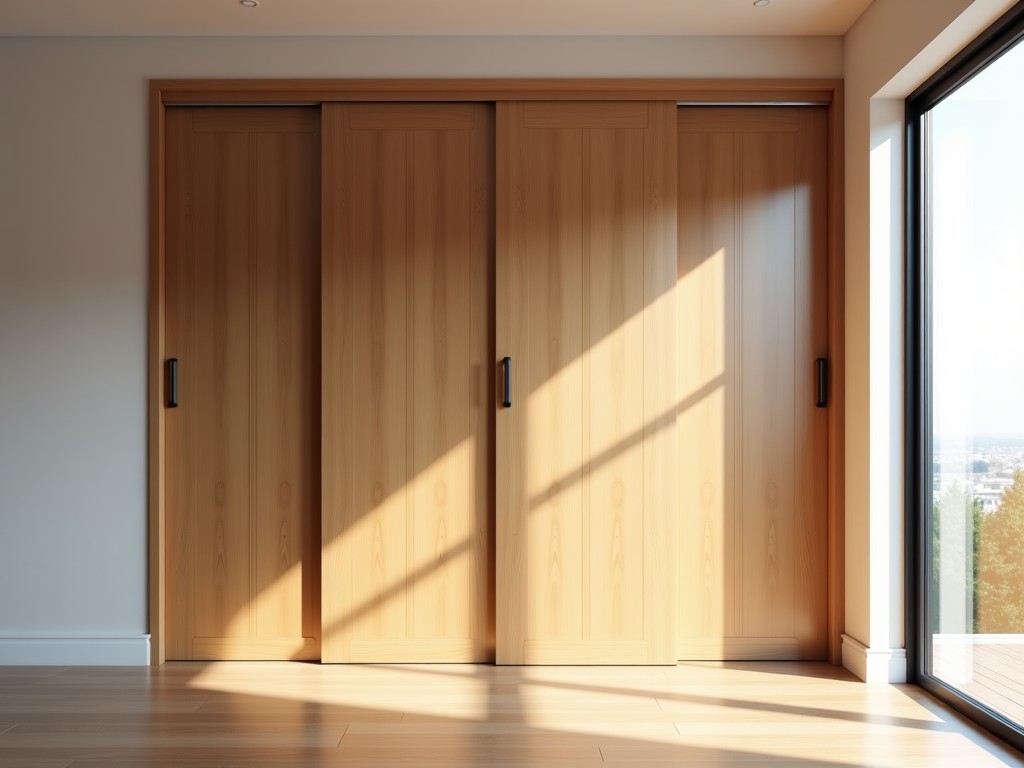
Soft Close Sliding Door Supplier
Soft Close Sliding Door Supplier
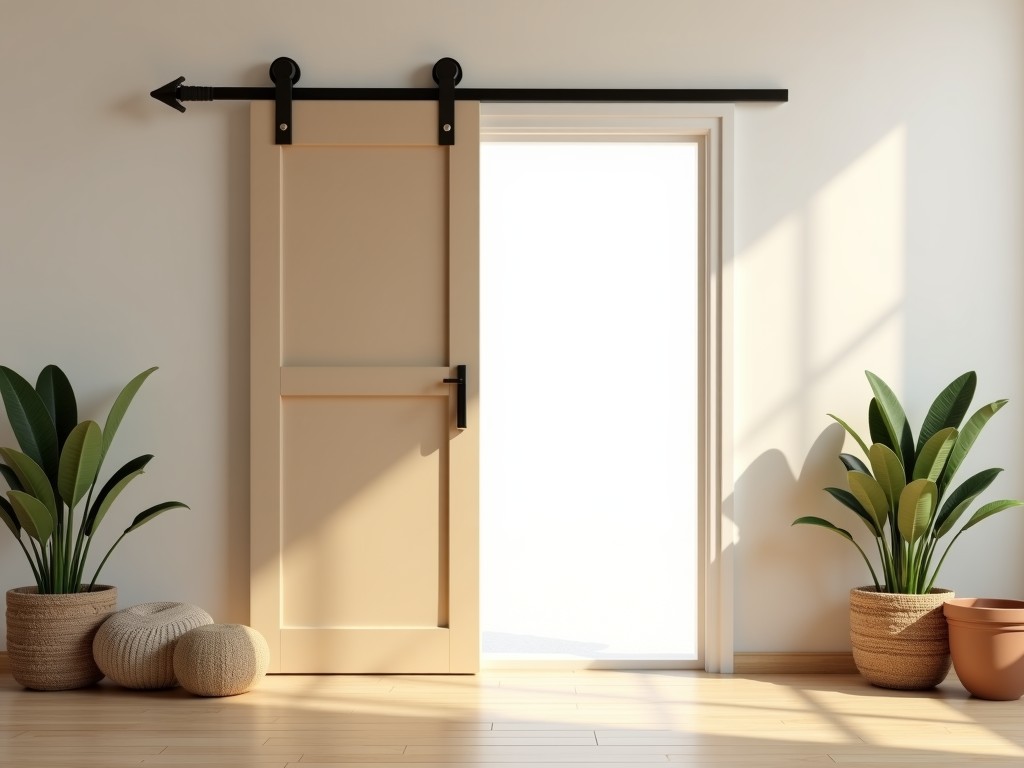
Soft Close Sliding Door Mechanisms for Industrial and Commercial Applications
In environments where door operation impacts workflow, safety, or acoustic performance—such as cleanrooms, control rooms, medical facilities, or high-traffic commercial corridors—uncontrolled closing of sliding doors can pose risks ranging from equipment damage to personnel injury. Soft close mechanisms address this by providing controlled, damped deceleration during the final phase of closure, eliminating slamming and ensuring repeatable, quiet operation regardless of user force or door weight.
Engineering Principle Behind Controlled Deceleration
Soft close functionality is achieved through hydraulic or pneumatic dampers integrated into the sliding door hardware system. As the door approaches the closed position, a piston moves through a viscous fluid or compressed air chamber, generating resistance proportional to velocity. This creates a predictable deceleration curve that brings the door to a smooth stop over the last 50–100mm of travel. The damping force is tunable via orifice size, fluid viscosity, or air pressure, allowing adaptation to door masses typically ranging from 30kg to 150kg per panel in industrial settings.
Unlike friction-based brakes or spring-assisted closers, hydraulic damping provides consistent performance across temperature cycles and repeated use, with minimal wear on moving parts. The system is passive—requiring no external power—and resets automatically after each cycle, making it suitable for doors operated manually or via automated actuators.
Material Selection for Longevity in Demanding Environments
Critical components—including the damper body, piston rod, and mounting brackets—are commonly manufactured from stainless steel grades such as AISI 304 or 316, selected for their resistance to corrosion in humid, chemically exposed, or washdown environments. The piston rod often features hard chrome plating or nitriding to improve surface hardness and reduce seal wear, extending service life in high-cycle applications.
Seals are typically made from nitrile rubber (NBR) or fluoroelastomer (FKM), chosen based on exposure to oils, solvents, or cleaning agents. For cleanroom or food-processing applications, FDA-compliant elastomers and electropolished stainless steel finishes may be specified to meet hygiene standards. Aluminum housings with anodized coatings are used in lower-load applications where weight reduction is a priority, though they offer less inherent corrosion resistance than steel alternatives.
Typical Specifications and Performance Ranges
| Parameter | Typical Range / Value | Notes |
|---|---|---|
| Door Weight Capacity (per damper) | 30–150 kg | Dependent on damper size and fluid viscosity; multiple units can be used for heavier doors |
| Closing Speed Range | 0.2–0.8 m/s | Adjustable via orifice control; factory-set for application |
| Deceleration Distance | 50–100 mm | Final travel phase where damping engages |
| Operating Temperature | -20°C to +60°C | Standard seals; extended ranges available with specialty elastomers |
| Cycle Life (Typical) | 50,000–100,000 cycles | Dependent on load, speed, and maintenance; verified via accelerated testing |
| Mounting Configuration | Side-mounted, top-mounted, or concealed | Selected based on door profile and clearance constraints |
Application Scenarios Where Soft Close Adds Value
In healthcare facilities, soft close sliding doors are used in patient wards, operating rooms, and medication storage areas where noise reduction and controlled access are critical. The mechanism prevents sudden closures that could disrupt sterile environments or startle patients, while ensuring doors fully latch without manual intervention.
In semiconductor manufacturing or laboratory settings, particulate contamination is a concern. Soft close reduces vibration and air turbulence caused by door impact, helping maintain ISO-classed cleanroom conditions. Similarly, in data centers or control rooms housing sensitive electronics, minimized shock and vibration contribute to equipment longevity.
Commercial applications include office meeting rooms, hotel corridors, and retail partitions, where frequent use demands durable, low-maintenance hardware. The consistent closing behavior improves user experience and reduces wear on door frames, rollers, and locking mechanisms over time.
Customization and Integration Considerations
Soft close mechanisms can be adapted to various sliding door systems, including top-hung, bottom-rolling, and bypass configurations. Mounting brackets are often designed for retrofit into existing aluminum or steel profiles, though optimal performance is achieved when specified during initial system design. Custom stroke lengths, damping forces, and housing geometries are available to match non-standard door weights, travel distances, or spatial constraints.
For OEMs integrating the mechanism into proprietary door systems, collaboration during the design phase ensures proper alignment with rollers, guides, and stop blocks. Providing door mass, center of gravity, and expected usage frequency enables precise damper sizing and fluid selection. Prototyping and cycle testing are typically recommended before full-scale production validation.
Quality Control and Testing Approach
Each unit undergoes functional validation, including damping force measurement across the deceleration stroke, leak testing of hydraulic seals, and verification of return speed. Samples from production lots are subjected to accelerated life testing—simulating years of operation in compressed time—to assess seal degradation, piston wear, and performance drift. Dimensional inspection of critical interfaces ensures compatibility with standard door hardware.
Material traceability is maintained for stainless steel batches and elastomer compounds, supporting compliance with industry-specific requirements. While specific certifications (e.g., ISO 13485, FDA) are application-dependent and provided upon request, internal processes follow documented procedures for inspection, calibration, and non-conformance handling.
Discuss your project requirements with our engineering team to evaluate suitability, customization options, and integration support for your sliding door application.