Veneer Wooden Doors Supplier
Veneer Wooden Doors Supplier
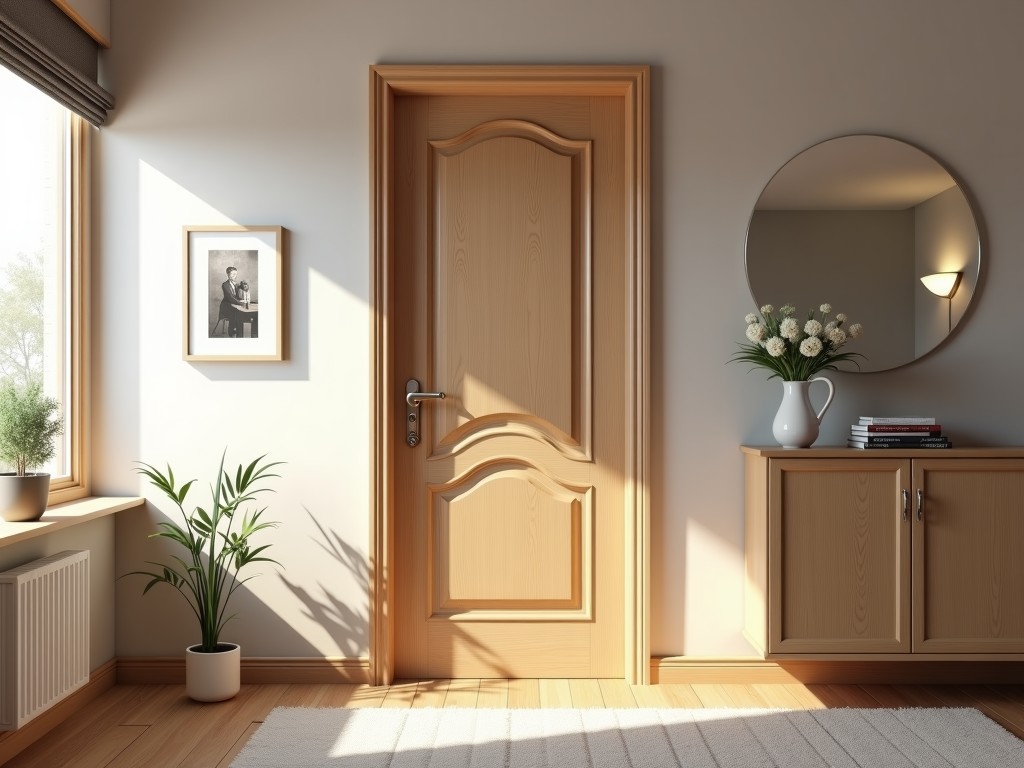
Veneer Wooden Doors Supplier
For industrial facilities requiring durable, aesthetically consistent entry solutions, selecting the right veneer wooden doors involves balancing dimensional stability, surface finish integrity, and compliance with environmental and safety standards. Buyers prioritize long-term performance under varying humidity and traffic conditions, as well as the ability to match architectural specifications across multiple units.
Engineering Considerations in Veneer Door Construction
Veneer wooden doors are engineered assemblies where a thin layer of real wood veneer is bonded to a stable core substrate. The core material significantly influences resistance to warping, impact durability, and fire performance. Common substrates include particleboard, MDF, and solid wood cores, each selected based on the door’s intended use—whether for interior office partitions, cleanroom access points, or high-traffic factory entrances.
Adhesive quality and pressing techniques determine bond longevity. Inconsistent glue spread or insufficient curing can lead to delamination, especially in environments with frequent temperature cycling. Precision manufacturing ensures veneer alignment and uniform thickness across the door face, which is critical for achieving a seamless appearance when installed in suites or corridors.
Material Selection and Performance Trade-offs
The choice of veneer species affects not only appearance but also hardness, grain stability, and susceptibility to moisture-induced movement. Oak and maple offer high surface durability suitable for areas with frequent contact, while species like walnut or cherry are selected for visual appeal in administrative or executive zones, accepting slightly lower wear resistance.
Core materials are evaluated for dimensional stability under fluctuating relative humidity. Particleboard cores provide cost-effective uniformity but may swell at edges if exposed to moisture. MDF cores offer superior screw holding and smooth routing for hardware integration, though they are heavier. Solid wood cores, while premium, require careful drying to minimize internal stress and are typically reserved for applications where natural wood characteristics are specified.
Typical Specifications
| Parameter | Typical Range |
|---|---|
| Door Thickness | 35–45 mm (interior), 40–54 mm (fire-rated) |
| Veneer Thickness | 0.3–0.6 mm (rotary cut), 0.6–1.0 mm (plain sliced) |
| Core Density | 600–800 kg/m³ (particleboard), 700–900 kg/m³ (MDF) |
| Face Screw Holding | > 800 N (MDF core), > 500 N (particleboard) |
| Fire Resistance Rating | FD30, FD60 (available with certified cores) |
| Standard Width/Height | 700–900 mm × 1900–2100 mm (custom sizes available) |
Manufacturing Process and Quality Control
Production begins with core panel preparation, where substrates are cut to size and sanded to ensure uniform surface energy for adhesion. Veneer sheets are matched for grain and color consistency before being coated with adhesive—typically urea-formaldehyde or melamine-urea-formaldehyde for interior applications, or phenolic-based systems for enhanced moisture resistance.
Veneer layup occurs in cold or hot presses under controlled pressure and time cycles to achieve full bonding without telegraphing or bubbling. Post-pressing, doors are sanded to final thickness, primed, and top-coated with UV-cured or water-based finishes to meet specified gloss and abrasion resistance levels. Edge banding is applied using PVC, wood, or metal strips, depending on durability and fire requirements.
Quality checks include moisture content verification (target 8–12%), adhesive bond strength testing via peel or boil methods, surface flatness measurement, and finish adhesion assessment. Dimensional tolerances are maintained within ±1.5 mm for width and height, and ±1.0 mm for thickness, ensuring proper fit within frames and minimal hinge binding.
Customization and Application Scenarios
Beyond standard configurations, veneer doors can be tailored for specific functional needs. Cutouts for vision panels, louvers, or access panels are routed with precision to avoid core weakening. Edge profiles can be squared, beveled, or radiused to match architectural detailing. For environments requiring electrostatic discharge (ESD) protection, conductive veneers or anti-static finishes are available upon request.
In cleanroom or pharmaceutical settings, doors may feature seamless edges, non-particle-generating finishes, and integrated gaskets to maintain pressure differentials. Industrial facilities often specify increased impact resistance at the kick plate zone through metal or high-density polymer inserts, reducing maintenance from cart or pallet traffic.
Packaging, Logistics, and Installation
To prevent surface damage during transit, doors are packaged individually with corner protectors, edge guards, and stretch-wrapped on pallets. Humidity indicators may be included for long-haul shipments to monitor exposure. Packaging is designed to withstand forklift handling and containerized transport without requiring unpacking at intermediate stops.
Installation requires acclimatization to site conditions for 48–72 hours prior to hanging. Frames must be plumb and square, with clearance gaps maintained per fire and acoustic specifications. Hardware selection—hinges, locks, closers—should align with the door’s weight and usage frequency to avoid sagging or premature wear.
Frequently Asked Questions
- Can veneer doors be supplied with pre-drilled hardware locations?
Yes, CNC routing for hinges, locks, and viewers is available based on provided templates or drawings. - What is the minimum order quantity for customized veneer or core specifications?
MOQ varies by material and finish but typically starts at 10–20 units for non-standard configurations. - How are color and grain variations managed across multiple doors?
Veneer is selected and matched from the same flitch or batch to ensure visual consistency; digital imaging can be used for approval prior to production. - Are fire-rated veneer doors available with decorative finishes?
Yes, fire-rated cores can be combined with decorative veneers and intumescent seals to meet both safety and aesthetic requirements. - What packaging standards apply for export shipments?
Export packaging includes ISPM 15-compliant pallets, vapor barriers, and corner reinforcement to withstand international transit conditions.
Selecting a veneer wooden doors supplier involves evaluating not only product appearance but also engineering rigor in material bonding, dimensional control, and finish durability. Technical alignment between specifications and manufacturing capabilities reduces field performance risks and supports long-term operational value.
Share your project drawings, performance requirements, or sample requests for a detailed engineering review and customized proposal.