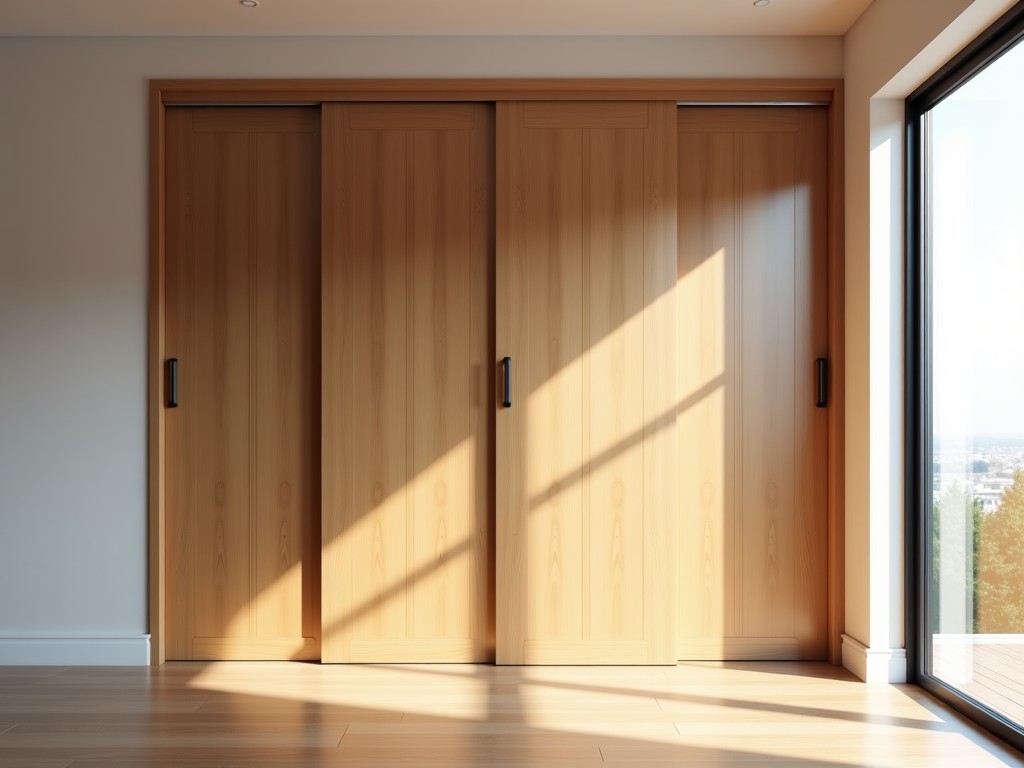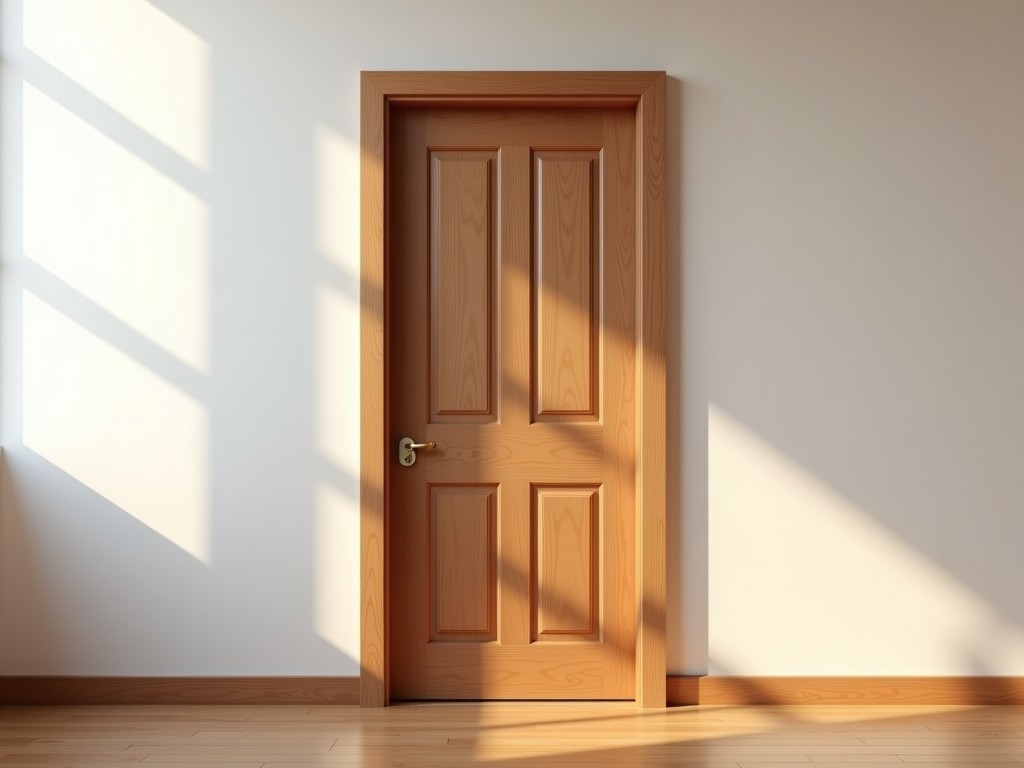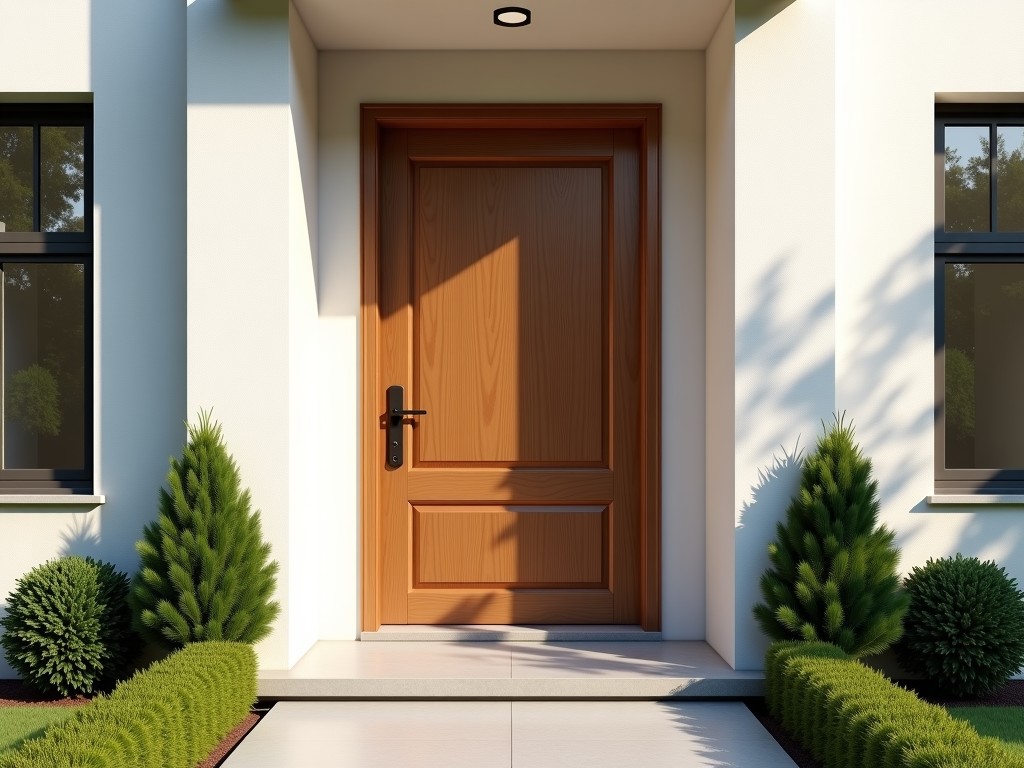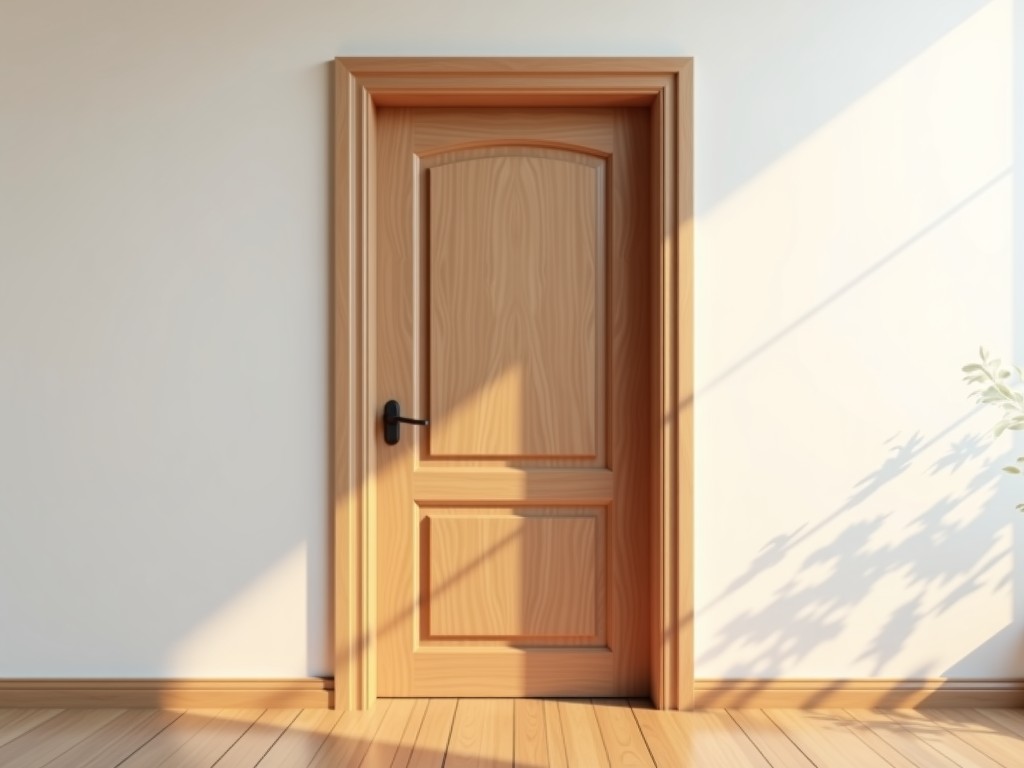
Walnut Wood Door With Veneer Finish For Sale
Walnut Wood Door With Veneer Finish For Sale
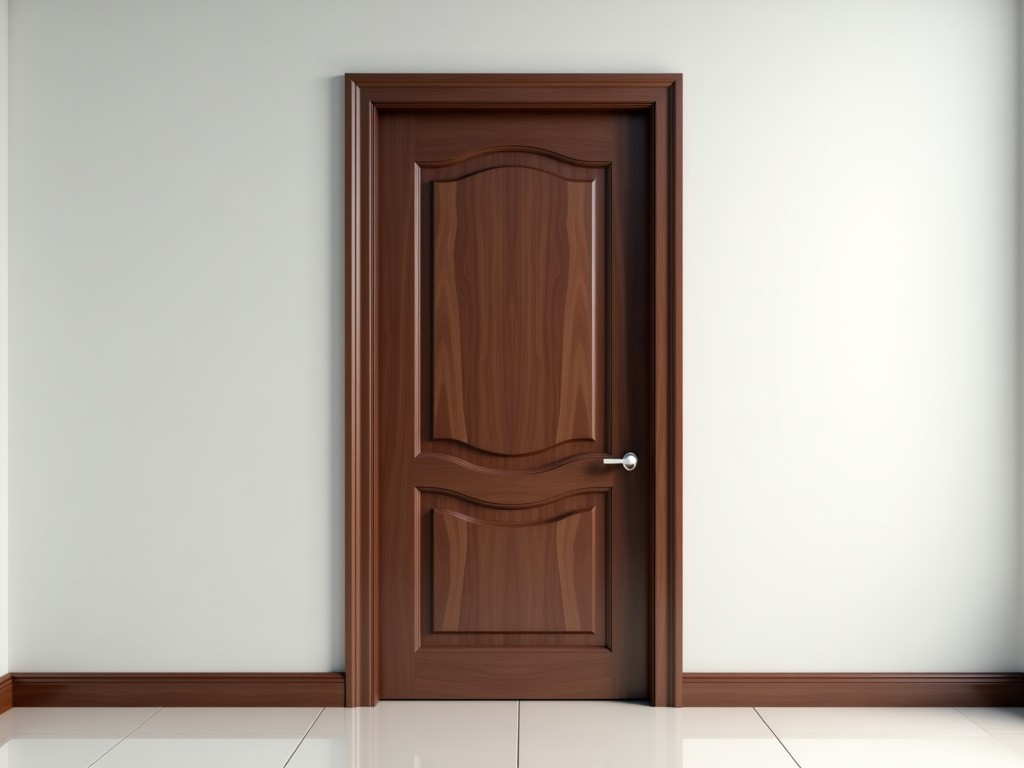
Walnut Wood Door with Veneer Finish
For applications requiring dimensional stability and a refined aesthetic in interior architectural systems, walnut veneer doors provide a consistent surface with predictable performance characteristics. This page explains the material behavior, manufacturing considerations, and selection factors relevant to procurement and engineering teams evaluating this product for commercial, institutional, or high-end residential projects.
Material Selection and Veneer Characteristics
Walnut veneer is typically sourced from Juglans regia or Juglans nigra logs, selected for straight grain and minimal mineral streaks. The veneer is sliced or rotary-cut to thicknesses ranging from 0.5mm to 0.6mm, then bonded to a substrate using cold-press or hot-press adhesives. Unlike solid walnut, which is prone to movement with humidity changes, veneer construction minimizes seasonal expansion and contraction when paired with a stable core.
The finish applied over the veneer is critical to long-term appearance. Common systems include UV-cured polyurethane, water-based acrylic, or catalyzed lacquer, each offering different levels of abrasion resistance, chemical stability, and gloss retention. Finish thickness typically ranges from 25 to 40 microns dry film, measured via DFT (dry film thickness) gauges during quality control.
Substrate Options and Dimensional Stability
The substrate governs the door’s resistance to warping, screw holding strength, and edge integrity. Common choices include:
- Particleboard (PB): Economical, uniform density (600–700 kg/m³), suitable for low-cycle interior doors in controlled environments. Edge sealing is required to prevent moisture ingress.
- Medium Density Fiberboard (MDF): Homogeneous structure, excellent screw retention, and smooth surface for veneer adhesion. Density typically 700–800 kg/m³. Performs well in machined applications (e.g., routed panels, muntins).
- Poplar or Birch Plywood: Cross-banded layers provide dimensional stability in both directions. 5-ply or 7-ply construction with face veneers graded for smoothness. Preferred where screw load or impact resistance is a concern.
Core thickness for standard interior doors ranges from 35mm to 44mm, with overall door thickness typically 40mm or 45mm. Tolerances on thickness are generally ±0.5mm, width and height ±1.5mm, depending on manufacturing method and post-pressing conditioning.
Manufacturing Process and Quality Control
Production begins with substrate preparation—sanding to achieve surface roughness (Ra) suitable for adhesive bonding. Veneer sheets are matched for grain and color using book-matching or slip-matching techniques to ensure visual consistency across the face. Adhesive (typically urea-formaldehyde or PVAc-based) is applied via roller spreader, then assembled in a cold or hot press at pressures between 8 and 12 bar.
After pressing, doors are conditioned for 24–48 hours at 50% RH to stabilize moisture content before sanding and finishing. Edge banding—using matching walnut veneer, PVC, or ABS—is applied to protect the core and provide a uniform finish return. Final finishing includes sealer, topcoat, and UV curing or air drying, depending on the system.
Quality checks include:
- Adhesion strength (cross-hatch test per ASTM D3359)
- Surface smoothness (Ra < 2.0µm after final sanding)
- Finish hardness (pencil test, typically 2H–4H)
- Color consistency (ΔE < 2.0 under D65 lighting)
- Dimensional inspection (caliper and laser measurement)
Typical Specifications
| Attribute | Typical Value / Range |
|---|---|
| Door Thickness | 40mm, 45mm (customizable 35–50mm) |
| Veneer Thickness | 0.5–0.6mm (sliced or rotary) |
| Finish Type | UV polyurethane, water-based acrylic, catalyzed lacquer |
| Finish Dry Film Thickness | 25–40µm |
| Core Material | MDF, particleboard, poplar/birch plywood |
| Moisture Content (at shipment) | 8–12% (equilibrated to 50% RH) |
| Edge Banding Options | Walnut veneer, 2mm PVC, 2mm ABS, solid wood strip |
| Standard Sizes | 813×2032mm, 864×2032mm, 915×2032mm (custom sizes available) |
Application Considerations
Walnut veneer doors are commonly specified in:
- Executive offices and conference rooms where visual warmth and material continuity are desired
- High-end hospitality suites and boutique hotel corridors
- Institutional buildings (libraries, museums, academic facilities) requiring durable, low-maintenance finishes
- Residential multi-unit developments where consistency across units is critical for aesthetic compliance
They are less suited for high-humidity environments (e.g., interior pool areas, unconditioned basements) or locations with frequent impact exposure unless paired with a plywood core and impact-resistant edge treatment. For exterior or semi-exterior use, solid wood or engineered door systems with overhangs and proper sealing are typically preferred.
Customization and OEM Support
Customization extends beyond dimensions to include:
- Veneer matching (book, slip, random, or center-matched for symmetrical layouts)
- Core material substitution based on load, acoustic, or fire rating requirements
- Edge treatment (square, eased, beveled, or profiled to match frame profiles)
- Pre-machining for hinges, locks, strikes, and door viewers
- Finish gloss level (matte, satin, semi-gloss, or high-gloss)
- Fire-rated cores (where applicable, with certified additives in MDF or particleboard)
Minimum order quantities for customized runs depend on tooling and pressing constraints. For standard profiles, MOQs often start at 20–50 units. Fully custom designs (e.g., curved, arched, or panelled) may require higher volumes due to die and mold preparation. Lead times typically range from 3 to 6 weeks for standard configurations, extending to 8–10 weeks for highly customized orders, depending on material sourcing and finish curing schedules.
Packaging and Logistics
Doors are packed flat or on edge, depending on size and quantity. Standard packaging includes:
- Individual polyethylene wrapping to prevent surface abrasion
- Corner protectors (cardboard or plastic) to guard against impact
- Horizontal stacking on pallets with interstitial sheets (kraft or corrugated) between layers
- Stretch film and strapping for unit load stability
Pallet dimensions are optimized for container loading (typically 1.1m × 1.1m footprint). Export packaging complies with ISPM 15 standards for wood pallets when required. Moisture barrier desiccants may be included for long transit times or tropical climates. Weight per door varies by core: approximately 25–35kg for MDF, 20–30kg for particleboard, and 30–40kg for plywood.
Selection Guide for Procurement and Engineering Teams
When evaluating walnut veneer doors, consider the following:
- Environmental stability: Confirm the core material’s suitability for the expected RH range in the installation location. MDF and plywood offer better stability than particleboard in fluctuating conditions.
- Finish durability: Request finish specifications (DFT, hardness, chemical resistance) if the door will be exposed to cleaning agents or frequent contact.
- Edge integrity: Verify edge banding material and adhesion—especially for doors in high-traffic areas where corners are prone to impact.
- Dimensional tolerances: Ask for inspection reports or sampling plans if tight fits are required (e.g., in frameless systems or with concealed hinges).
- Supply consistency: Inquire about veneer sourcing and batch matching to ensure color and grain uniformity across multiple shipments.
Samples should be evaluated under the actual lighting conditions of the project (e.g., D65, TL84, or warm white) to assess metamerism. Request a finished sample with edge treatment applied to verify appearance and quality before approving full production.
Discuss your project requirements with our engineering team to review material options, finish systems, and customization capabilities. Share your drawings or specifications for a detailed proposal and lead time estimate.